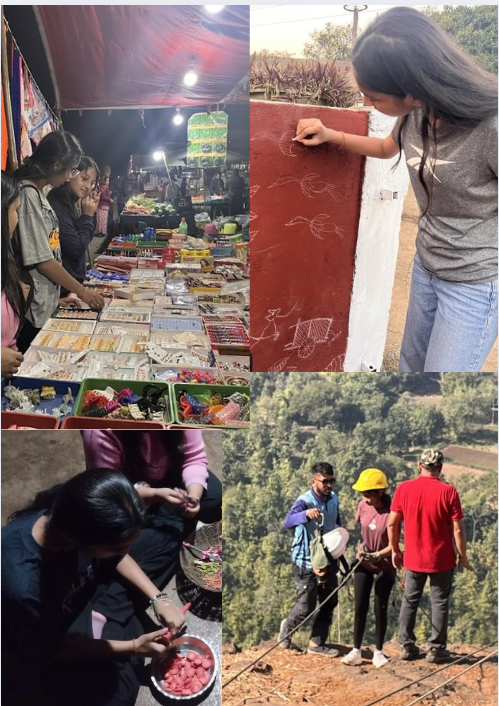
The rural Immersion trip to Kilad was an experimental learning journey that allowed us to live and engage with a local village community. We stayed at a campsite, experiencing their daily routines, agricultural techniques and traditional practices like warli art. We explored schools, markets and homes made of cow dung gaining insights into rural. The trip included activities like river baths, campfires and cultural dances building deep connection with their way of life and understanding diverse communities.
LO 1: Identify own strengths and develop areas for growth
LO 1 : During the Rural Immersion trip to Kilad, I identified my strengths in adaptability and cultural awareness as I learned the local lifestyle, engaged with villagers and participated in traditional activities. However, I recognized areas of growth, such as resilience in adjusting to a strict schedule and patience in unfamiliar situations. Living in a shared space and following rural routines pushed me beyond my comfort zones and learned teamwork and open mindedness; skills that are valuable for both personal and academic growth.
LO 2 : Demonstrate that challenges have been undertaken,developing new skills in the process
LO 2 : As I was in the trip we engaged with multiple global issues. Observing rural education challenges aligned with SDG 4 Quality Education, while learning about friendly housing and sustainable farming connected to SDG 11 Sustainable cities and Communities along with SDG 12 Zero Hunger. Limited healthcare facilities highlighted SDG 3 Good health and well being. This experience deepend my understanfding of rural challenges and strengthened my commitment towards social equity and sustainibility.
LO 7: Recognize and consider the ethics of choices and actions
LO 7 : During the Rural Immersion trip to Killad, I recognized the ethical implications of choices in education, sustainability, and resource consumption. Seeing limited school facilities made me reflect on educational inequality, while learning about eco-friendly homes and farming highlighted the ethical responsibility of sustainable living. Gender roles in the village also raised questions about equity and empowerment. This experience made me more mindful of the ethical impact of my actions, reinforcing the importance of advocating for sustainable and equitable solutions.