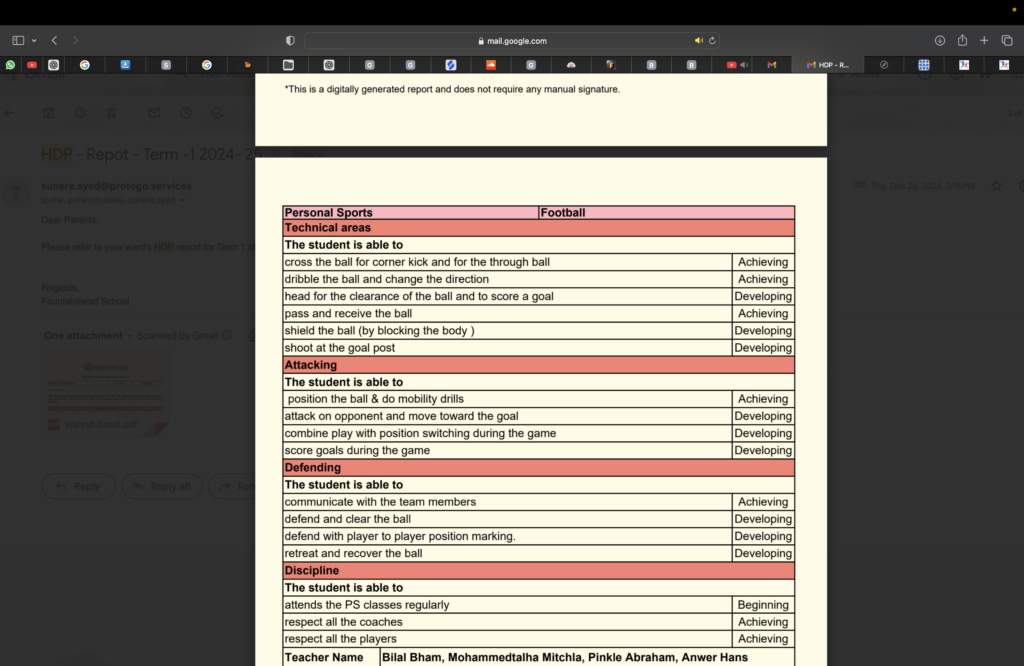
Football has always been a passion of mine, but through this CAS experience, I aimed to develop my technical skills, teamwork, and leadership abilities. I wanted to push myself beyond just playing for fun by setting personal goals to improve my dribbling, passing accuracy, and overall game strategy. Additionally, I saw this as an opportunity to contribute to the community by coaching younger students and promoting inclusivity in sports. From the start, I knew this experience would challenge me both physically and mentally, requiring a high level of commitment and perseverance to stay consistent with my training and coaching schedule (LO1, LO4).
As training sessions progressed, I encountered several challenges, particularly in decision-making under pressure. There were moments during practice matches when hesitation led to lost opportunities, making me realize the importance of trusting my instincts. To overcome this, I focused on refining my game awareness and reaction time, learning to assess situations quickly. This required stepping outside my comfort zone and taking risks—such as trial-running new defensive formations—which helped me grow not only as a player but also as a more confident and decisive individual (LO2, LO5).
A significant part of this experience involved working collaboratively with my teammates. Football is a sport that relies on coordination and communication, and I quickly understood how essential it was to build trust on the field. Organizing team strategies, calling for passes, and supporting one another during tough moments or after a loss strengthened our bond. These moments reinforced the value of teamwork and showed me how success in any group effort depends on effective collaboration and mutual respect (LO5).
One of the most fulfilling aspects of this journey was the service component. I chose to engage with LO6 by addressing the global issue of social exclusion and the lack of access to physical education (SDG 3: Good Health and Well-being). By coaching younger students, I wasn’t just teaching drills; I was actively working to break down barriers to participation. I focused on creating an environment where students of all backgrounds and abilities felt welcome, realizing that sports are a universal language that can promote global goals of health and social equity. This mentorship allowed me to demonstrate leadership and engage with the broader community in a way that felt globally significant (LO3, LO6).
Reflecting on this journey, I realize how much I have grown—not just as a football player, but as a leader, teammate, and mentor. Football has taught me patience, resilience, and the importance of adapting to challenges. Whether it was improving my own performance, working with my team, or guiding younger players to become more active citizens, every aspect of this experience contributed to my personal development. This journey has reinforced my commitment to continuous improvement and the value of using my skills to support others (LO7).