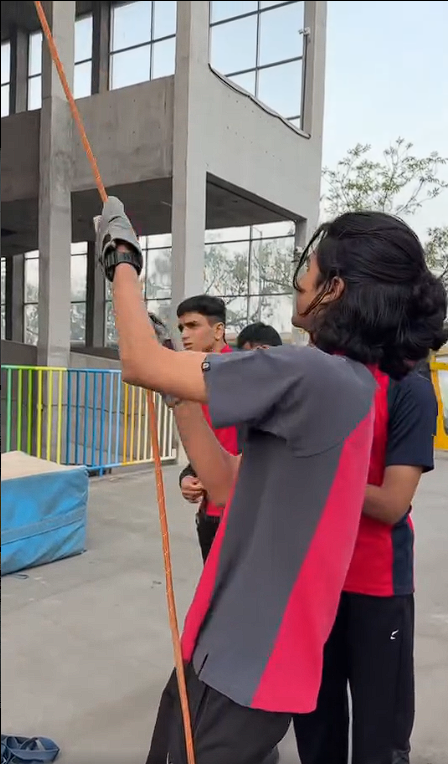
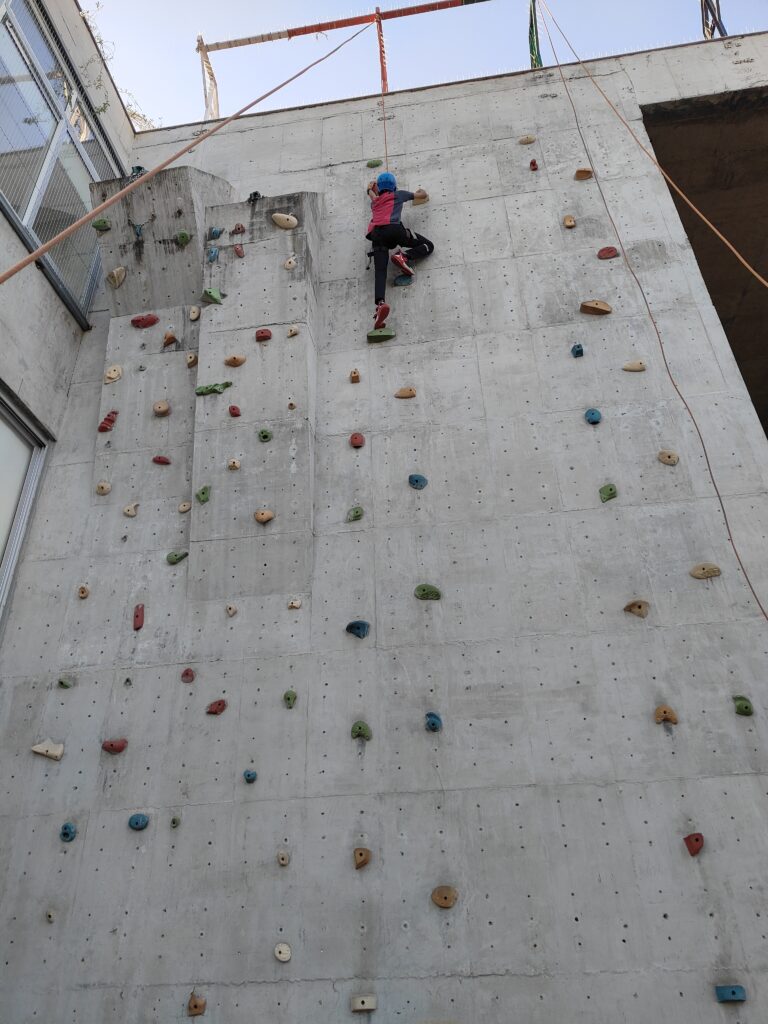
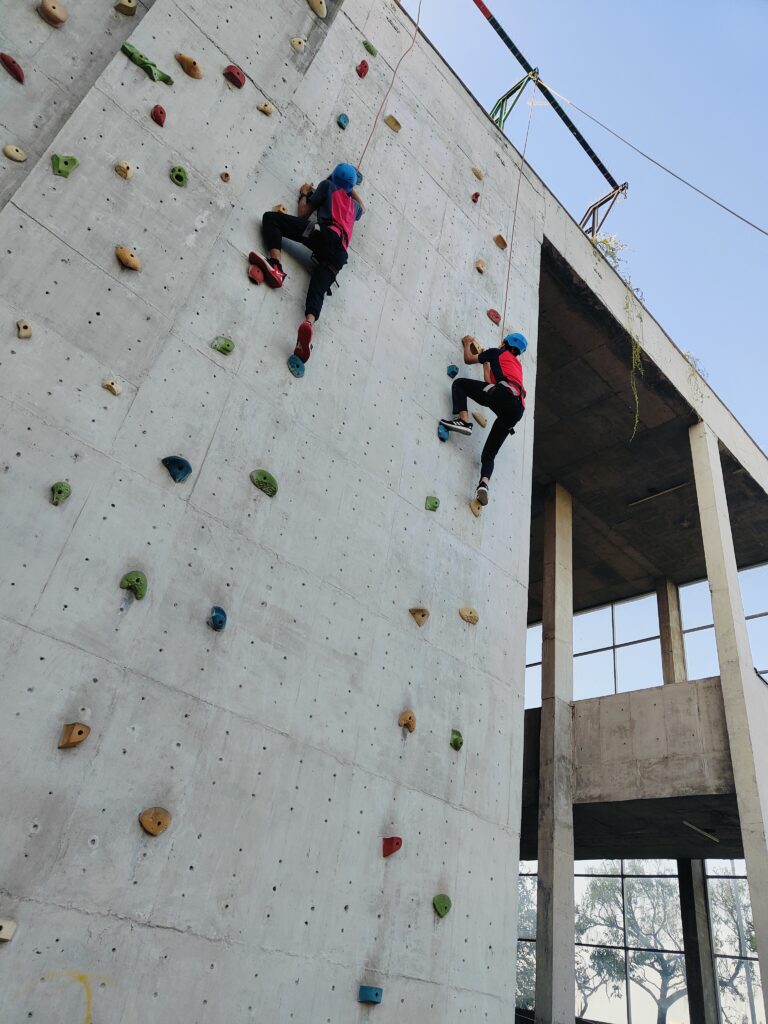
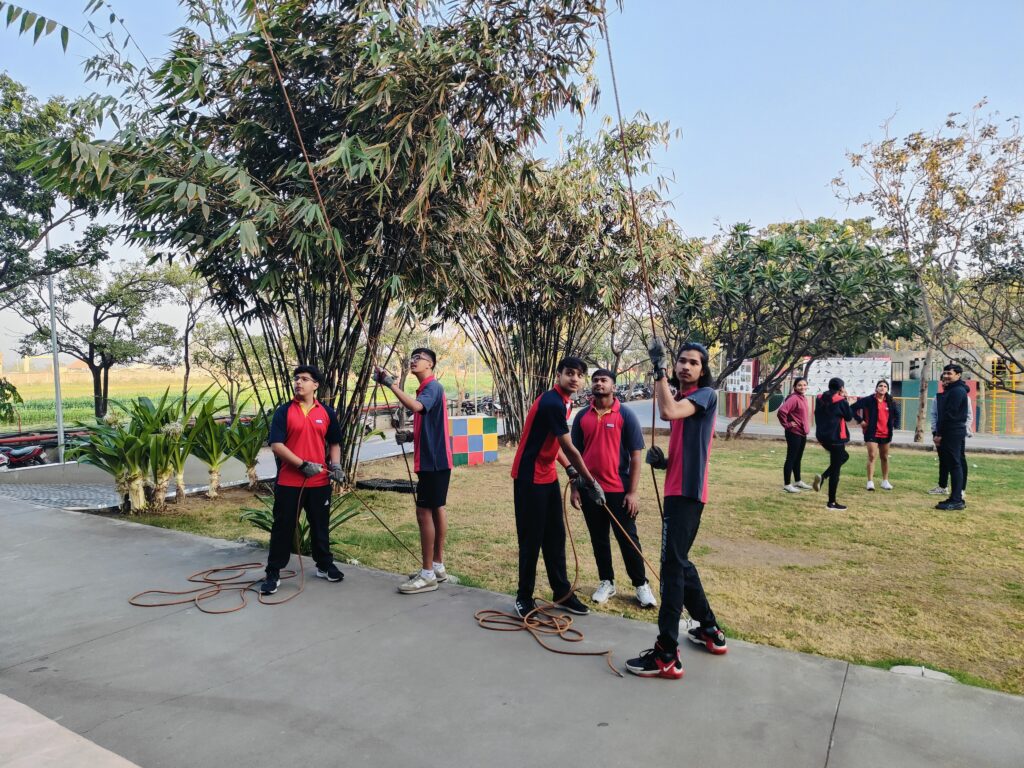
I participated in four rock climbing sessions, each beginning with a warm-up that included jogging, stretching, and strength exercises like push-ups and pull-ups to build arm strength. After warming up, I practiced scaling the climbing wall using various handholds, focusing on improving my technique. My main goal was to set a personal best time for completing the climb. Initially, it took me 38 seconds, but with practice, I managed to reduce it to 26 seconds. In addition to climbing, I also took on the role of belayer, assisting other climbers by managing the rope to ensure their safety and support during their ascent.
LO1 – Identify your own strengths and develop areas for personal growth.
Through these rock climbing sessions, I was able to identify both my strengths and areas for personal growth. I realized that I had a natural drive for self-improvement, as seen in my determination to lower my climbing time from 38 to 26 seconds. My persistence and focus on technique played a key role in this progress. At the same time, I recognized that my upper body strength, particularly in my arms, needed improvement, which became evident during the push-ups and pull-ups in the warm-up. Additionally, taking on the role of a belayer highlighted my ability to stay attentive and responsible for others’ safety, reinforcing my teamwork skills. This experience helped me understand that growth comes from balancing personal challenges with supporting those around me.
LO2 – Demonstrate that challenges have been undertaken, developing new skills in the process.
Rock climbing pushed me out of my comfort zone, challenging me both physically and mentally while allowing me to develop new skills in the process. Initially, my climbing time was 38 seconds, and I struggled particularly with transitioning between widely spaced handholds. Noticing this, my coach suggested that I try the “Cross Reach” technique, where I extended my arm diagonally to grasp a higher hold instead of relying solely on vertical movements. This adjustment significantly improved my efficiency, especially on sections where my previous approach was slowing me down. As a result, I managed to lower my time to 26 seconds. The warm-up exercises, including push-ups and pull-ups, also helped me develop the necessary arm strength to execute the technique more effectively. The role of belayer was also a strenuous duty, especially with climbers struggling to climb the wall, as I was sometimes required to completely lift their body weight using a rope, which required great grip and muscle strength. Hence, in the 4 sessions, I was also able to grow my grip and muscle strength.
LO4 – Show commitment to and perseverance in CAS experiences.
Rock climbing required consistent effort and perseverance, as progress didn’t come instantly. There were times when my arms felt too fatigued to continue, especially after multiple climbs in a session, but I pushed through, determined to improve. One particularly frustrating moment was when I kept slipping at the same tricky overhang section, unable to find the right grip. My coach advised me to engage my legs more by using a “Toe Hook” technique—hooking my foot around a hold to stabilize myself. At first, it felt unnatural, but after multiple attempts, I finally got past the obstacle. Despite setbacks, I kept attending sessions, determined to refine my skills and lower my climbing time. Taking on the additional responsibility of being a belayer also required focus and patience, as I had to stay attentive for long periods, ensuring my partner’s safety. The experience reinforced the importance of perseverance, proving that steady effort leads to tangible improvement.
LO6 – Demonstrate engagement with issues of global significance.
Rock climbing also connected to a larger global issue—promoting health and fitness as a means of improving overall well-being. In many parts of the world, access to sports and physical activities is limited, contributing to rising health concerns such as obesity and sedentary lifestyles. Engaging in climbing reinforced the importance of physical fitness, not just for personal achievement but as a way to build strength, endurance, and mental resilience. Through this experience, I gained a deeper appreciation for the role that accessible sports play in promoting a healthier society. Additionally, by encouraging others to participate and overcome their hesitation, I contributed in a small way to fostering a culture where fitness is valued and seen as an essential part of life.
LO7 – Recognize and consider the ethics of choices and actions.
Rock climbing not only tested my perseverance but also made me more aware of the responsibility that comes with the activity. As I worked to improve my own climbing time and technique, I also had to ensure the safety of others while belaying. Staying focused and attentive was crucial, as even a small mistake could put my climbing partner at risk. Additionally, I noticed that some participants were hesitant to climb, unsure of their abilities. I encouraged them to give it a try, reminding them that progress comes with practice and that it was okay to struggle at first. By supporting and motivating them, I helped foster a more positive and determined environment. This experience reinforced that perseverance isn’t just about personal growth—it also involves being responsible and helping others overcome their challenges.
Conclusion –
Overall, rock climbing was a demanding yet fulfilling experience that pushed me to improve in multiple ways. Setting a new personal record of 26 seconds was a significant achievement, showing how much I had progressed since my initial 38-second climb. Along the way, I learned new techniques, such as the “Toe Hook,” which helped me navigate challenging sections more efficiently. My upper body and grip strength also noticeably improved, making each climb feel more controlled and less exhausting.