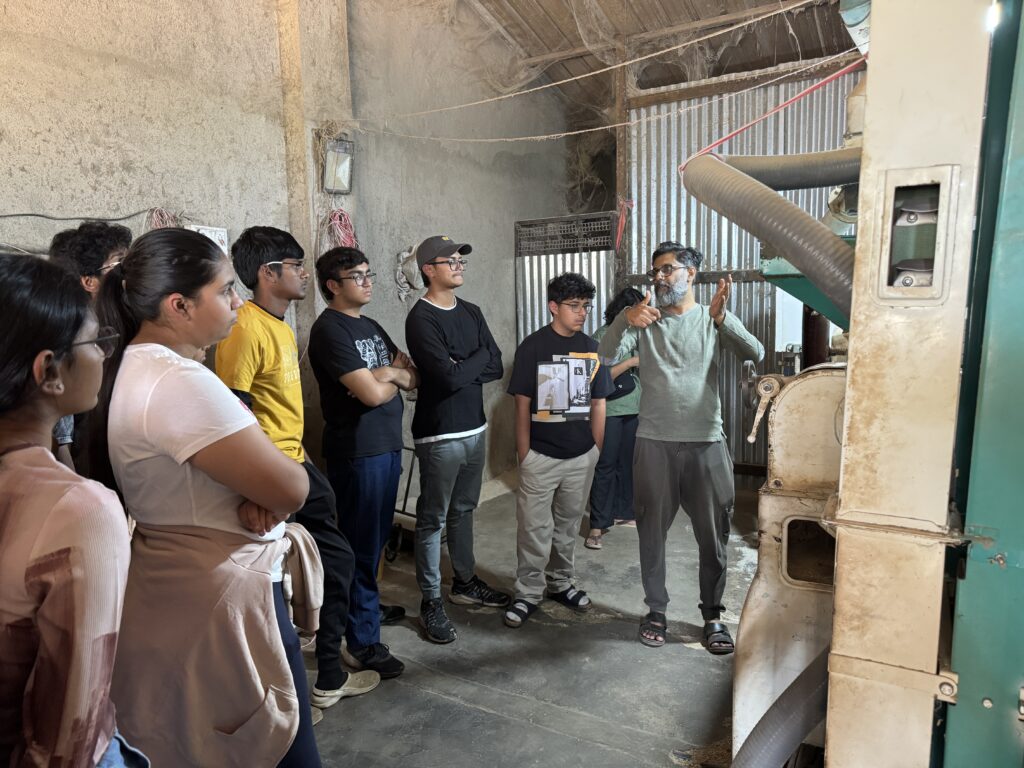
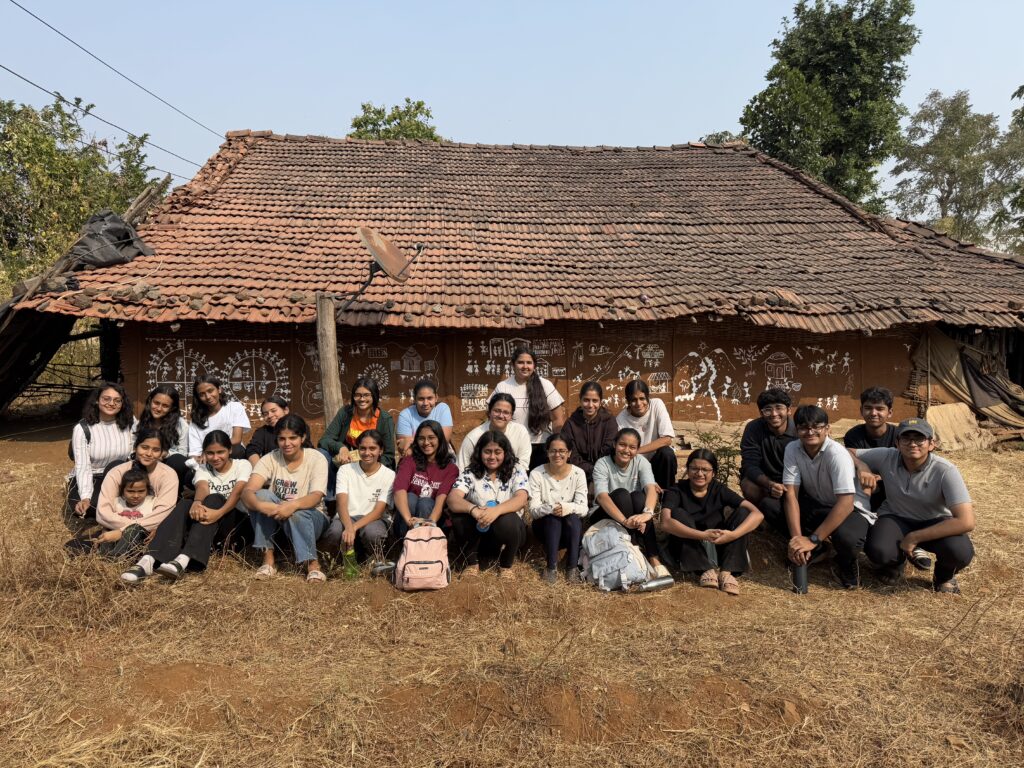
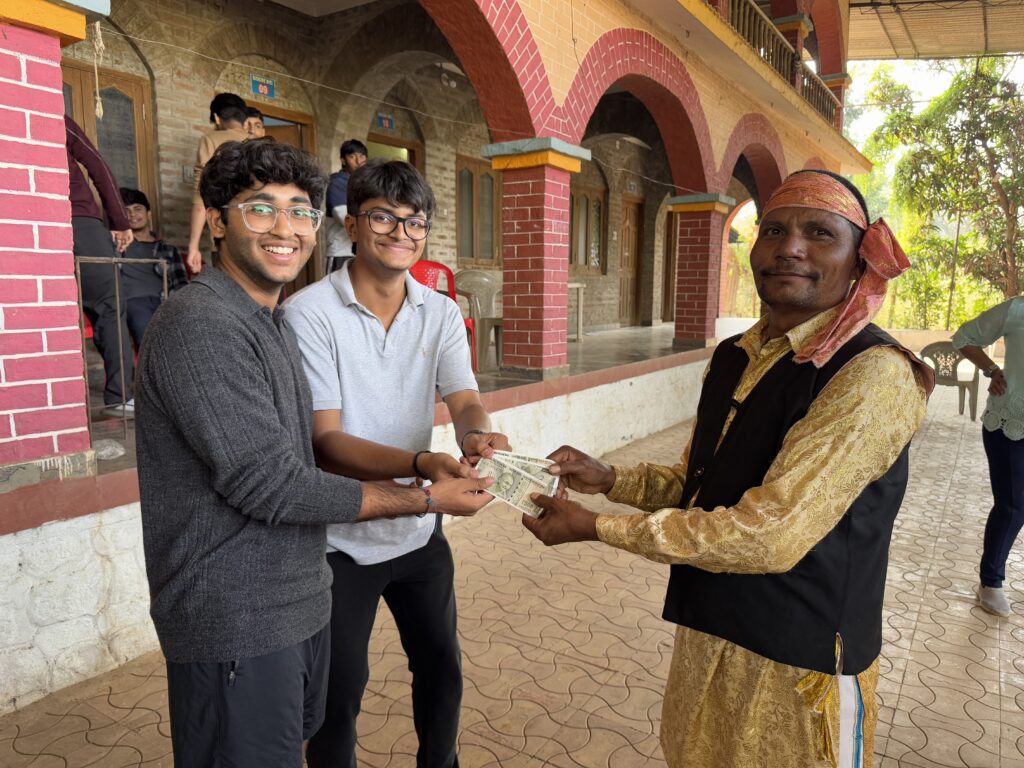
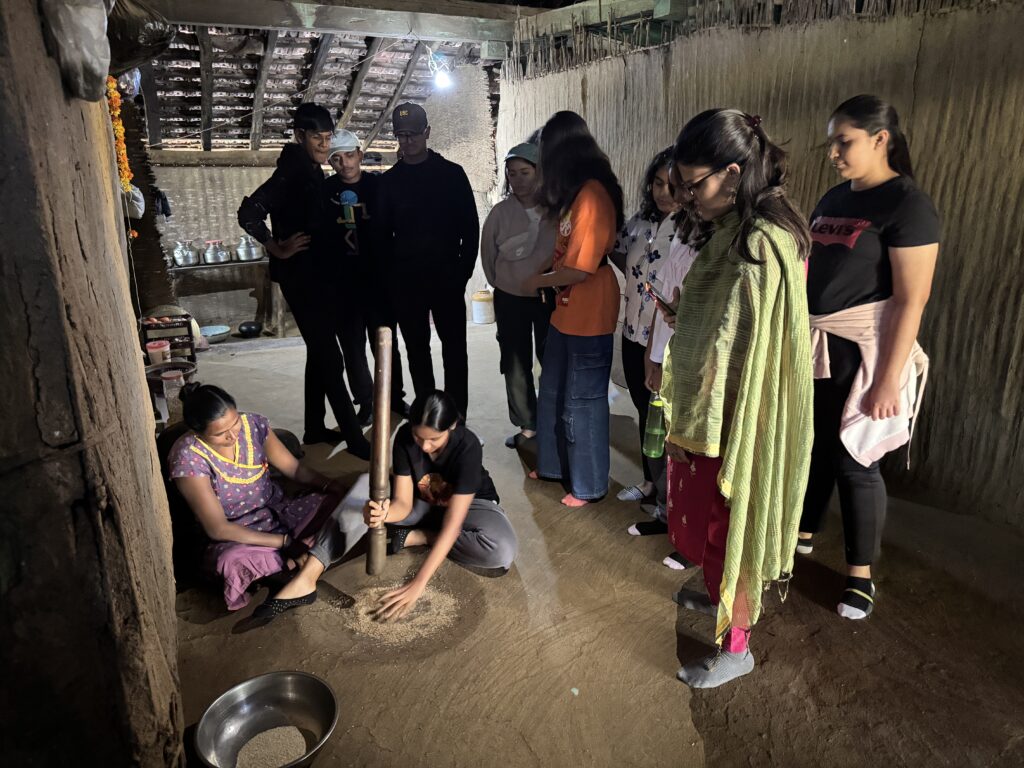
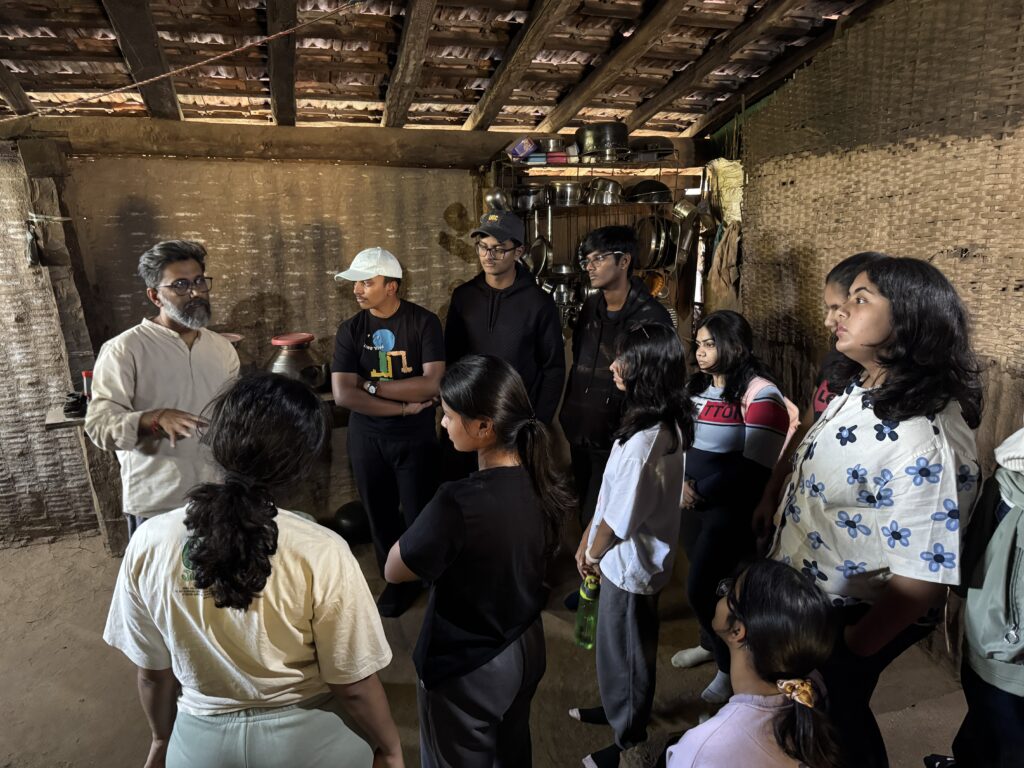
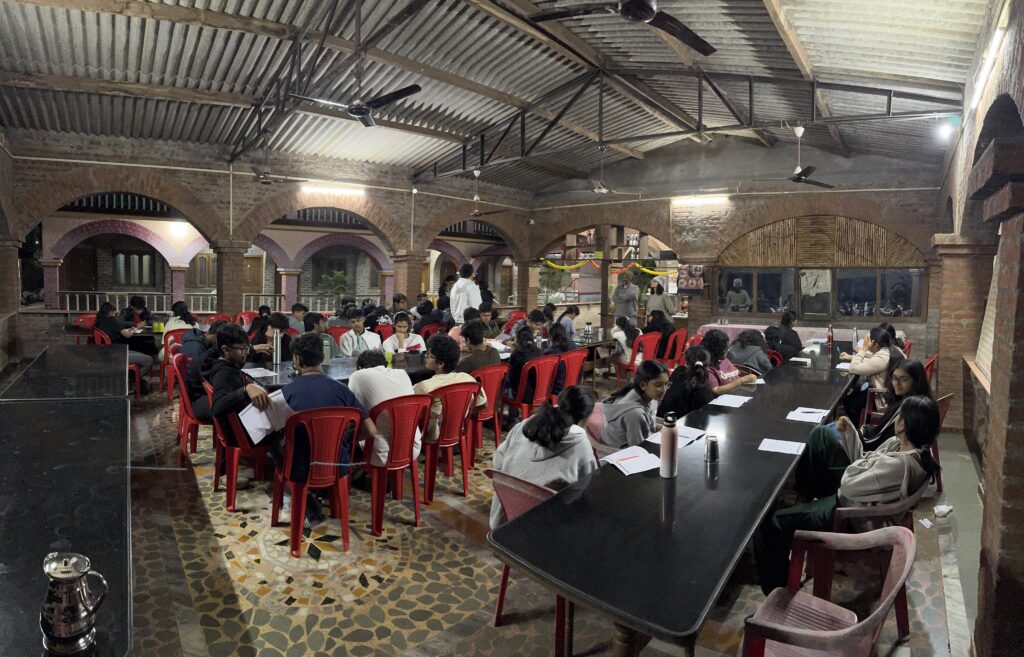
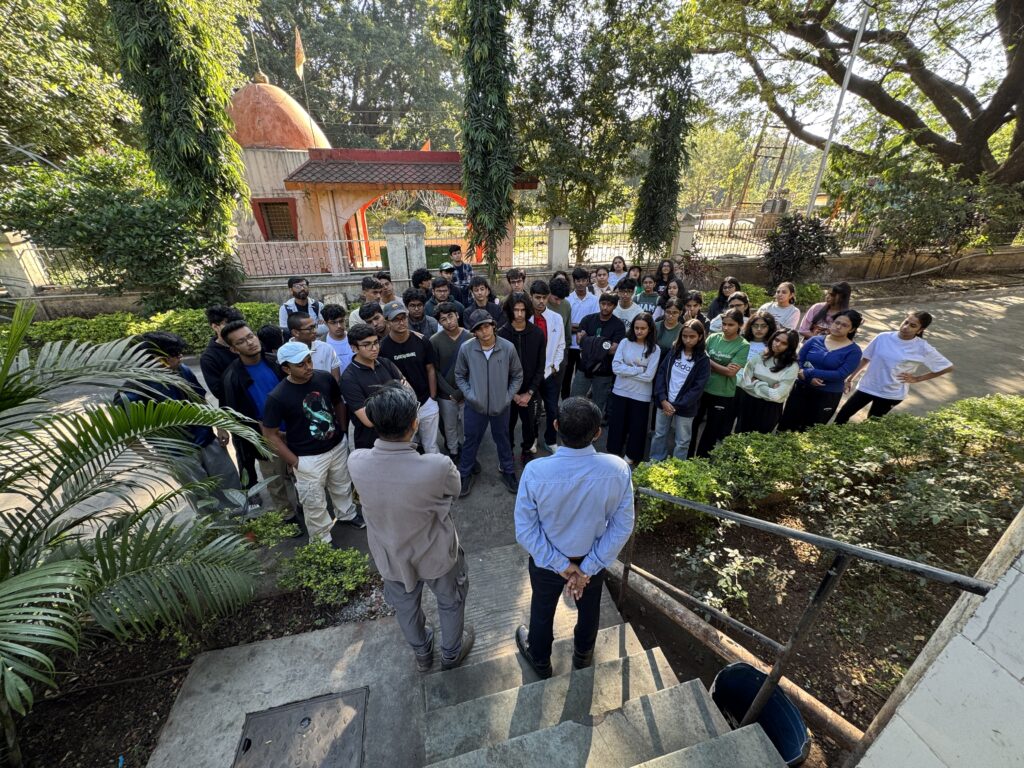
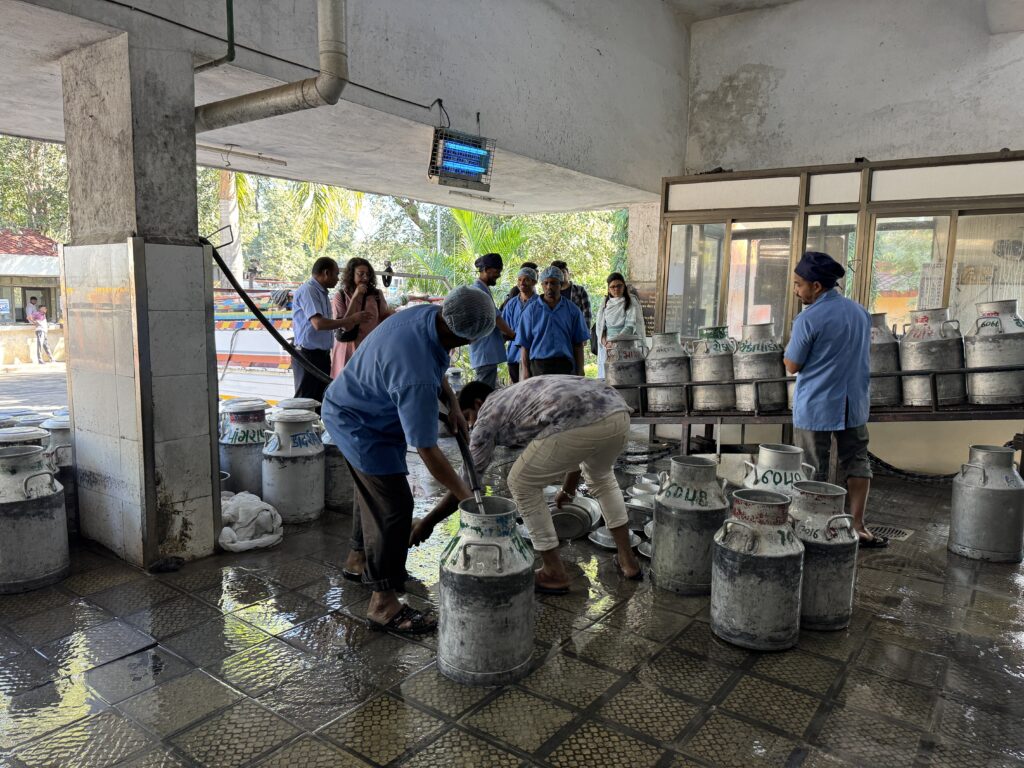
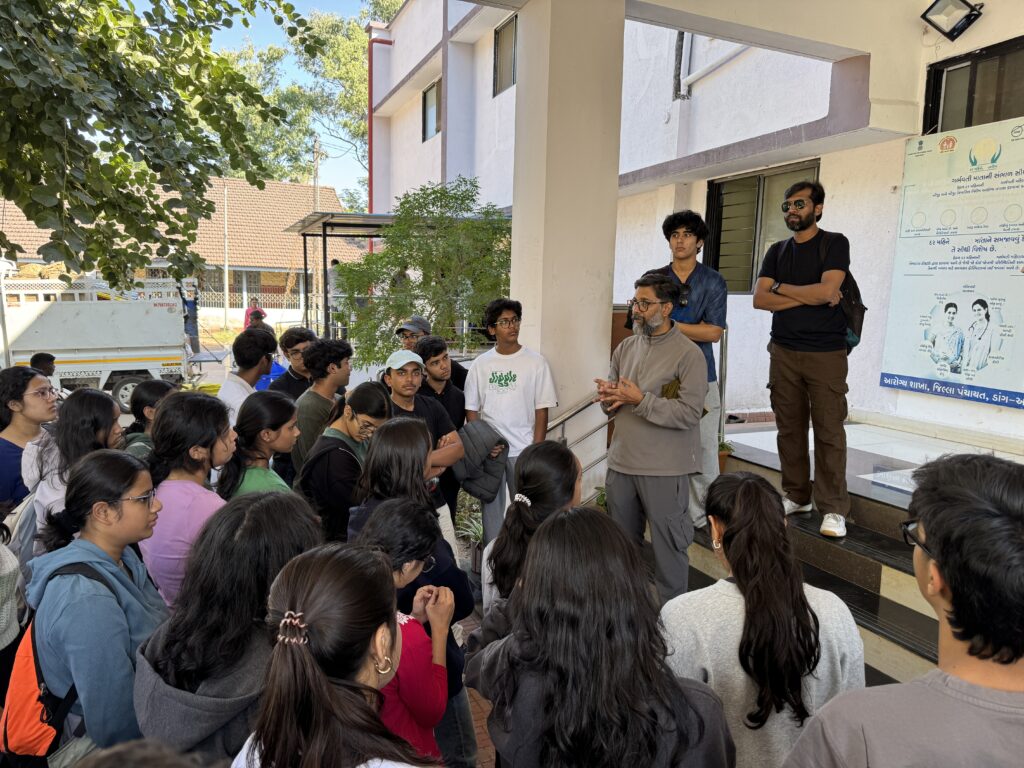
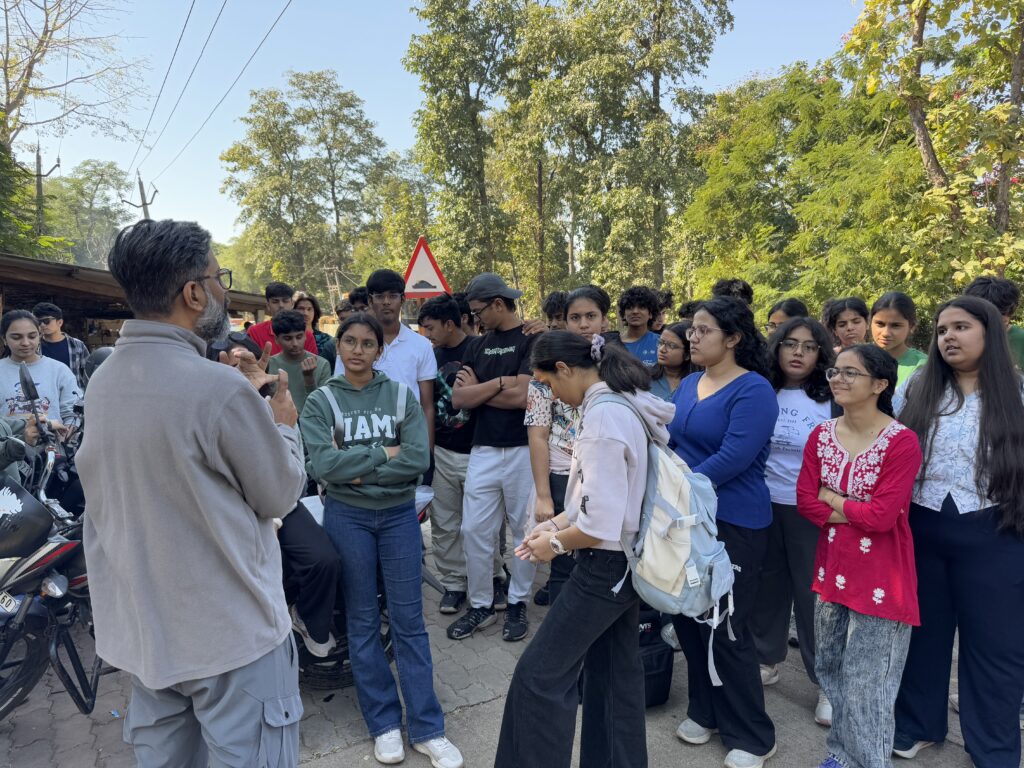
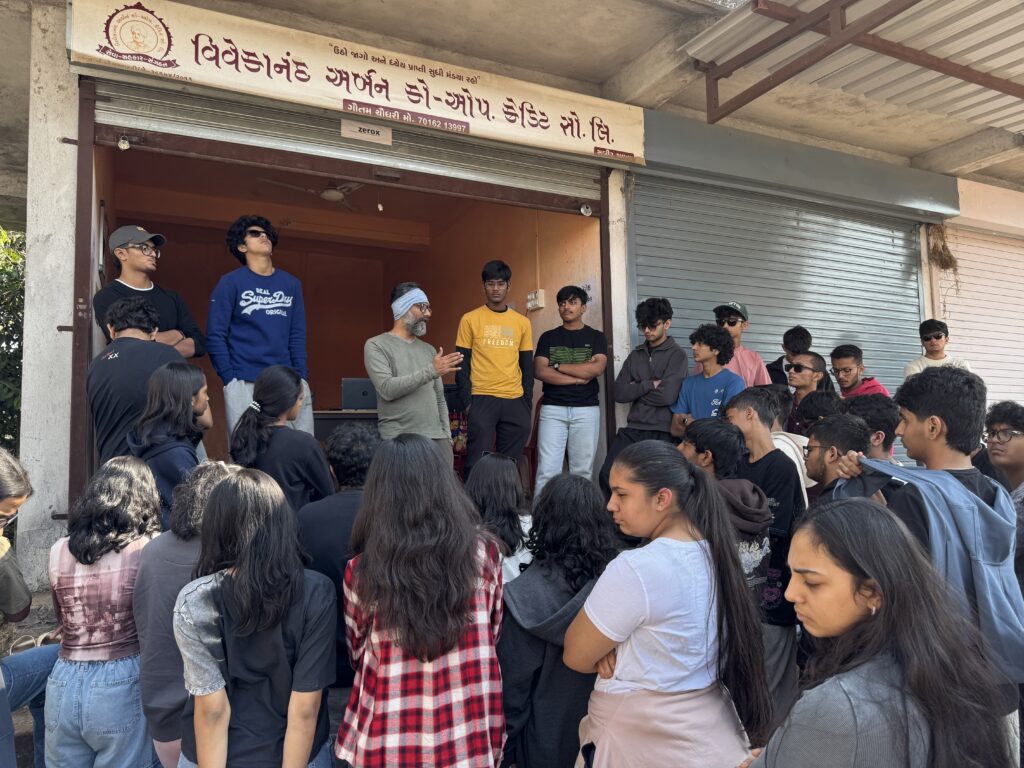
The Rural Immersion Trip to Dang, Gujarat was an unforgettable experience that took us beyond the walls of our classrooms and into the heart of rural life and the way of the village people. Over the course of our stay, we worked alongside villagers, engaged and learned their daily routines, and learned about their traditions, art forms, and economic well-being. We participated in farming activities, helped with household chores, and assisted in community service projects aimed at improving village conditions as well as learn the way of living. The goal was not just to observe but to truly experience life in a rural setting, understand the challenges faced by the community, and contribute in any way we could. This experience pushed us to step outside our comfort zones, embrace a simpler way of life, and develop a deeper appreciation for the resilience and resourcefulness of rural communities.
LO2 – Demonstrate that challenges have been undertaken, developing new skills.
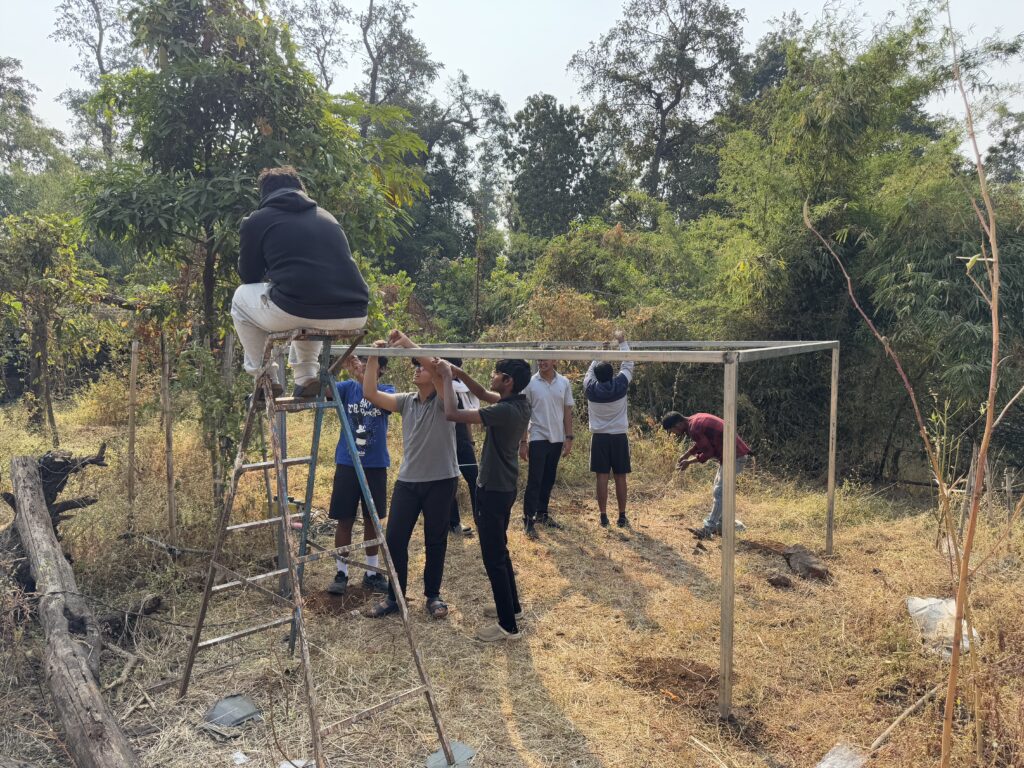
Adjusting to rural life also had its challenges. Lacking the luxuries of city life, we needed to learn new things and be out of our comfort zone—learning how to live in a small farmhouse, eating plain food, having a rigid routine and staying warm. Welding and other groundwork, especially, was hard manual work, and soon we appreciated the sheer drudgery that goes into the food and way of life that we tend to take for granted in our everyday lives. Communication too proved difficult, as there was the need to overcome language barriers to communicate with the villagers and learn about their lifestyle. However, through collaboration and an open mind, we learned problem-solving, resilience, and flexibility, developing a new appreciation for the rural way of life.
LO6 – Engagement with issues of global significance.
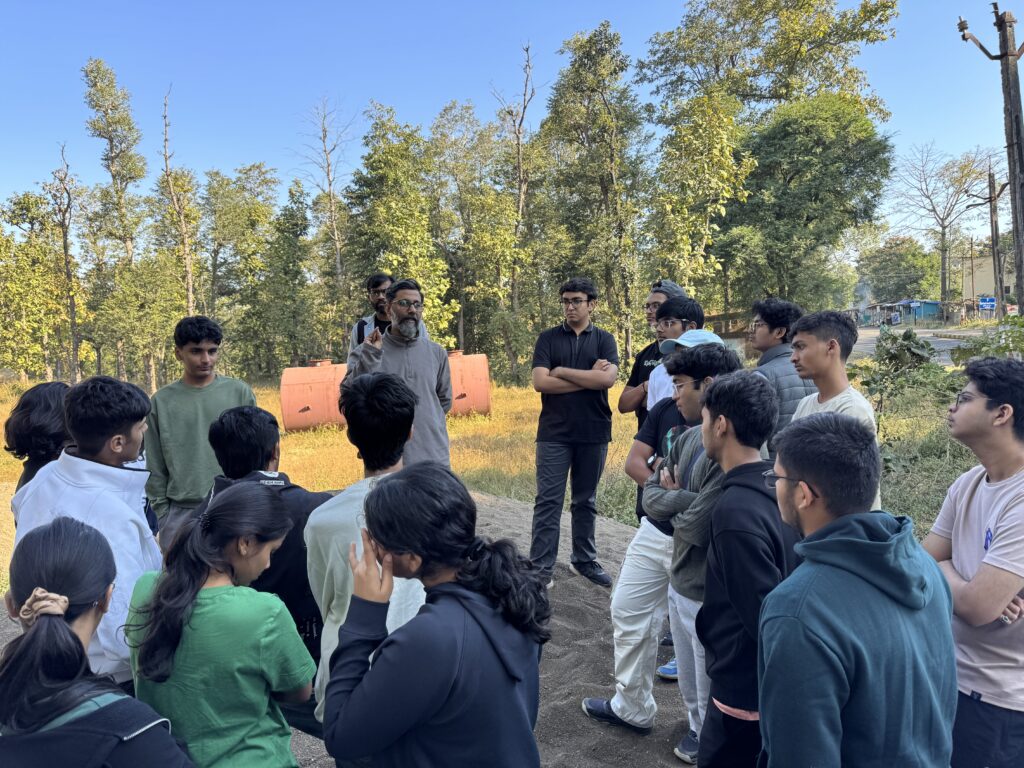
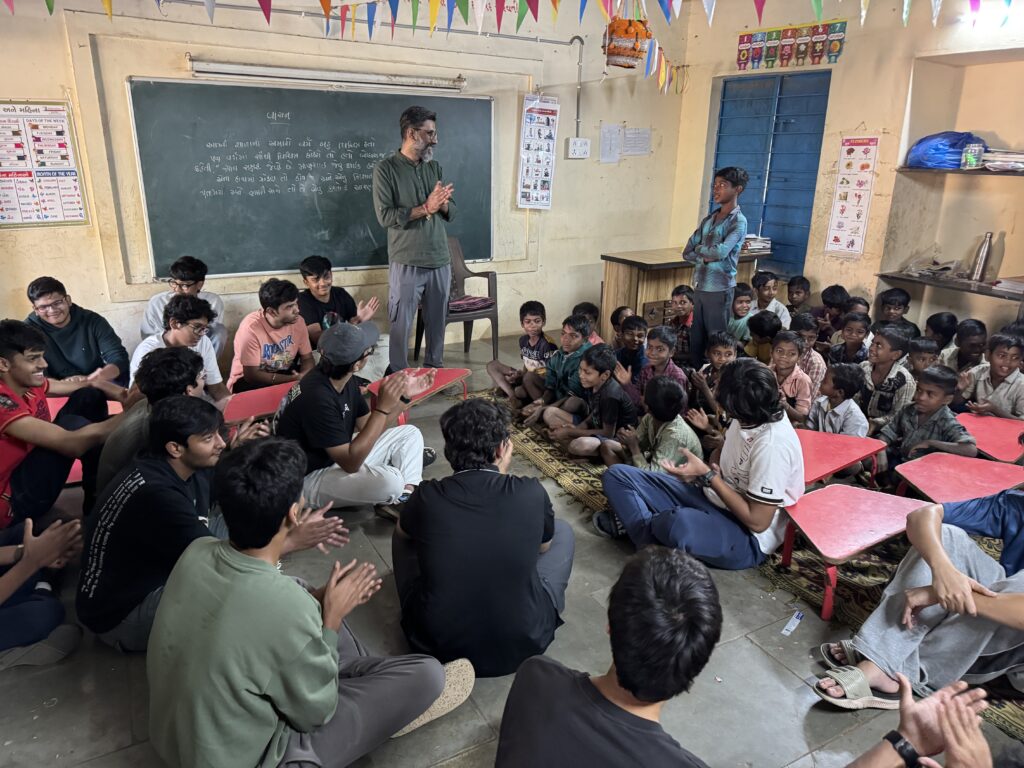
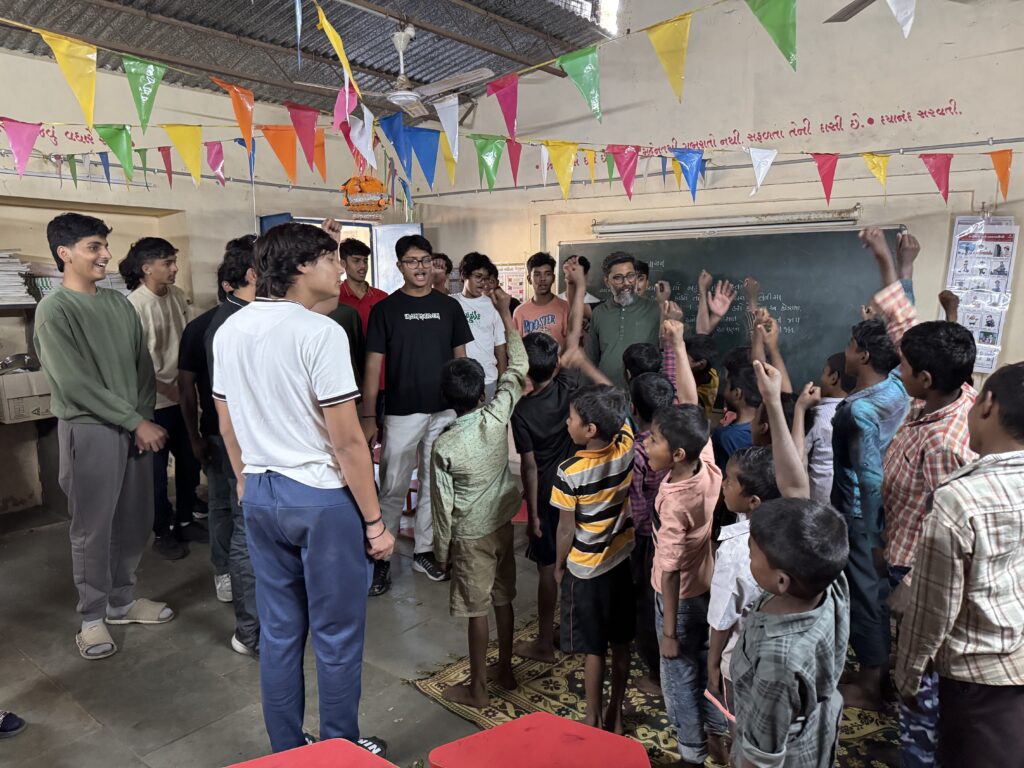
One of the most eye-opening aspects of this experience was witnessing the inequalities that rural communities face daily in things like economy, and their thinking. Limited access to quality education, healthcare, and sustainable income opportunities were some of the pressing issues we observed. The children, eager to learn, had very few resources, and the adults worked outside of their homes to provide for their families with minimal infrastructure and support. However, despite these hardships, their strong sense of community, self-sufficiency, and harmony with nature was inspiring. Their slogan “Eating, Dancing and living” was something that opened our eyes. This trip reinforced the importance of advocating for rural development, ensuring access to education, and creating opportunities for a better quality of life in underserved areas.
Key Takeaways
This journey was far more than just a school trip—it was a transformative experience that reshaped our perspectives on privilege and sustainability as well as teach us wonderful things about the life of the Dangy people. We learned to appreciate the small luxuries we often overlook—clean running water, reliable electricity, and access to education—while also admiring the strength, generosity, and wisdom of the villagers, we also saw how smart and clever are the children over there which was a complete shock to us.
Above all, this journey gave us a sense of responsibility. The rural-urban divide is not just real, but instead of viewing it as an irreversible fact, we now realize that little things—raising awareness, volunteering, and working towards change—can actually make a difference. Living their life, albeit for a brief period, was humbling. It reminded us that learning is not just in textbooks—through experiences, in the fields, in conversations shared, and in moments of real connection.