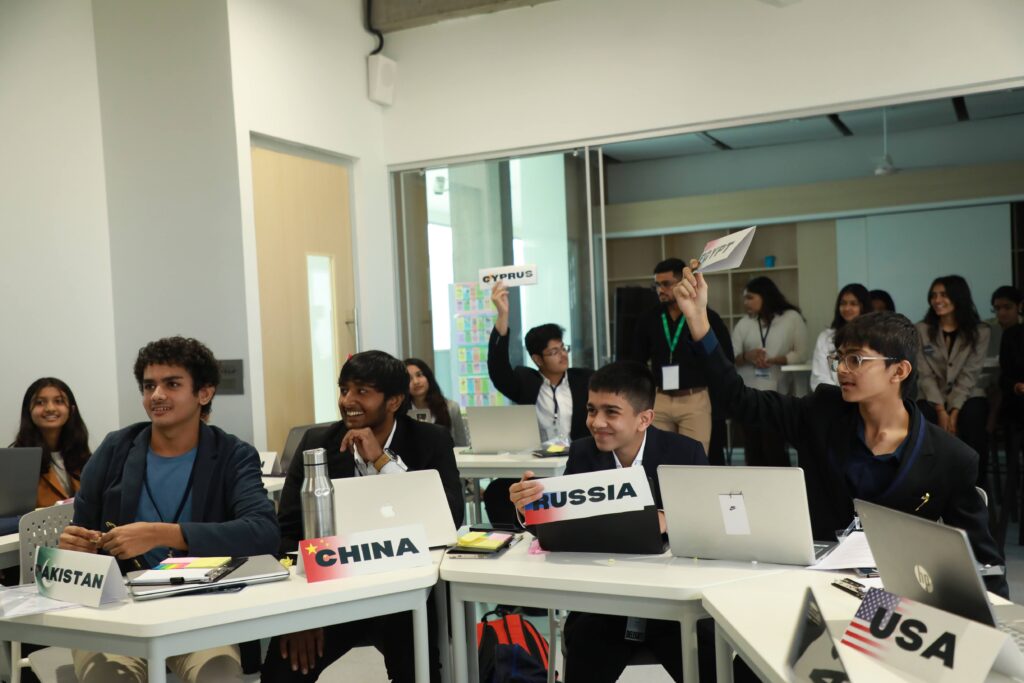
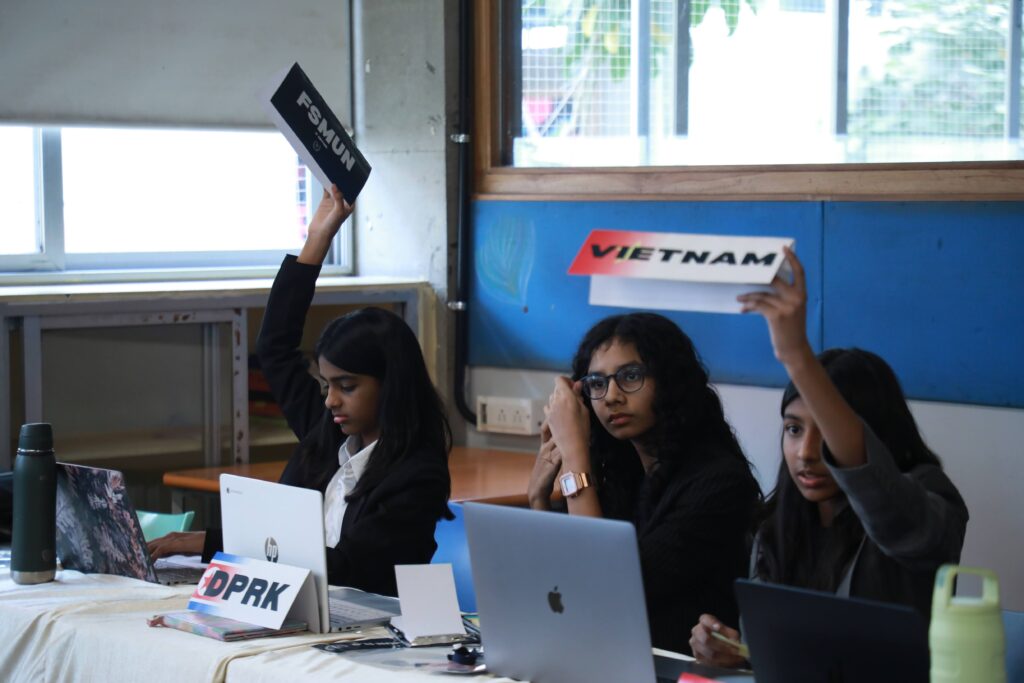
I served as the Deputy Secretary-General for the 11th edition of FSMUN. My association with the conference dates back to the 8th edition where I participated as a first-time delegate indulging in the world of Model UN on a whim. This indulgence led to a terrific journey that encompassed multiple conferences, several awards, and key connections along the way! Having witnessed, first-hand, the holistic impact Model UN can have on young students, I wanted to organize a conference of my own and create a memorable experience for all participants.
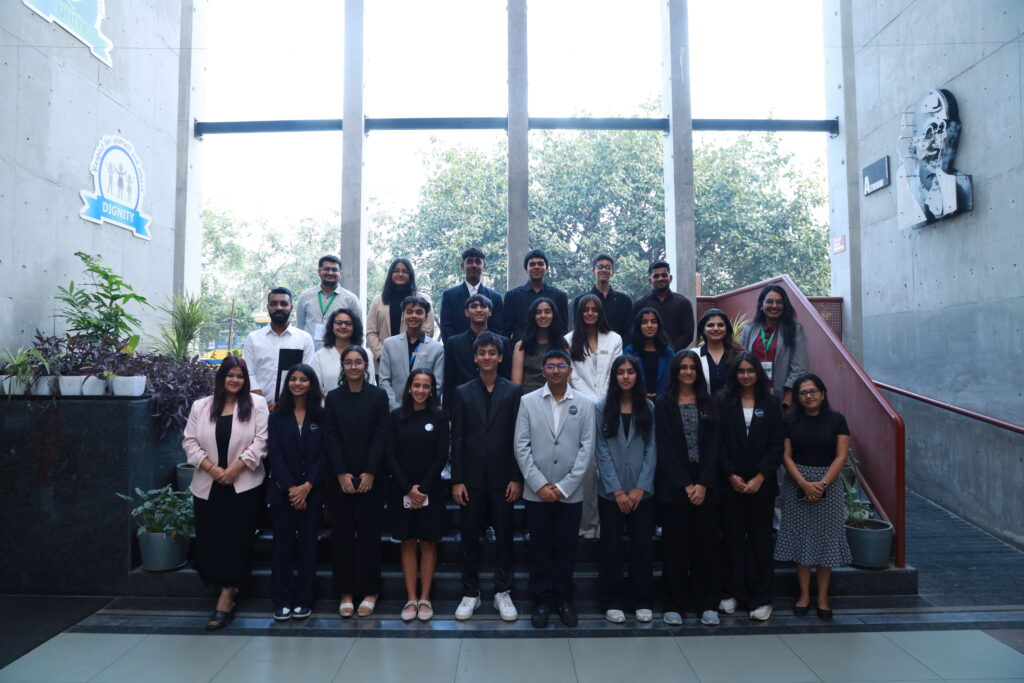
Learning Outcome 1: Identify Own Strengths and Develop Areas of Growth
Despite the conference being at the end of November, preparations began in August. The massive scale of the event, projected to accommodate over 300 delegates, required a huge team and numerous departments because being efficient was the key. While I oversaw all departments – logistics, registrations, marketing, delegate affairs, executive board panels, communications, etc. – I soon realized that managing everything all the once was nearly impossible and often led to miscommunication between the team that would ultimately delay the completion of essential tasks. Micromanaging the team was not an effective strategy which is why I shifted to a lenient approach which included stepping away from departments where my skillset was weak or restricting my involvement in the same. These included executive board panels and marketing where I had limited experience. I openly communicated the same with my team and granted lee-way for them to operate as they saw fit. Adopting such a method soon observed greater synergy between the core committee and witnessed tasks being completed early too!
Learning Outcome 2: Demonstrate the Challenges that have been Undertaken, developing new Skills
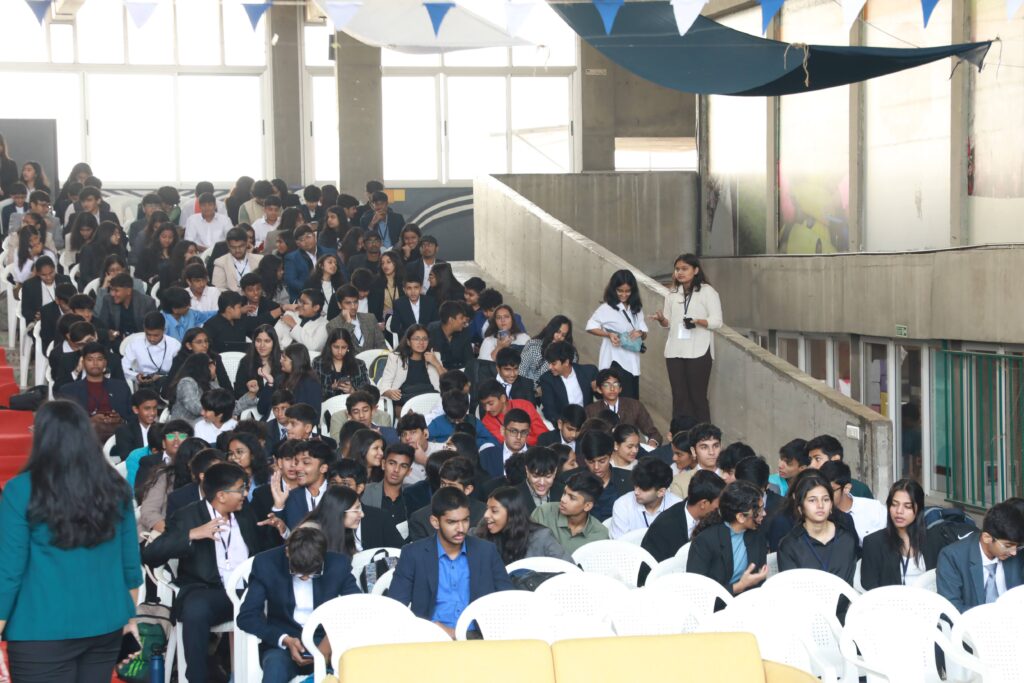
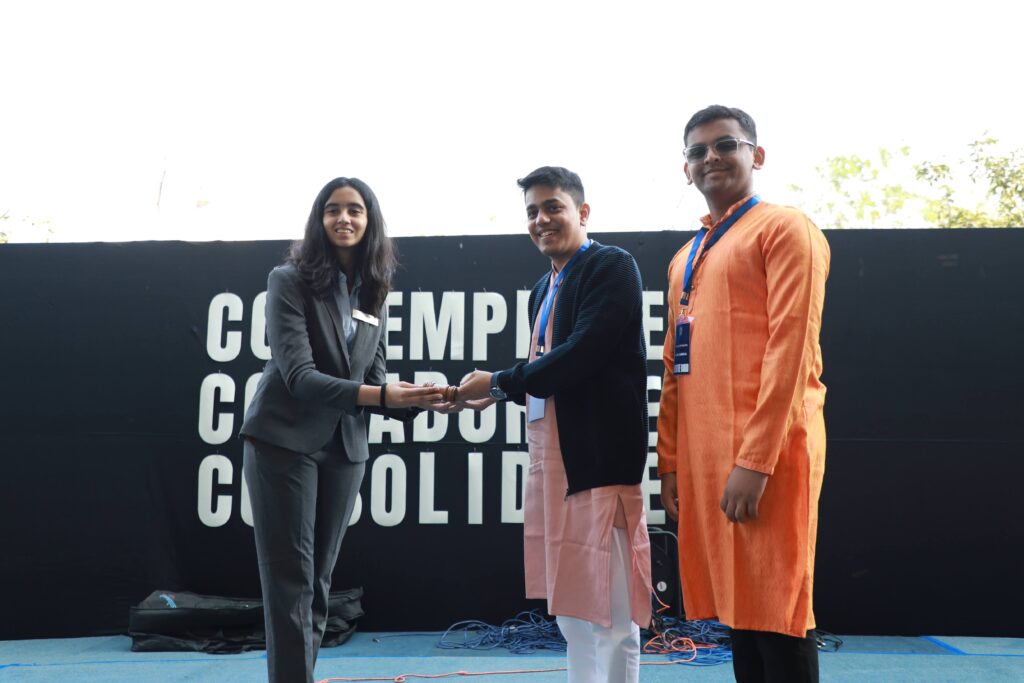
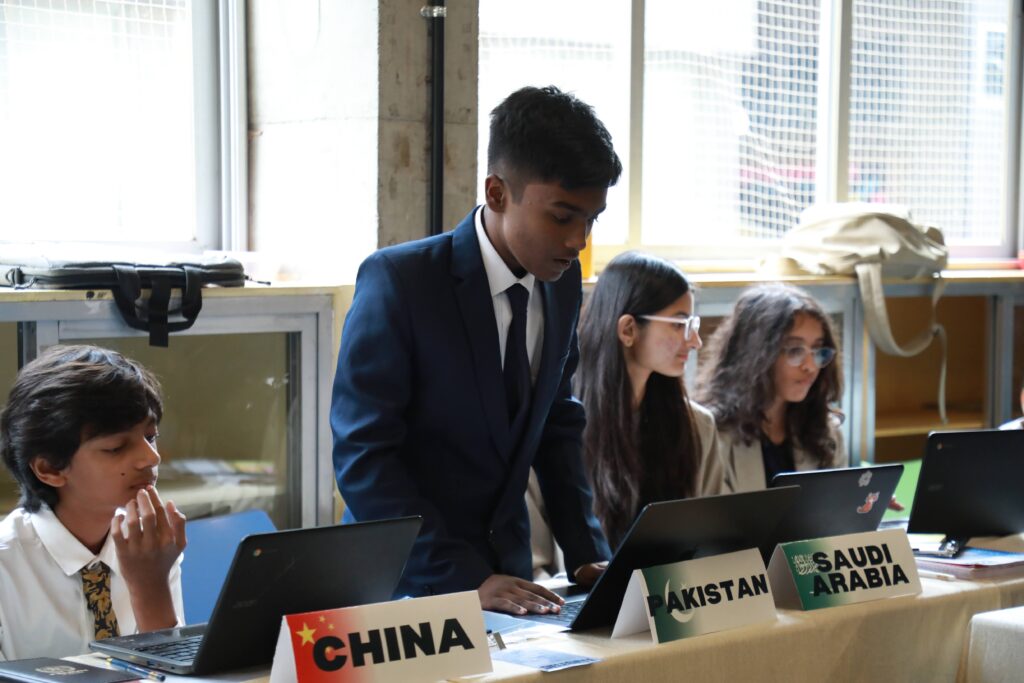
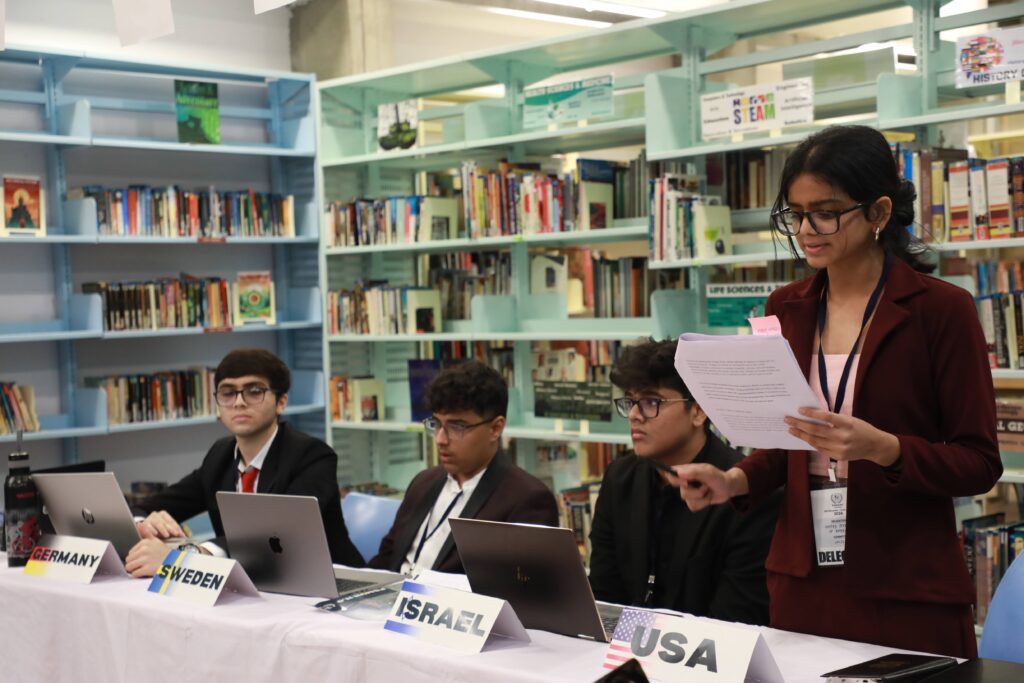
While the photos of the conference might depict it as a smooth-sailing event, the reality couldn’t have been any more different. The team and I were hit with one “crisis” after the other – could be one of the reasons you might’ve seen me running across the school. Early on, we were met with a worrying problem – low registration numbers. We had set a daunting target of surpassing 250 delegates at the 11th edition but upon releasing the forms to students, we were as surprised as disappointed to have a poor response. Delegates essentially conduct the event and without them, there is no event to plan. As a member of the Secretariat, I felt the pressure mounting on, worrying about whether we’ll be able to better or even match the previous editions. However, after much brainstorming, we came up with several marketing campaigns including creating reels to drive engagement, paying personal visits to principals of other schools for an invite, and mandating OC members to bring at least 3 new registrations on their referral. Results were slow but eventually visible. We saw our delegate count increase by ~ 10 everyday and after fretting for over 2 months, we crossed 300. Another challenge during the project was managing such a big team. I had to coordinate with multiple groups at the same time and occasionally doing so would become overwhelming. We had teams for marketing, communication, finance, sponsorships, graphics, all of which were under my purview. When dedicating time to working on FSMUN, I would also further divide that time to fit the task requirements for different departments. I realized that this method meant that I was able to finish pending tasks quicker.
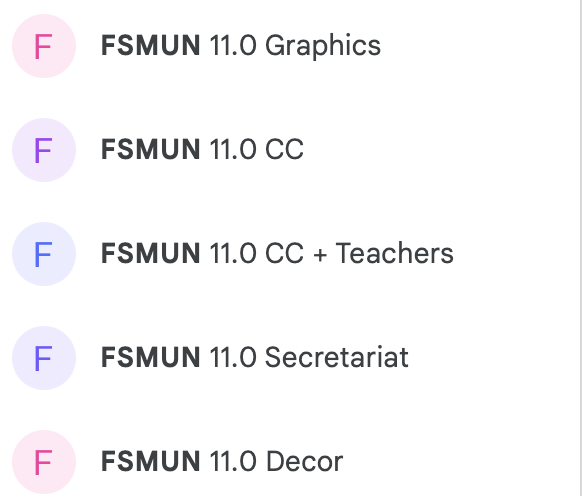
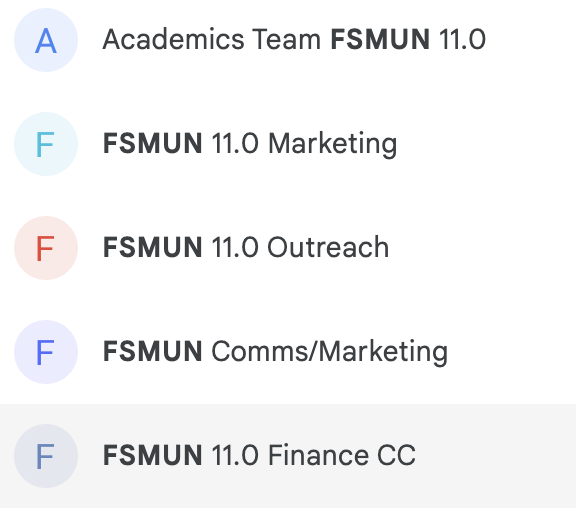
This is an image of all the FSMUN 11.0 Google Chat groups that I managed.
Having such a big team working on the conference also meant that we had a larger set of teachers overlooking the process. While the additional support was welcome, the students and teachers often were at odds on certain matters. There were occasions where neither parties complied and the only outcome was a further delay in completing tasks. I soon realized that continuous friction won’t help us make the conference a success and instead redirected the team to take a collaborative approach where open discussion were frequent and finding a balance between compromise and advocacy was the key to resolving discourse.
Learning Outcome 3: Initiate and Plan a CAS Experience
Organizing an event of this size required months of planning, organization, and task delegation. The number of groups shown in the image above demonstrate the various, and sometimes unnoticed, aspects of the conference. We utilized a spreadsheet to maintain track of all pending tasks, storing delegate data, creating the budget, and much more.
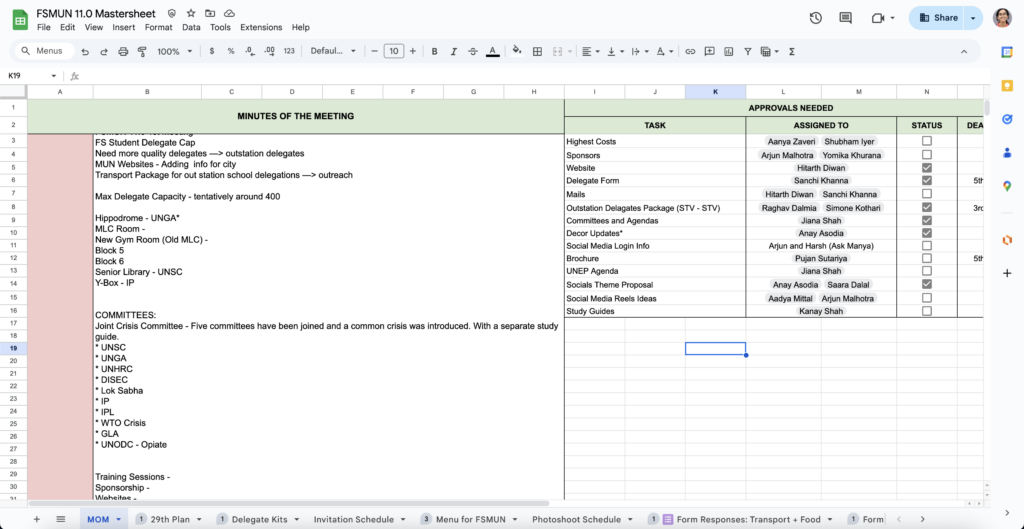
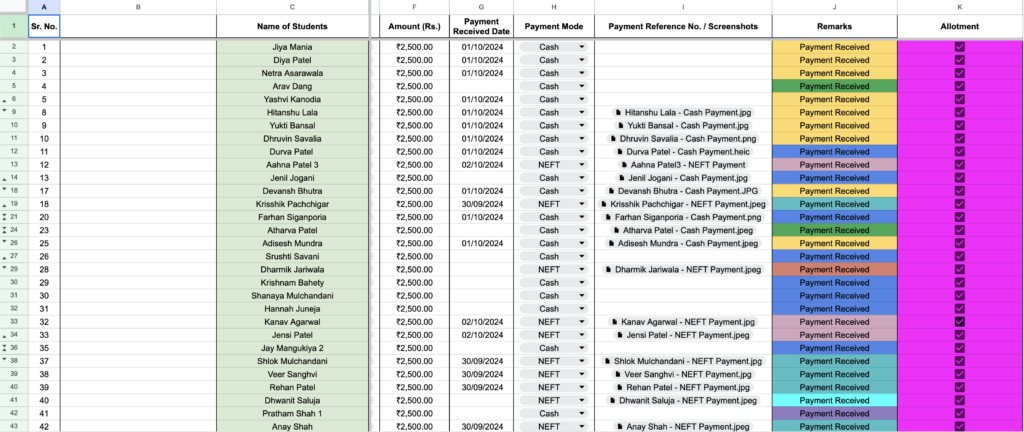
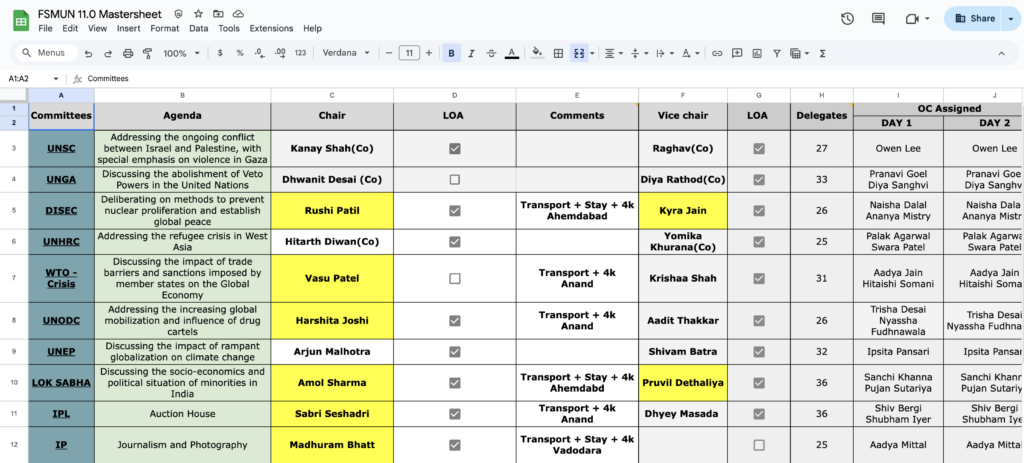
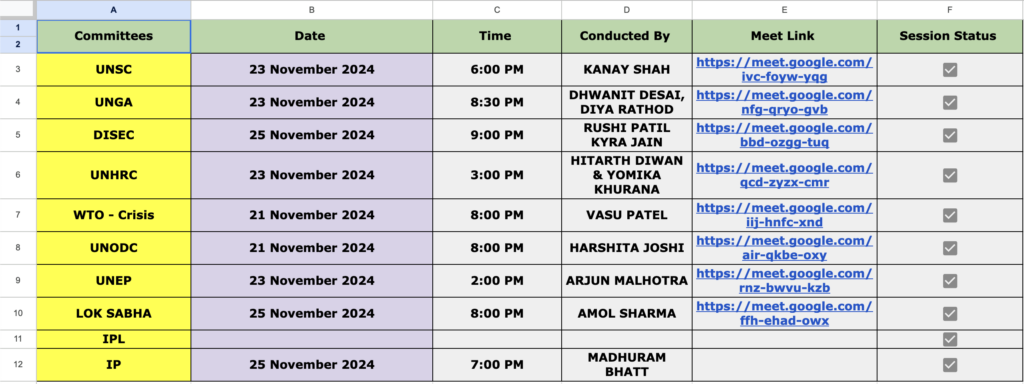
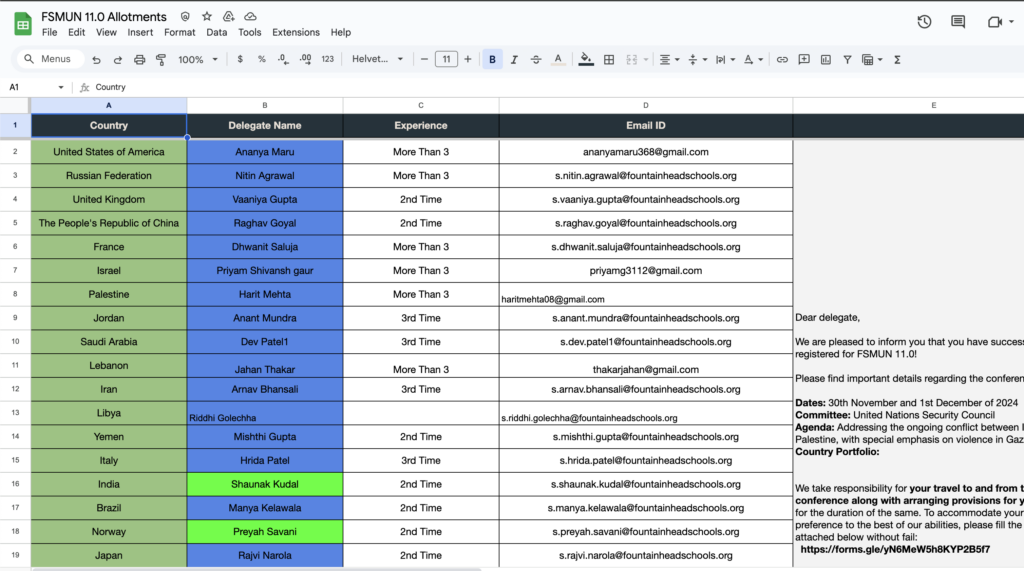
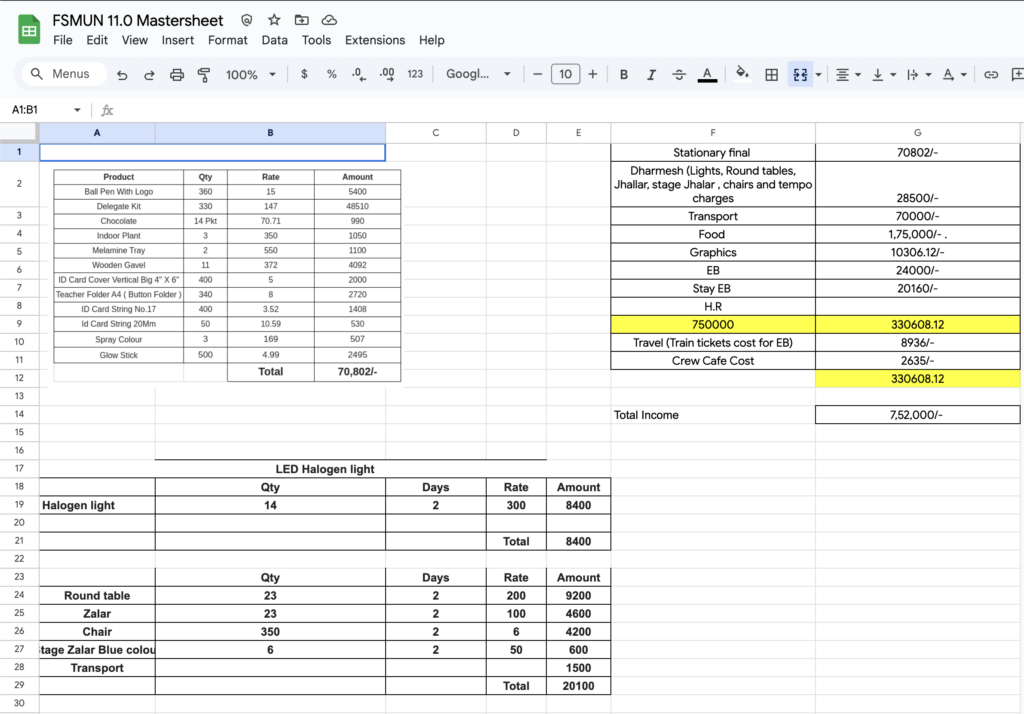
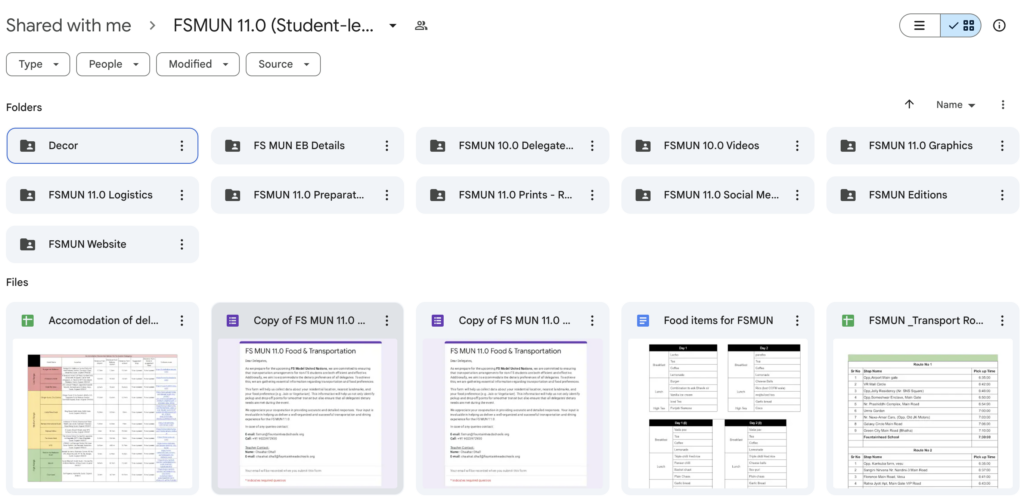
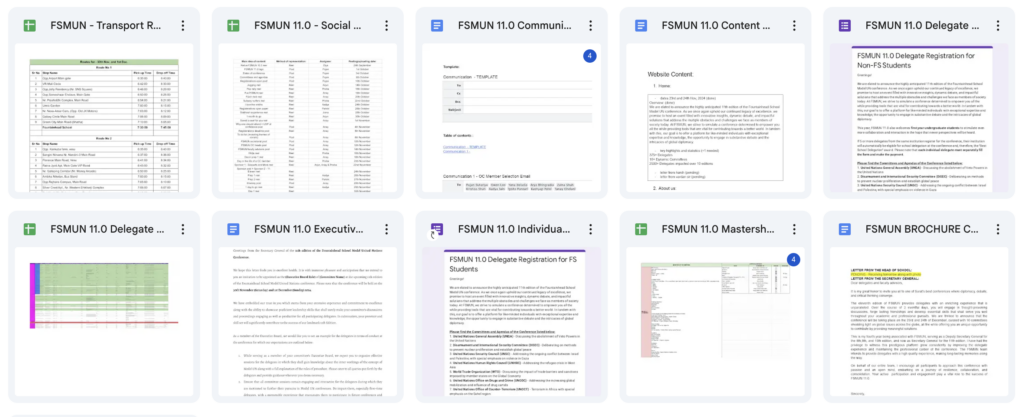
Additionally, a folder was also created to have all documents and graphic files of the conference in one place. This included a communication doc with all our promotional content, a folder with clips for the social media team to use, and certificate files that were to be given for print.
Learning Outcome 4: Show Perseverance and Commitment in the CAS Experience
I worked on this conference for ~ 4 months coming in for early-ins every day to take updates from teachers, doing countless pull-outs, and working upto 2 hours daily at home to finish pending tasks. I showcased my perseverance by finding solutions to the challenges encountered and tying loose-ends of the event well after its conclusion.
Learning Outcome 5: Demonstrate Skills and Benefits of Working Collaboratively
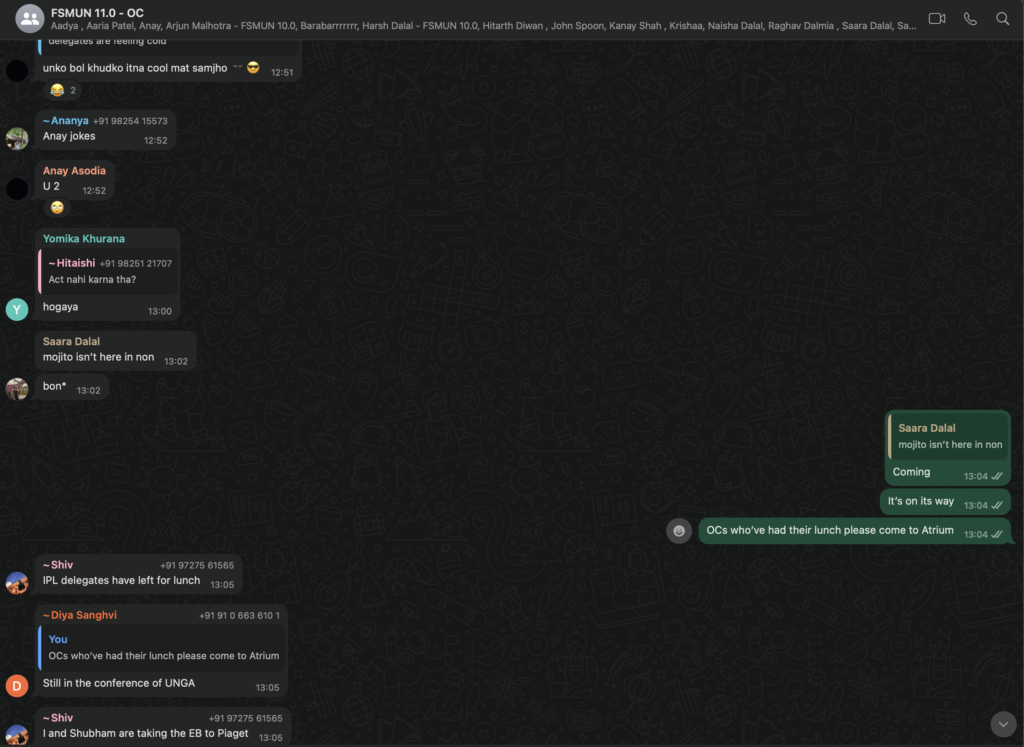
Without my team this conference simply would not have been possible. I ensured that all opinions were heard and only then was a concrete decision taken. I also gave the respective OC Heads discretion to operate as they saw fit rather than micro-managing every step. Respecting their authority and expertise meant that everyone was on the same page and we could complete our work in a quicker manner. Even during the actual conference we operated on a group-chat system for smooth communication. OC members could send their requests or concerns in the common WhatsApp group and then whoever was free could volunteer to aid them. Collaboration was the ultimate cornerstone of this project and I am glad we realized its importance early on.
EVENT GALLERY: