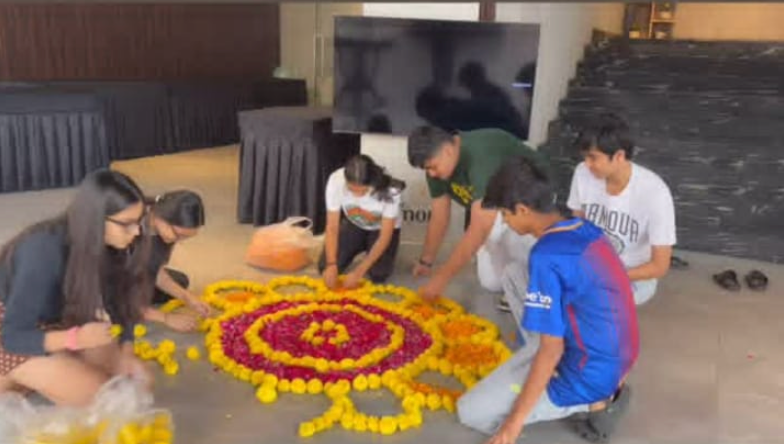
Our CAS journey this term took a vibrant and festive turn with Navrang, an event that beautifully blended creativity, collaboration, and service. The project aimed not only to celebrate culture but also to strengthen our community ties and contribute to a meaningful cause.
LO1: Identify own strengths and develop areas for growth
While organizing Navrang, I realized my strength in creativity and teamwork, particularly in planning the décor and coordinating with peers. However, I also realized that I sometimes struggle with time management, especially when multiple tasks come up simultaneously. This awareness gave me clarity on where I need to improve for future projects.
LO2: Demonstrate that challenges have been undertaken, developing new skills in the process
Navrang was a large-scale event, and it came with several unexpected challenges. For example, there were delays in setting up stalls and a sudden issue with the sound system just before the performances began. As part of the organizing team, I had to stay calm, communicate quickly with my peers, and help coordinate solutions. These moments forced me to adapt on the spot, and I developed problem-solving and resilience skills that I would not have gained in a classroom setting.
LO3: Demonstrate how to initiate and plan a CAS experience
This project was initiated and executed entirely by students, which meant that every detail—from brainstorming the idea to managing logistics—was in our hands. I contributed by helping structure responsibilities, coordinating decorations, and ensuring that timelines were followed. I learned that effective planning requires dividing tasks fairly, anticipating obstacles, and always having a backup plan. Taking initiative in this project gave me practical leadership experience and a better understanding of project management.
LO4: Show commitment to and perseverance in CAS experiences
The success of Navrang depended on consistent effort over several weeks, not just on the event day. Balancing academics with the workload was demanding, and there were times when I felt overwhelmed. However, I continued to attend planning meetings, followed through on my assigned responsibilities, and supported my peers whenever extra help was needed. This showed my perseverance and commitment, not just to the project itself, but also to the collective responsibility of ensuring that our team succeeded.
LO5: Demonstrate the skills and recognize the benefits of working collaboratively
Navrang was a collaborative project where every individual’s contribution mattered. From décor and logistics to music and crowd management, the success of the event was a result of shared responsibility. I learned how to communicate more effectively, listen to others’ ideas, and compromise when differences arose. The outcome was stronger and more meaningful because of teamwork, and it reinforced for me how collaboration creates results that are greater than the sum of individual efforts.
LO6: Demonstrate engagement with issues of global significance
Though Navrang was rooted in the Indian tradition of Navratri, it carried global relevance by celebrating cultural identity and inclusivity. In today’s interconnected world, preserving cultural practices and promoting diversity are issues of global importance. By hosting Navrang, we engaged with these issues in our own community, showing how traditions can strengthen social bonds and connect people across different backgrounds.
LO7: Recognize and consider the ethics of choices and actions
One of the most meaningful aspects of Navrang was that the proceeds from the event were donated to Enrichment. This decision highlighted the ethical responsibility we hold as students to use our efforts for a greater good. Instead of limiting the event to just entertainment, we ensured that the outcome created a positive impact on the wider community. This reflection on ethics deepened my understanding of how service can be woven into cultural celebrations.