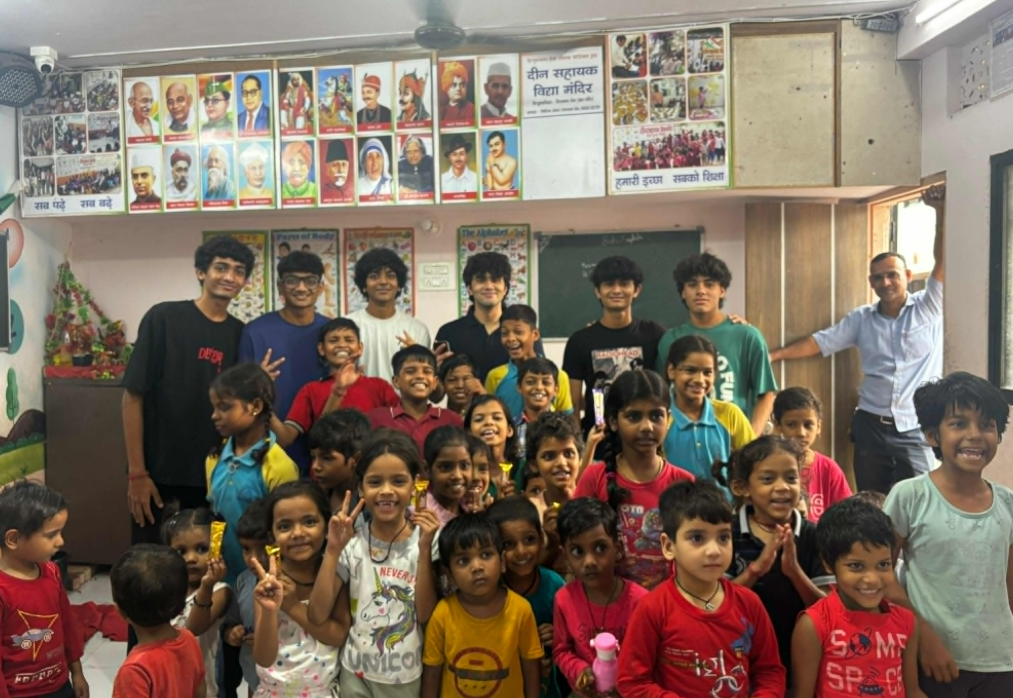
Being the co-founder of SowKind, I have always believed that kindness is not just an action — it is a responsibility. Our recent project at Balashram, an orphanage and children’s home, was one of our most impactful initiatives to date. This project was not only a way to serve the community but also an opportunity for me to grow as a leader, a learner, and a person. It was a powerful CAS experience that allowed me to reflect on every single Learning Outcome (LO) in depth.
We began with the planning phase, which took several weeks to complete. I initiated the idea, coordinated with the Balashram administration, and led my team through the process of designing the activities. This required research into what the children would enjoy, how we could combine fun with learning, and what supplies we would need to bring. From arranging transportation to preparing teaching materials and gifts, every detail had to be thought through. This project demanded creativity, collaboration, and perseverance — and I am proud to say that we successfully brought it to life.
Learning Outcomes (LOs) Reflected in This Experience
LO1 – Identify own strengths and develop areas for growth
Through this experience, I discovered how comfortable I am taking initiative and speaking to groups, both children and adults. My organizational skills were tested and strengthened as I had to plan a day that kept 40+ children engaged. However, I also identified that I need to improve my delegation — initially, I tried to handle too many tasks myself, which led to stress. Recognizing this helped me trust my team more and build my ability to share responsibilities effectively.
LO2 – Demonstrate that challenges have been undertaken, developing new skills
This project was full of challenges. For example, we had limited funds to purchase materials, so I had to budget carefully and find creative ways to maximize impact at a low cost. I also learned how to design activities that were not just entertaining but also educational — such as interactive games that taught teamwork, hygiene, and problem-solving skills. I developed new skills in logistics management and learned how to adapt when things didn’t go according to plan.
LO3 – Initiate and plan a CAS experience
This experience was completely student-led, which is something I am proud of. I created a detailed plan that included a schedule for the day, a list of roles and responsibilities for each team member, and backup activities in case of unexpected challenges. This taught me how to manage time, anticipate problems, and create a shared vision that motivated my entire team.
LO4 – Show commitment to and perseverance in CAS experiences
The visit was the result of weeks of preparation, and there were moments where it would have been easier to cancel or postpone due to logistical challenges. However, I stayed committed to the project and made sure we followed through. On the day of the event, we faced unexpected delays in transportation, but we worked together to adjust the schedule and still delivered every planned activity. This experience reminded me that perseverance pays off, especially when working on something that matters to others.
LO5 – Demonstrate the skills and recognize the benefits of working collaboratively
Our team was diverse, with each person contributing different strengths — some were great at leading games, others at organizing materials, and others at engaging one-on-one with the children. I learned that collaboration is not just about dividing work but about supporting one another, filling in gaps, and making sure everyone feels valued. The smiles on the children’s faces were the result of our teamwork, not just individual effort.
LO6 – Demonstrate engagement with issues of global significance
This project gave me a deeper understanding of the global issue of inequality in education and basic resources. Many of the children lacked access to quality schooling and essential items we often take for granted. This experience inspired me to think more critically about systemic issues and how youth-led initiatives like SowKind can make a small but meaningful difference in tackling these global challenges.
LO7 – Recognize and consider the ethics of choices and actions
We made sure that our approach respected the children’s dignity. Instead of treating them as passive recipients of charity, we engaged them in a way that made them feel seen, heard, and celebrated. We chose activities that encouraged participation and confidence rather than pity. This ethical approach was crucial to making our project truly impactful and empowering for the children.