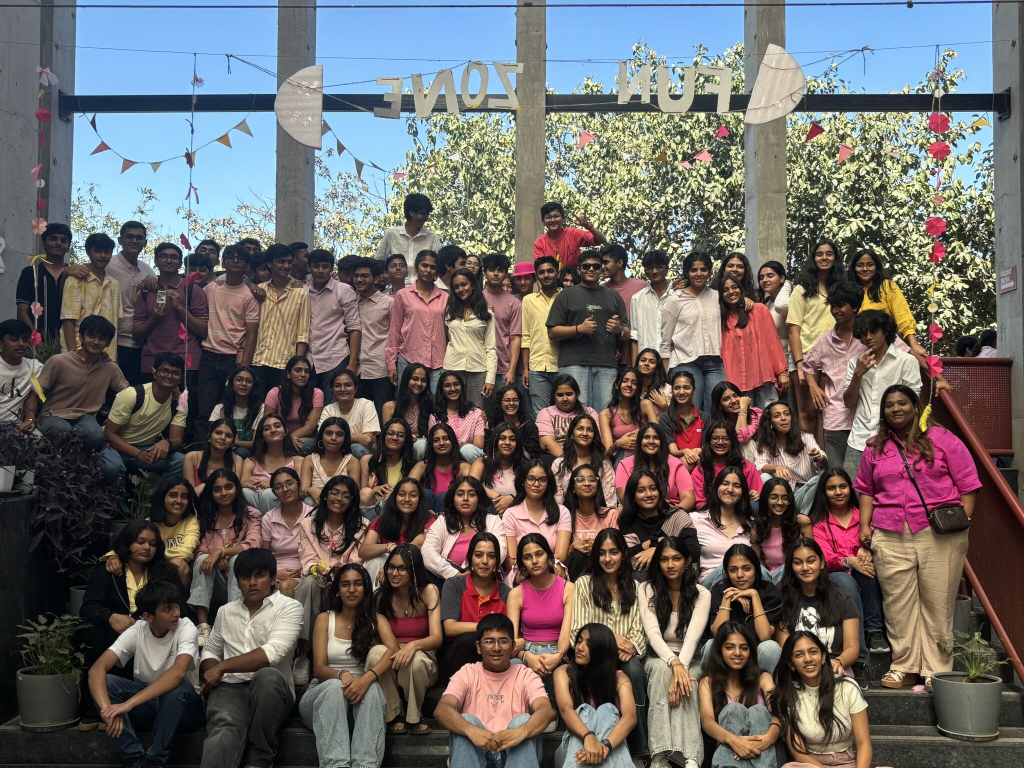
On January 31st, the Global Odyssey event provided business and economics students with hands-on experience in running a business. As a team leader for the photo booth stall, my role was to ensure that both groups under our brand were well-prepared, coordinated, and aligned with the event’s theme, “Pink Lemonade.” I managed logistics, pricing, decor, and communication with teachers, team members, and other stall leaders. This experience challenged my leadership, decision-making, and teamwork skills while teaching me valuable lessons about collaboration and adaptability.
LO1 Identify own strengths and develop areas for growth
Through this event, I recognized that my strength lies in organization and management. I effectively ensured that all necessary materials—such as cameras, film, and props—were available while maintaining communication with multiple people; both photo booth stalls, decor team leaders, teachers in charge and the school event team. However, negotiating and compromising on various decisions was a skill I had to develop, especially when it came to decor choices. With everyone having different perspectives on what would appeal to a larger audience, it was challenging to find common ground. There were many ideas I liked that others didn’t and vice versa, but eventually, we settled on a design that I grew to appreciate. This experience helped me become more open-minded in business, as I realized that I don’t always consider other perspectives as much as I should. This experience helped me develop flexibility in decision-making, showing me that embracing other viewpoints can lead to great results.
LO2 Demonstrate that challenges have been undertaken, developing new skills in the process
One of the biggest challenges was resolving disagreements among team members regarding pricing and decor. I initially wanted to charge higher prices and purchase fewer film rolls to minimize potential losses, but my friend suggested a different, better strategy which I eventually agreed to. Additionally, I faced the challenge of time management, as balancing multiple responsibilities—such as stall setup, coordination with teachers, and last-minute adjustments—required me to work under pressure.
LO3 Demonstrate how to initiate and plan a CAS experience
The planning phase required meticulous organization to ensure a smooth execution. I had to coordinate with the school regarding the space allocated for our stall, source materials that matched our theme, and collaborate with my co-leader to finalize details and make sure each booth has all resources needed and had well-made plans for decor, pricing and number of films. Indeed, the most difficult part was ensuring consistency between both photo booth stalls, from pricing to branding, to maintain a unified company identity. I also had to adjust our plans based on teacher feedback, which meant frequently adapting and problem-solving; we even had to change our decor plans around 3-5 times due to lack of availability or high costs of certain decor items. Hence, this experience improved my ability to plan strategically and handle unforeseen obstacles, which will be useful for future leadership roles.
LO4 Commitment and Perseverance in CAS
This event required a high level of commitment and persistence, especially when facing unexpected challenges. Coordinating with multiple people, managing logistics, and ensuring everything aligned with our theme required continuous problem-solving and adaptability. There were moments when I felt overwhelmed by the numerous responsibilities, especially when handling last-minute changes and finding suitable decor ideas that could cater to a wider audience (since there were many grades present). However, staying dedicated and persistent ensured that our booth was a success. We figured out a place that could sell decor for a great price — ensuring our costs weren’t too high — and a way to hang it onto the larger than expected frame which had definitely been the cause of many issues. I learned that commitment and resilience are essential when managing projects, and I now feel more confident in handling complex responsibilities in the future.
LO5 Demonstrate the skills and recognize the benefits of working collaboratively
Collaboration was key to the success of our stall. At times, I faced disagreements with my team regarding pricing strategies and decor choices. I initially preferred higher pricing and fewer film rolls to avoid potential losses, but my friend convinced me to take a different approach by keeping a moderate price and having about 150-160 films and keeping any that don’t sell for ourselves without adding it to the cost, since we each do have our own cameras and printers. I eventually saw the benefits of this compromise and understood the importance of trusting my teammates. Additionally, I had to coordinate with teachers, my co-leader, and other stall teams, ensuring that our stall matched with the theme of the event. Furthermore, during the event the other group members and I had to work together to make sure each of us had a fair amount of time away from the stall to have fun, while there being someone at all times to manage it. Overall, this experience strengthened my teamwork, communication, and leadership skills, making me more adaptable in group settings.
The Global Odyssey event taught me valuable leadership and collaboration skills. I learned that effective teamwork requires open-mindedness, compromise, and clear communication. I also realized the importance of balancing my managerial strengths with the ability to adapt to different perspectives. Moving forward, I will continue to improve my collaborative decision-making skills while refining my ability to manage and lead teams efficiently.
LO6 Demonstrate engagement with issues of global significance
Our project connected to a global issue because we donated the profits from our photo booth stall to a social cause. Around the world, fundraising events and such entrepreneurial initiatives play a vital role in supporting organizations that address social, economic, or environmental challenges. By leading my team and ensuring our stall was well-prepared and successful in terms of sales and revenue, I was able to contribute to this larger cause and in a way, regognise the need for such activities that donate to charities. Even though our contribution was small in comparison to global needs, it reinforced the idea that collective action and youth-led initiatives can make a meaningful difference. This experience helped me understand that business and economics are not only about profit-making but can also be used to create a positive social impact, which is a responsibility that should be shared globally.
LO7 Recognize and consider the ethics of choices and actions
An important ethical dimension of this project was ensuring that our fundraising was conducted with integrity. Since we were donating the profits, it was crucial that we priced fairly so that students are willing to pay for it and so that there’s enough profit to donate, managed resources responsibly, and maintained transparency with both participants and teachers. As the team leader, I also had the ethical responsibility of ensuring that all funds were accounted for and that our promise of donating profits was fulfilled. The experience emphasized that ethical leadership involves balancing fairness, accountability, and social responsibility, values that I want to carry into future projects.
Leading the Global Odyssey photo booth stall taught me that entrepreneurship can extend beyond making money to creating positive change. By combining teamwork, leadership, and fundraising for charity, I not only developed organizational and collaborative skills but also became more aware of the ethical and global responsibilities tied to business activities. This experience motivated me to approach future projects with a stronger focus on both social impact and ethical decision-making.
Observation recieved for being the team leader: