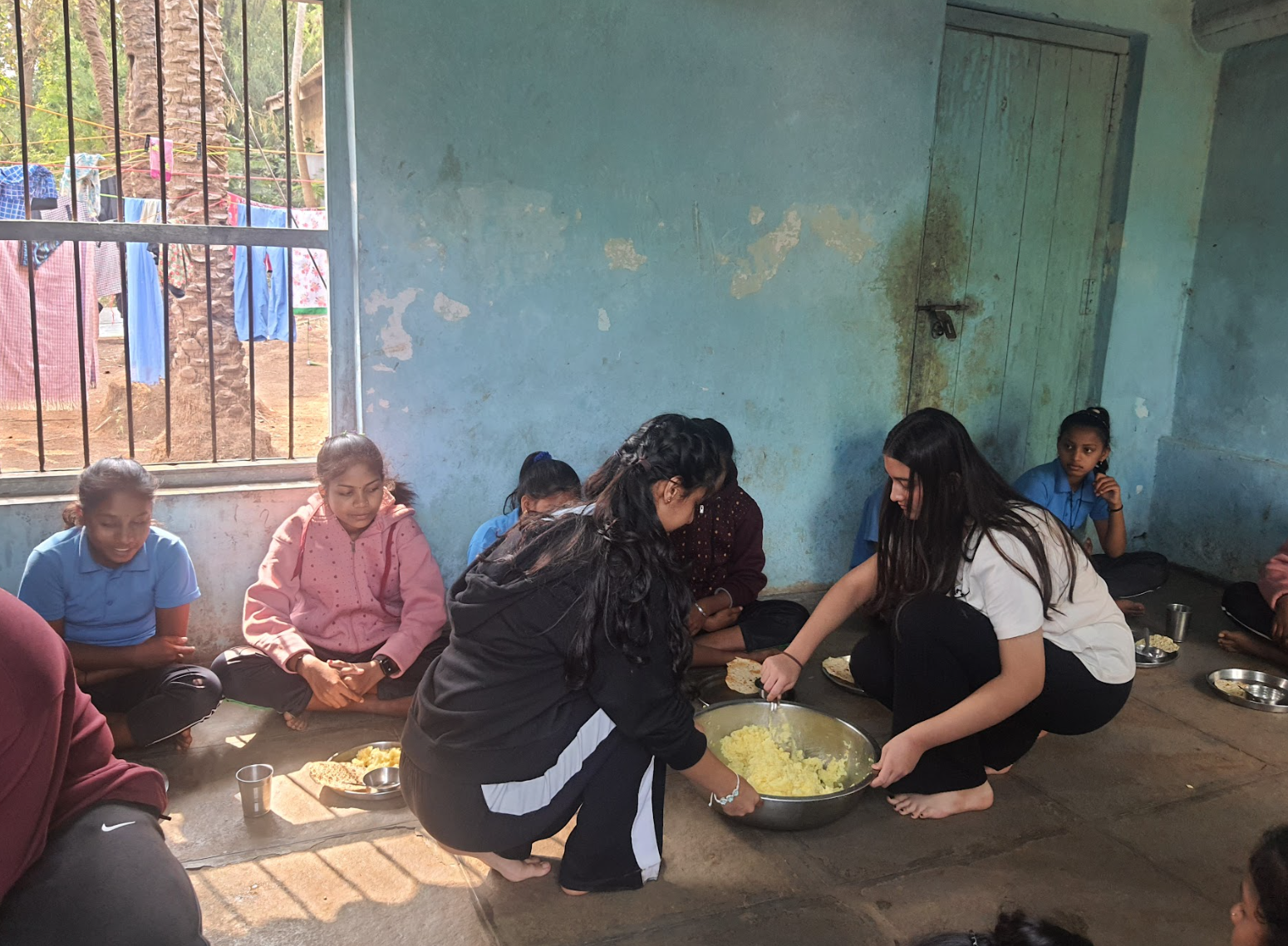
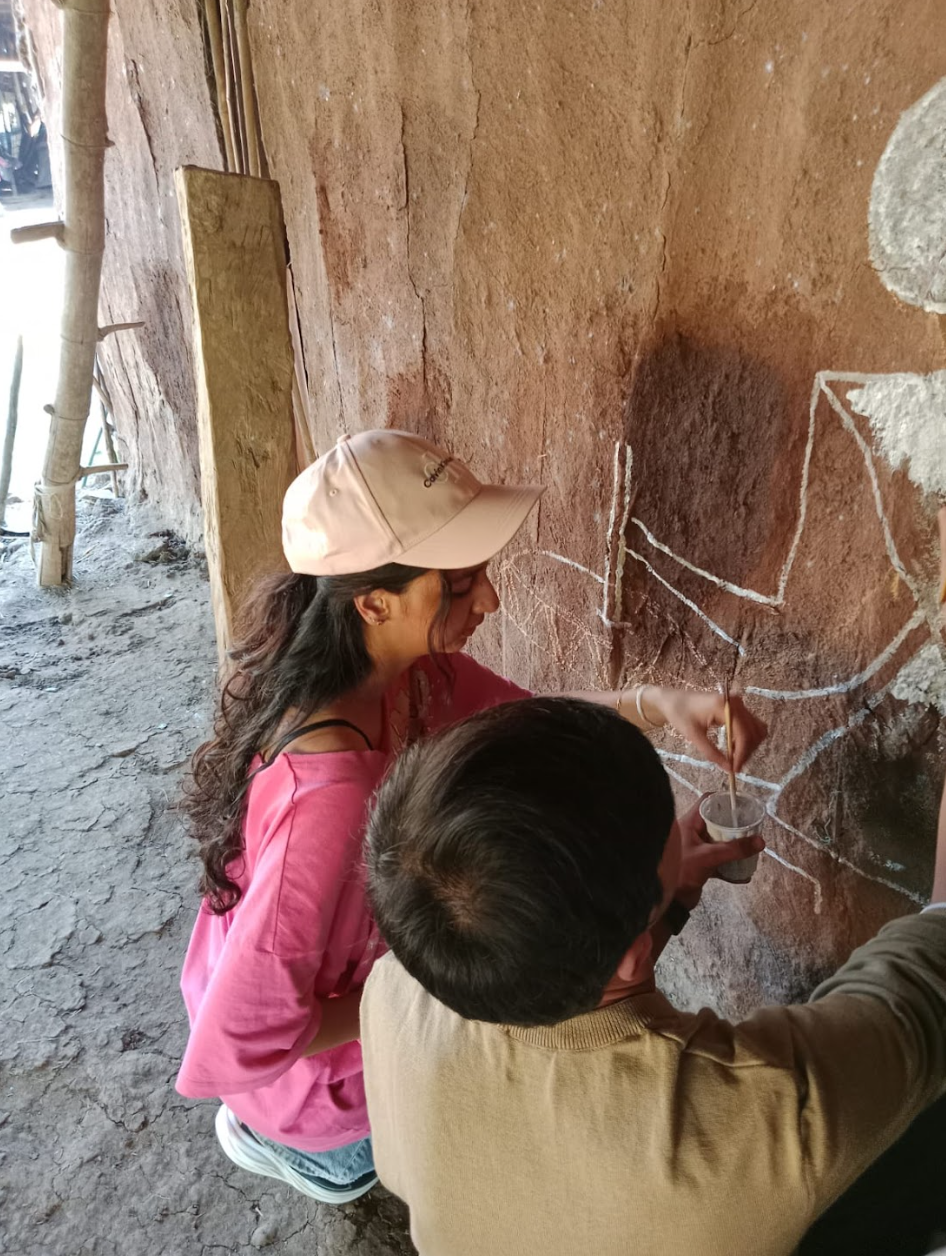
For our CAS trip, we visited Ambapani near the Dang and Purna rivers for six days. Each day came with new activities that pushed me out of my comfort zone and explored all three strands of CAS — creativity, activity, and service. We trekked through forests and hills, tried traditional art forms like Warli painting, Lippan art and bamboo basket weaving, and even joined service activities such as picking up trash and plastic to support conservation, serve food to underprivelaged children and play games with them. We also got the chance to meet villagers including the sarpanch, interact with them, and learn about their daily lives, which gave me a deeper understanding of rural lifestyles.
LO1: Identify own strengths and develop areas for growth
During this trip, I realized that my strength lies in creativity and service. Activities like Lippan art and Warli painting came naturally to me because I used to do visual arts, and because of my non-profit, I was able to interact with the kids and know which games they might like. At the same time, I noticed my weakness in physical endurance, especially during the long hikes and treks. I struggled with stamina, which made some parts more tiring than enjoyable. Recognizing this has shown me that building endurance is something I need to work on, as it will help me in future physically demanding activities and my health.
LO2: Demonstrate that challenges have been undertaken, developing new skills in the process
The trip was full of challenges, both physical and creative. Trekking for extremely long periods of time tested my stamina, while learning new skills like basket weaving and Lippan art tested my patience. I had never done weaving before, but with practice and guidance, I managed to improve. These challenges helped me become more adaptable and reminded me that learning requires persistence. I also developed confidence by trying things outside my comfort zone like lippan art which I found quite gross at first but eventually got used to. I think this would help me in the future.
LO4: Show commitment to and perseverance in CAS experiences
The trek and other activities demanded commitment, especially when things got uncomfortable. Hiking for long hours, keeping up with so many energetic kids, and working on detailed artwork all required focus and perseverance. Even when I felt tired, I pushed myself to keep going because I wanted to experience everything fully and make the most of the trip. Additionally, I usually have a hard time waking up super early and we had to get up at 6 am everyday and excerise almost every morning which I found difficult. However, I still always got there on time and participated in every activity.
LO5: Demonstrate the skills and recognize the benefits of working collaboratively
Collaboration was an important part of this trip. Trekking safely meant helping each other along tricky paths, while group art activities required teamwork and patience. We also worked together during the trash-picking activity, which felt more impactful because it was a shared effort. Working with others also helped me learn more about the cultural art forms, since we exchanged ideas and encouraged one another. I realized that teamwork makes difficult tasks easier and more enjoyable and that I should always be open to other’s opinions to ensure group activities run smoothly.
LO6: Demonstrate engagement with issues of global significance
This trip highlighted important issues such as environmental conservation and cultural preservation. Picking up trash made me more aware of how pollution affects even natural and rural spaces, while learning Warli and Lippan art showed me how traditional crafts need to be supported to survive. These issues matter globally, not just locally, since sustainability and cultural heritage are both under threat in many parts of the world. Being directly involved gave me a stronger sense of responsibility to act more sustainably and value traditional knowledge.
LO7: Recognize and consider the ethics of choices and actions
Ethical responsibility played a big role in this experience. We had to be respectful while interacting with villagers, making sure we appreciated their traditions rather than misrepresenting them. Similarly, in service activities like trash-picking, I realized how important it is to leave natural places cleaner than we found them. These actions made me reflect on responsible tourism and how our choices as visitors can impact communities and the environment.
The CAS trip to Ambapani was an eye-opening experience that combined adventure, creativity, and service. Trekking tested my endurance, art activities nurtured my creativity, and service tasks deepened my awareness of environmental and cultural issues. Meeting villagers gave me perspective on different ways of living, and working as a team made the whole trip more meaningful. Overall, the trip helped me grow in resilience, adaptability, and responsibility, leaving me with memories and lessons I will carry forward.
Meeting with the sarpanch:


Trash picking:

Lippan art:

Early morning activities:


Bamboo basket weaving:

Morning yoga: