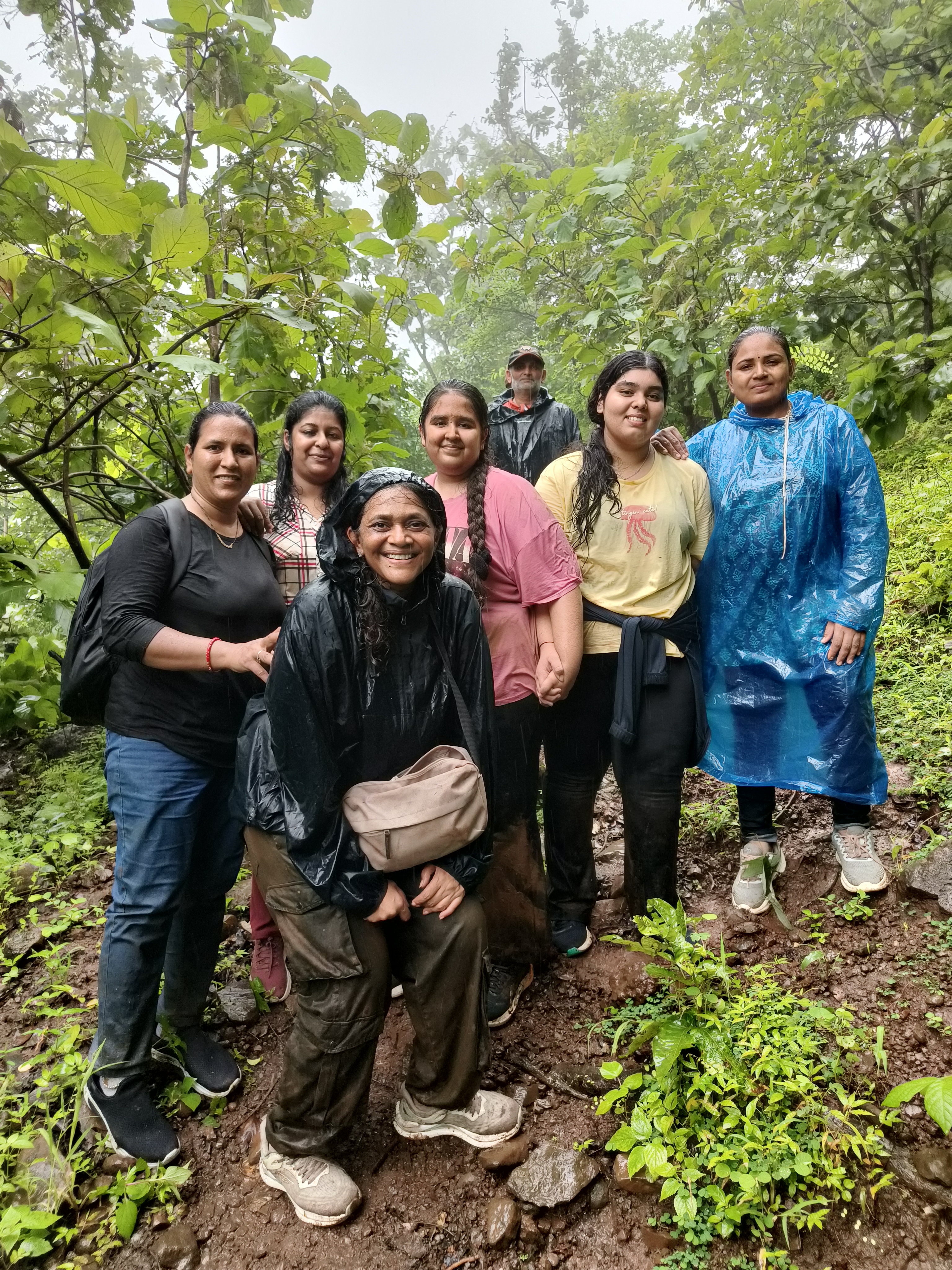
In the lands of mist and rain, I had the opportunity to go on a one day trek. I started my journey early in the morning, a 6-7 hour journey of just travelling in the seat of the bus, where every single one of us fell asleep with the support of our bags as pillow. After an exhausting journey, we reached Dang, where we started our trek to the scenice Bhavar Kada Waterfalls. This journey covers the following learning objectives:
LO1 – Identify own strengths and develop areas for growth
This trek turned out to be far more challenging than I expected. I already have travel sickness, and combined with the heavy rains and muddy terrain, I slipped and fell several times. At one point, I even twisted my ankle, which made walking painful and uncomfortable for the rest of the trek, and I remained unwell for the following days.
However, through these difficulties, I recognized one of my strengths — resilience. Even though I was struggling physically, I pushed myself to keep going and did not give up. I also tried to maintain a positive attitude despite the discomfort. At the same time, I realized important areas for growth: I need to improve my physical fitness and balance, and also learn how to prepare better for such treks (carrying proper footwear, stretching, and strengthening exercises beforehand).
This experience showed me that setbacks are part of growth, and that being aware of both my strengths and weaknesses helps me become more prepared for future challenges.
LO2 – Demonstrate that challenges have been undertaken, developing new skills
The one-day trek was a significant challenge for me, both mentally and physically. The rain made the path muddy and slippery, which caused me to fall several times. I wanted to give up the trek, yet with the help of teachers and the dedicated guides, I was able to reach near the waterfall. Due to severely paining ankle, i had to step aside from the trek. This shows that I am capable of pushing myself beyond my comfort zone. A key skill I developed was learning how to manage discomfort and continue moving forward even when the situation was not ideal.
This experience taught me that challenges are not only about reaching the destination but also about developing the ability to adapt, stay calm, and keep going despite setbacks. These skills will help me in future physical activities as well as in everyday situations that require perseverance.
LO4 – Show perseverance and commitment in CAS experience
What stood out most to me during this trek was my ability to remain determined even when things didn’t go my way. Once I decided to participate, I committed myself to completing it, no matter the discomfort. Even when I was exhausted, I kept reminding myself of the goal and motivated myself to take the next step forward.
This experience helped me realize that perseverance is not just physical endurance, but also a mental commitment to see something through despite difficulties. I could have chosen to stop midway, but I wanted to finish what I started. By doing so, I proved to myself that I am capable of maintaining consistency and dedication even in unfamiliar or uncomfortable situations.
The trek reminded me that perseverance is a skill I can transfer to academics and other commitments—staying focused, not giving up easily, and keeping long-term goals in mind.
LO5 – Demonstrate skills and benefits of working collaboratively
The trek also showed me the value of collaboration. Walking together with my peers created a sense of support and encouragement that made the journey easier. We often looked out for one another, whether it was by sharing water, setting a steady pace, or offering a hand while climbing tricky sections. The constant cheering and hooting which made me and my friend going on, even while crying and chanting prayers. This teamwork helped me realize that working together builds confidence and makes challenges more manageable.
I also understood the importance of communication and patience when moving as a group. Everyone had a different pace and level of comfort, but by adjusting to each other we were able to stay together and ensure no one was left behind. This experience taught me that collaboration is not just about achieving a common goal but also about creating a supportive environment where everyone feels motivated.
The benefits of working collaboratively extended beyond just completing the trek—it strengthened bonds, improved group morale, and reminded me that challenges become easier when shared.
LO7 – Recognise and consider the ethics of choices and actions
One of the key lessons I took from this trek was the importance of being mindful about the consequences of my actions. When I injured my ankle, I had to make an ethical decisions about how to continue—whether to push myself at the risk of worsening the injury or to move more fastly so that I do not burden the group. I chose to slow my pace and be more careful, which taught me that acting responsibly is sometimes more important than proving endurance.
The trek also highlighted the ethical responsibility we carry toward our surroundings and peers. I made a conscious effort to avoid littering, respect the environment, and support teammates whenever I could. Even small actions like waiting for others, offering encouragement, or sharing resources helped maintain group safety and morale.
Overall, this experience reminded me that ethical decision-making is not always about big actions but about consistent awareness of how our choices—whether for safety, teamwork, or the environment—impact ourselves and those around us.
Overall, the one-day trek was far more than just a physical activity—it became an experience of self-discovery, resilience, and teamwork. Despite the difficulties I faced, I was able to reflect on my strengths and weaknesses, push through challenges, and stay committed until the end. I also experienced the benefits of collaboration, responsibility, and ethical decision-making in a group setting. This trek not only tested my endurance but also gave me valuable lessons in perseverance, adaptability, and mindful choices. This is my second last chapter in my journey of learning, growing and becoming a responsible individual through CAS.
Thank You