Introduction
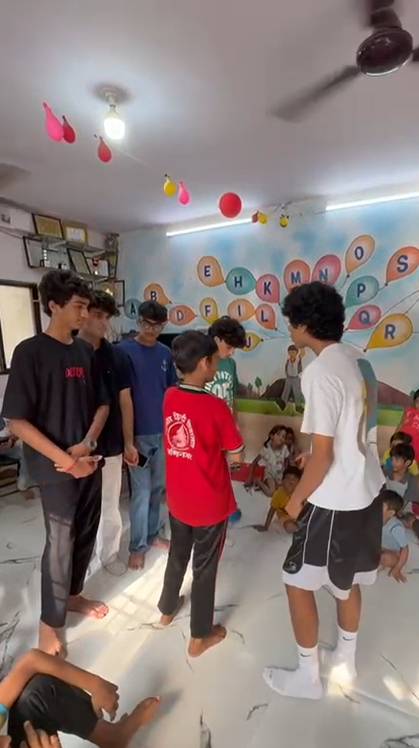
For my CAS Project, I am part of a student-led club called Sowkind, which functions like a small NGO dedicated to spreading kindness and education. Together with my friends, I work to support underprivileged children by visiting schools and ashrams every Saturday to teach, interact, and inspire them. So far, we have completed over four visits, with many more planned. I am a member of the core team and serve as the Marketing Head, where I design posters for our Instagram campaigns, create reels of our visits, and handle photography to showcase our work and spread awareness. This role has allowed me to combine my creativity with service, while also ensuring that our initiative reaches a wider audience and creates a stronger impact.
LO 1: Identify your own strengths and develop areas for personal growth
As Marketing Head, I realized that creativity, design, and communication are my biggest strengths. Making posters, reels, and content gave me the chance to use these skills effectively. At the same time, I recognized that I need to grow in time management and balancing creative tasks with on-ground service. This project helped me reflect on my potential as a communicator while motivating me to improve organizational skills.
LO 2: Demonstrate that challenges have been undertaken, developing new skills in the process
Working on SowKind presented several challenges—such as engaging children in meaningful activities, coordinating schedules for visits, and consistently creating impactful online content. I also faced the challenge of learning how to create reels that were both appealing and informative. By experimenting with editing tools and observing audience feedback, I developed new skills in digital marketing, video editing, and photography, which enhanced my overall contribution to the project.
LO 3: Demonstrate how to initiate and plan a CAS experience
Being part of the core team meant I was involved in planning our visits, deciding what activities we would do with the children, and scheduling campaigns for our social media presence. I also planned photo and video content in advance, ensuring that our posts aligned with the values of SowKind. Taking initiative in these areas allowed me to make the project more structured and impactful.
LO 4: Show commitment to and perseverance in CAS experiences
Our visits to ashrams and schools take place every Saturday, and committing to this weekly responsibility showed my perseverance. Even when academic work piled up or personal schedules got busy, I made sure to dedicate time to both the visits and my role as Marketing Head. The consistency of showing up every week, creating content, and contributing to the cause demonstrated my long-term commitment to this project.
LO 5: Demonstrate the skills and recognize the benefits of working collaboratively
SowKind is a team-driven initiative, and collaboration is at its core. Working alongside friends meant that we had to share responsibilities, support each other’s ideas, and divide tasks fairly. For example, while others focused on teaching or planning activities for the children, I handled content creation and promotion. Our teamwork helped us create a stronger impact collectively than any of us could have individually, showing me the true value of collaboration.
LO 6: Demonstrate engagement with issues of global significance
Our project directly addresses the global issue of unequal access to education. By teaching underprivileged children and supporting their learning journey, even in small ways, we are contributing to Sustainable Development Goal (SDG) 4: Quality Education. Additionally, through social media, we spread awareness about social responsibility and kindness, encouraging others to take part in addressing similar global challenges.
LO 7: Recognize and consider the ethics of choices and actions
As part of this project, I became aware of the ethical responsibility that comes with working with children and representing them online. I ensured that any photographs or reels we posted respected the dignity and privacy of the children, and that the messaging of our campaigns was sincere rather than performative. This helped me reflect on how important ethics are in service work, especially when dealing with vulnerable communities.