LO 1 – Identify own strengths and develop areas for growth
On this journey, I acknowledged my strengths and the aspects where I required enhancement. A key strength of mine was my capacity to adjust to new surroundings and collaborate effectively with my colleagues. This ability enabled me to enhance my social skills by interacting with my peers and the residents of Ambapani during all the activities and also during downtime. I also understood that stepping outside my comfort zone is necessary since mud lippin was among the most difficult but enjoyable experiences. I had never done this activity before; it was tough since the cow dung smelled terrible, making it difficult to endure that atmosphere. Despite the difficulty, it was enjoyable to collaborate with my classmates and accomplish this demanding task together. It allowed me to connect more with my peers and the people of Ambapani.
LO 2 – Demonstrate that challenges have been undertaken, developing new skills in the process
I faced numerous difficulties, both physically and emotionally. Particularly for the mud lippin activity, I needed to enhance my mindset and finish the task despite the foul smell of cow dung and the difficulty of enduring that setting. Another difficulty was adapting to a rural lifestyle that had never been encountered, where resources were scarce and everyday activities were unfamiliar and challenging. Moreover, activities like trekking assessed my physical stamina and resilience. These experiences helped me acquire new skills, such as patience and collaboration, which I think will benefit me going forward.
LO 4 – Show commitment to and perseverance in CAS experiences
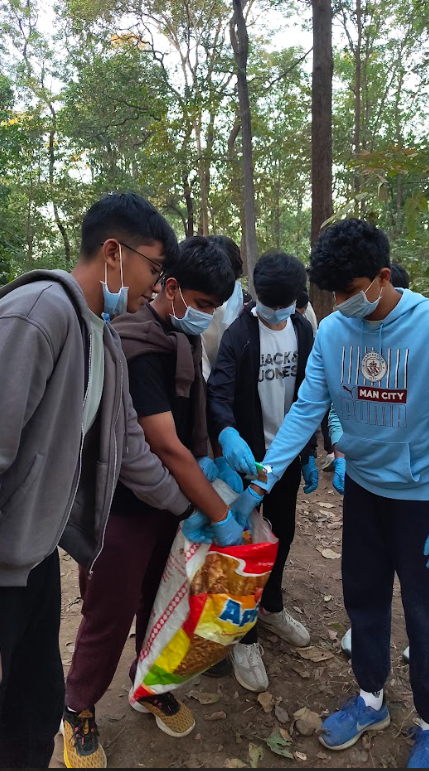
This rural immersion experience demanded significant commitment and ongoing effort, especially in tasks such as picking up litter and engaging in adventure activities. Initially, these tasks appeared quite challenging to accomplish, but with the help of every team member, we successfully finished all the activities and greatly enjoyed each other’s company. Throughout these activities, we enhanced our social skills by engaging with one another more while enjoying ourselves in completing the tasks. Cleaning up litter in the heat taught me the significance of resilience and how small, steady efforts can lead to meaningful changes
LO 5 – Demonstrate the skills and recognize the benefits of working collaboratively
Many of the trip’s activities demanded cooperation and teamwork; for me, collaborating with others is usually straightforward since we can allocate tasks based on each person’s strengths and weaknesses to achieve better outcomes. Through finishing all the activities and tasks, I recognized the value and meaning of teamwork and collaboration in community service in daily life.
LO 6 – Demonstrate engagement with issues of global significance
This journey enabled me to participate in worldwide concerns like environmental sustainability. I participated in sustainable development when we carried out an activity to clean the streets of Ambapani and remove the litter. Cleaning up the litter and garbage highlighted the significance of effective waste management and the impact of littering on the environment and surrounding communities. Mud lippin activity familiarized me with an environmentally friendly building method that utilizes sustainable resources, demonstrating how conventional techniques can aid in creating a more sustainable planet. These tasks enhance my comprehension of sustainability and the effects of pollution worldwide
LO 7 – Recognize and consider the ethics of choices and actions
During community service activities like supplying food to children or applying mud lippin to the walls, I ensured that I honored the local customs and collaborated with the villagers rather than relying on our own comfort and methods. Assisting the villagers with their tasks made me contemplate my own life, my habits, and the significance of minimizing waste. From this experience, I acquired a different viewpoint on ethical obligations and eco-friendly living
In conclusion, the rural immersion journey to Ambapani provided a valuable learning opportunity, allowing me to experience the villagers’ way of life and understand the potential challenges that come with such a lifestyle. This journey also allowed me to develop various skills, including communication skills that enabled me to connect with and comprehend the villagers’ way of life, social skills as I interacted with a diverse group of individuals, including teachers and teammates, and more. This experience helped me recognize my strengths and weaknesses, which will benefit me in the future; thus, it was a valuable experience.