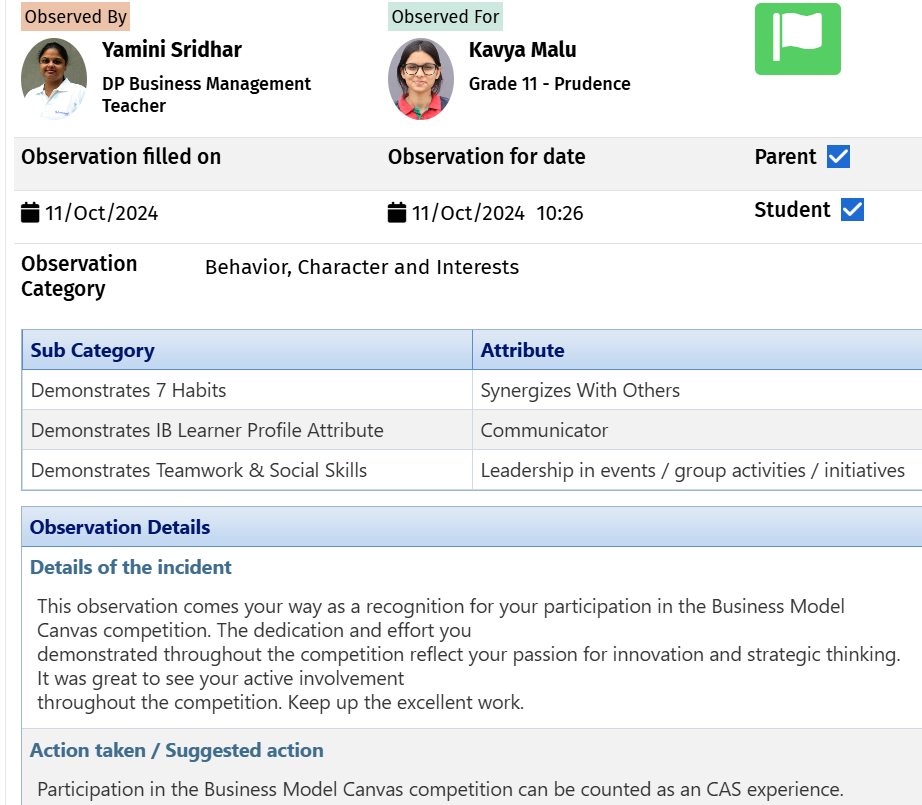
The Business Canvas Model Competition was an intense and exhilarating Shark Tank-style challenge held in my Business Management class. In teams, we had to develop a business idea, structure it using the Business Model Canvas framework, and then pitch our concept to a panel of judges acting as potential investors. The competition required strategic thinking, creativity, and strong presentation skills, as we had to justify every aspect of our business model—from value proposition to cost structure and revenue streams. It was a high-pressure yet rewarding experience that simulated the real-world dynamics of entrepreneurship.
LO3: Initiating and Planning a CAS Experience
Participating in this competition required careful planning and structured execution. From the start, my team and I had to brainstorm innovative business ideas, assess market demand, and outline a clear business strategy. Once we settled on an idea, we had to conduct market research, define our target audience, and structure our Business Model Canvas accordingly.
Planning was one of the most challenging aspects, as we had to divide tasks efficiently while ensuring every component of our model aligned. Time management was crucial, especially when balancing this project alongside other schoolwork. We had to set milestones, allocate research responsibilities, and schedule practice sessions for our pitch. The experience helped me develop organizational skills, as I had to ensure that each section of our business model was well-researched and that our final presentation was both professional and convincing.
LO5: Demonstrating Skills and Benefits of Working Collaboratively
Collaboration was the foundation of our success in this competition. Since we had a limited timeframe, efficient teamwork was essential. Each member brought different strengths—some were skilled in market analysis, others in financial planning, and some had strong public speaking abilities. By leveraging our individual skills, we were able to create a well-rounded and comprehensive business pitch.
One of the key benefits of teamwork was the ability to challenge and refine ideas. During brainstorming, not every suggestion made it into the final model, but through constructive discussions, we filtered out weaker concepts and developed a more viable business plan. Additionally, when preparing our pitch, we practiced as a group, gave each other feedback, and adjusted our presentation style based on our strengths.
This competition reinforced the importance of communication, adaptability, and trust in a team setting. Working collaboratively not only improved the final outcome but also made the entire experience more engaging and rewarding.
Final takeaways
The Business Canvas Model Competition was an exciting and challenging CAS experience that pushed me to think strategically, plan effectively, and work collaboratively under pressure. I developed key entrepreneurial skills such as market research, financial planning, and persuasive pitching, while also improving my organization and leadership abilities. This competition aligned with the UNSDG Goal of Industry, Innovation, and Infrastructure, as it encouraged business innovation and structured economic planning. I also embodied the Thinker learner profile by analyzing market trends and refining our business model, while embracing the Risk-Taker attribute by pitching under pressure and defending our ideas. Whether or not I pursue business in the future, the critical thinking, teamwork, and structured planning skills I gained will be invaluable in any professional setting.