Table Tennis was introduced to me as an Personal Sport in my school, I thought this was the best time to challenge myself. I always enjoyed how fast-paced Table Tennis is, but I did not want to take it casually anymore—refining my techniques, developing my reflexes, and having better strategic concepts. My goal was not to play but to play well—to be consistent, read my opponent’s moves more accurately, and make accurate shots when the game was tight.
Table Tennis became more than a physical activity for me, but a mental training as well, demanding concentration, patience, and adaptability. Every rally tested my endurance, every point required quick thinking, and every match tested me to stay calm despite the pressure.
Learning Outcomes
LO1 – Identify own strengths and develop areas for growth Screen reader support enabled:
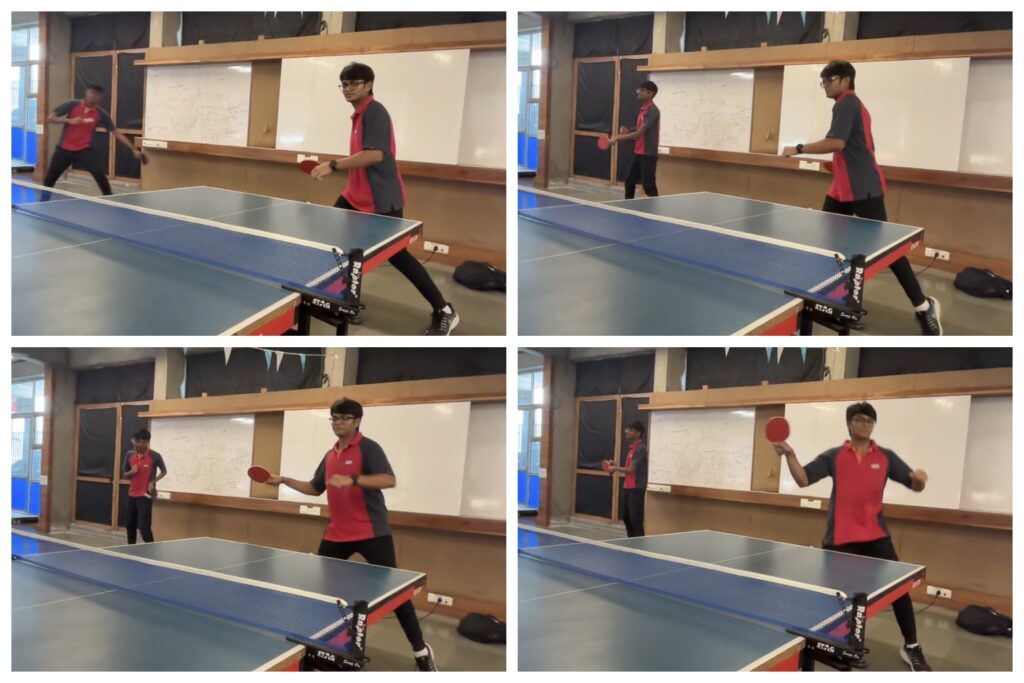
I soon discovered that my reflexes was my strongest points, and I could successfully counter rapid shots. My weakest point was speed—specifically, dealing with corner shots or maintaining accuracy over long rallies. To work on this, I focused on building a wider grip, mixing up my stance, and learning to deflect sneaky shots. Through constant practice and positive criticism, I refined my technique further and enhanced my overall control of the game.
LO2 – Demonstrate that challenges have been undertaken, developing new skills:
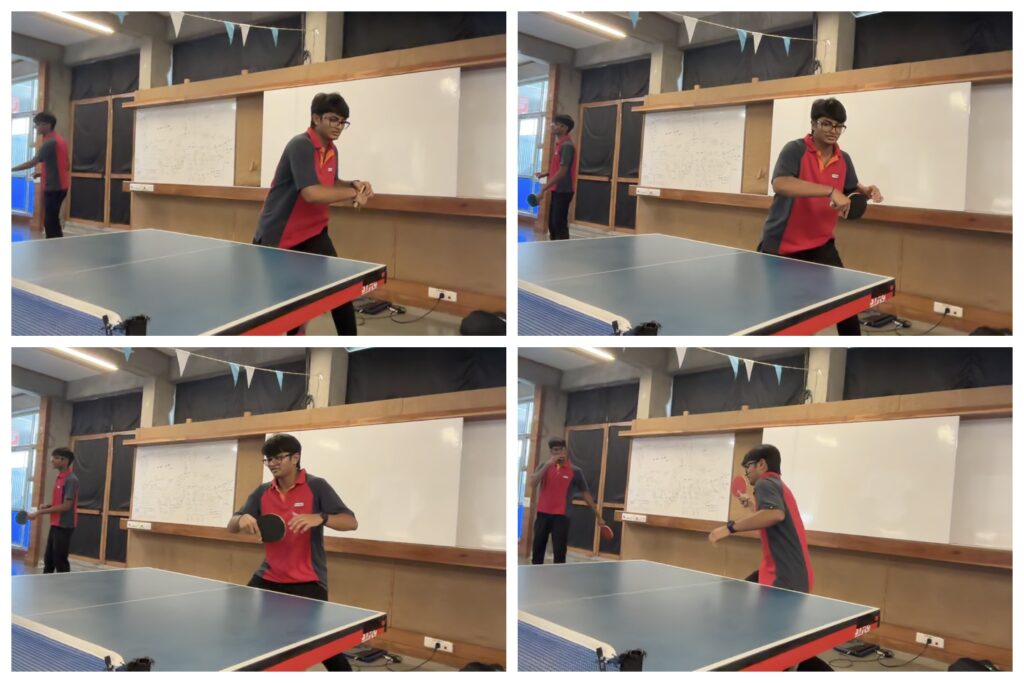
Table Tennis is a game of fractions of seconds, and the experience of playing against good players pushed me out of my comfort zone. There were moments when I lost points because of nothing but hesitation or a poor judgment of a shot. Instead of getting frustrated, I took each game as a learning opportunity every session. I experimented with different styles, learned to judge my opponent’s motion, and came to trust in my ability to think on the spot.
LO5 – Demonstrate skills and benefits of working collaboratively:
While Table Tennis is a single-player sport, the training sessions were cooperative. Competing with different players and teachers exposed me to other playing styles and strategies. We pushed each other to play better—sometimes competing against each other, sometimes guiding each other, but always getting better together. The shared tactics, and even the friendly rivalries made the experience more engaging and enjoyable.
Key Takeaways
This CAS experience was not just learning to improve at a sport. It was learning the importance of discipline, patience, and continuous learning. Table Tennis is not just about speed; it’s about control, anticipation, and staying calm under pressure. I realised that losing a point is not failure—its a opportunity to make myself play better next time. Every mistake was a stepping stone towards improvement, and every win was a reminder that hard work pays off.
Above all, I saw how sport could bring people together. Be it the bare-knuckle fights in rallies, after-match arguments, or even banter, the experience reaffirmed the power of unity and shared improvement. Table Tennis was no longer just a game for me—it was now a lesson in determination, adaptability, and the art of ceaseless self-improvement.