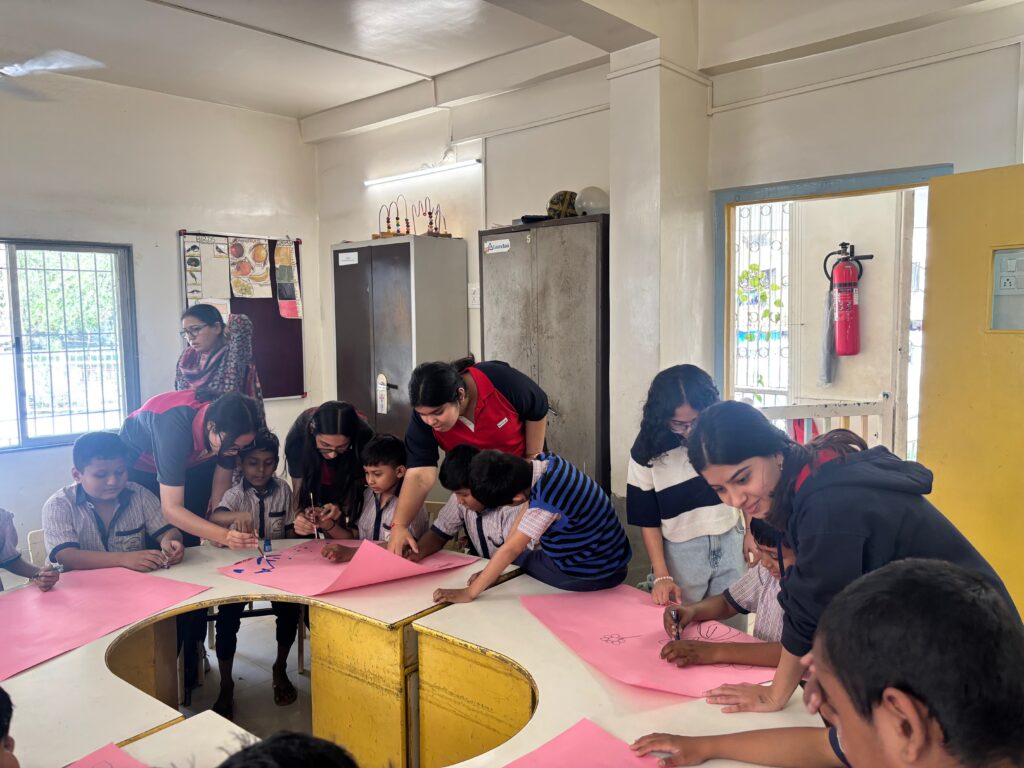
The act of volunteering to teach special needs children was among the most rewarding experiences I had during my CAS journey. In addition to helping those around me, this experience gave me the chance to consider my own growth and the wider significance of inclusive education.
LO 1: Identifying Strengths and Areas for Growth
At the beginning, I was unsure about my capacity to interact and communicate with the kids in an effective manner. But I soon saw that my ability to be patient and empathic was crucial to developing deep connections with them. In order to engage children with a variety of learning requirements, I also realized that I needed to become more flexible and creative in my problem-solving techniques. I improved these abilities and developed as as an instructor and communicator as a result of this experience.
LO 2: Overcoming Challenges and Developing New Skills
This enabled me to adopt fresh approaches to learning and exceed my comfort zone in order to teach kids with unique requirements. I found it difficult to communicate ideas in a way that each youngster could understand and find interesting. I experimented with several teaching strategies, such as interactive narratives, hands-on activities, and illustrations to get around this. This flexibility improved my teaching skills and helped me better grasp how various students process information.
LO4: Showing Commitment and Perseverance in CAS Experiences
Preparing for the visit required planning and consistent effort. We discussed session structures beforehand, prepared teaching materials, and divided responsibilities within our team. During the visit, we worked for several hours, guiding different groups of students, solving doubts, and assisting them with activities without losing focus or energy.
Even though it was tiring, I stayed committed throughout because I understood the importance of making a positive impact and giving the students our best efforts.
LO5: Demonstrating Skills and Recognizing the Benefits of Working Collaboratively
This experience would not have been possible without teamwork. We divided tasks among ourselves; some handled group games, others focused on teaching, while a few helped organise resources. Collaborating allowed us to manage time better and ensure every student received individual attention.
We also worked closely with the Shilpi School teachers to understand the students’ needs, which helped us plan activities more effectively. I learned that successful collaboration requires communication, flexibility, and mutual respect.
LO 6: Engaging with Issues of Global Significance
Since many of those with special needs still encounter obstacles to receiving an adequate education, inclusive education is a crucial issue on a global scale. I learned firsthand how important it is to support equal learning opportunities for all pupils by taking part in this project. My conviction that education ought to be inclusive, accessible, and sensitive to the many needs of students worldwide was strengthened by this encounter.
LO 7: Ethics of Choices and Actions
Working with these kids also caused me to consider the ethical responsibilities that learners and society at large have. I realized that every choice I made, from picking the right teaching strategy to just being patient, had a significant effect on the way they learned. Making sure that every child feels appreciated, understood, and supported is not merely a decision; it is also an ethic that promotes an atmosphere that is more compassionate and inclusive.
Final Reflection:
The visit to Shilpi School was one of the most meaningful CAS experiences I’ve had. It taught me to value empathy, patience, and collaboration while deepening my understanding of educational inequality and disability. I discovered my strengths, developed new skills, and gained a broader perspective on social issues that extend beyond my immediate environment.
Most importantly, this experience reminded me that small actions can create lasting impacts. The smiles on the students’ faces and their eagerness to learn made me realise how important it is to continue contributing to initiatives that promote equal opportunities for all.
Overall, this experience was a powerful reminder of the impact small actions can have in creating positive change. It pushed me to grow personally, take on new challenges, and engage with global issues while reinforcing the importance of ethical decision-making in education and beyond.