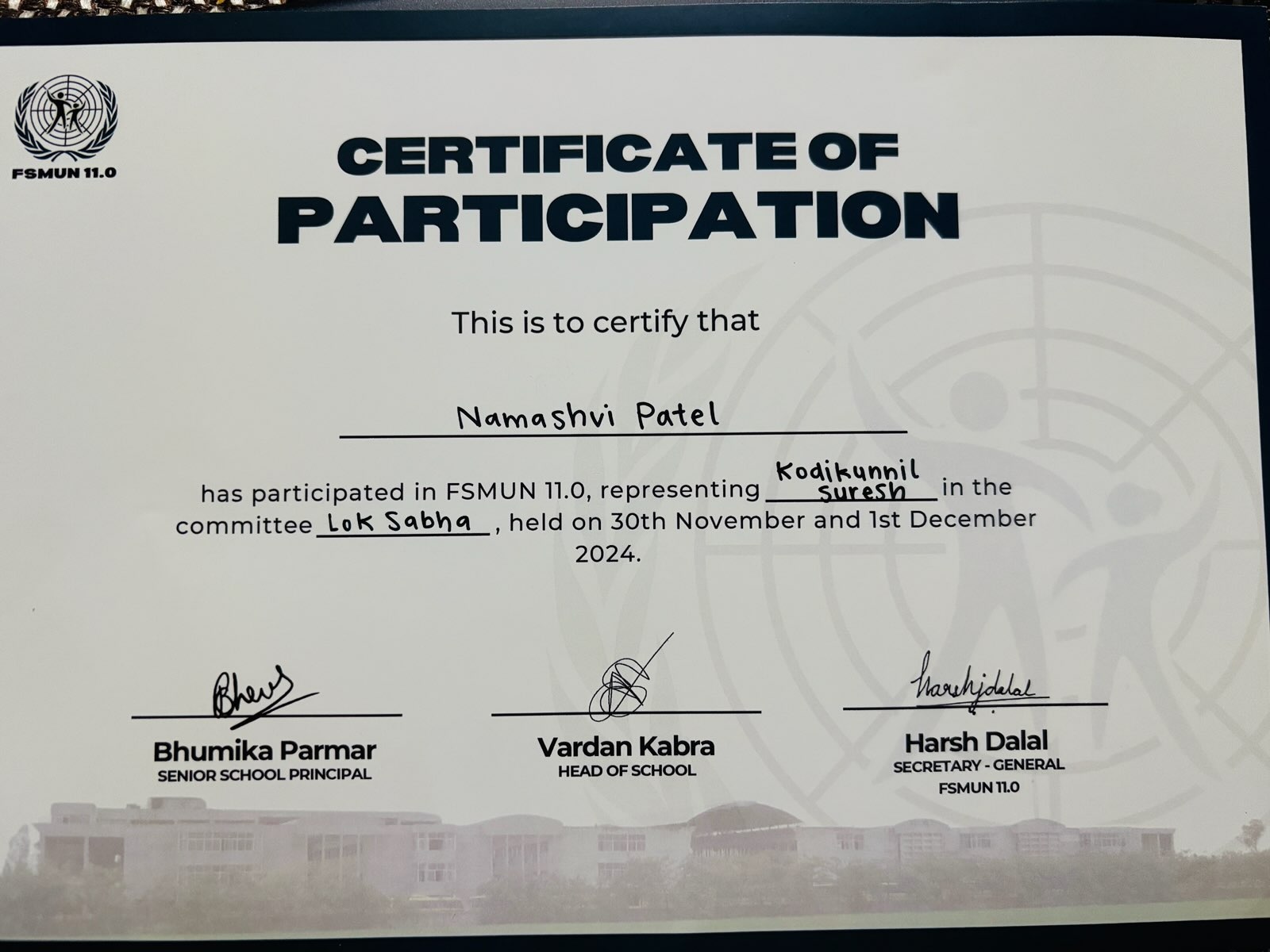
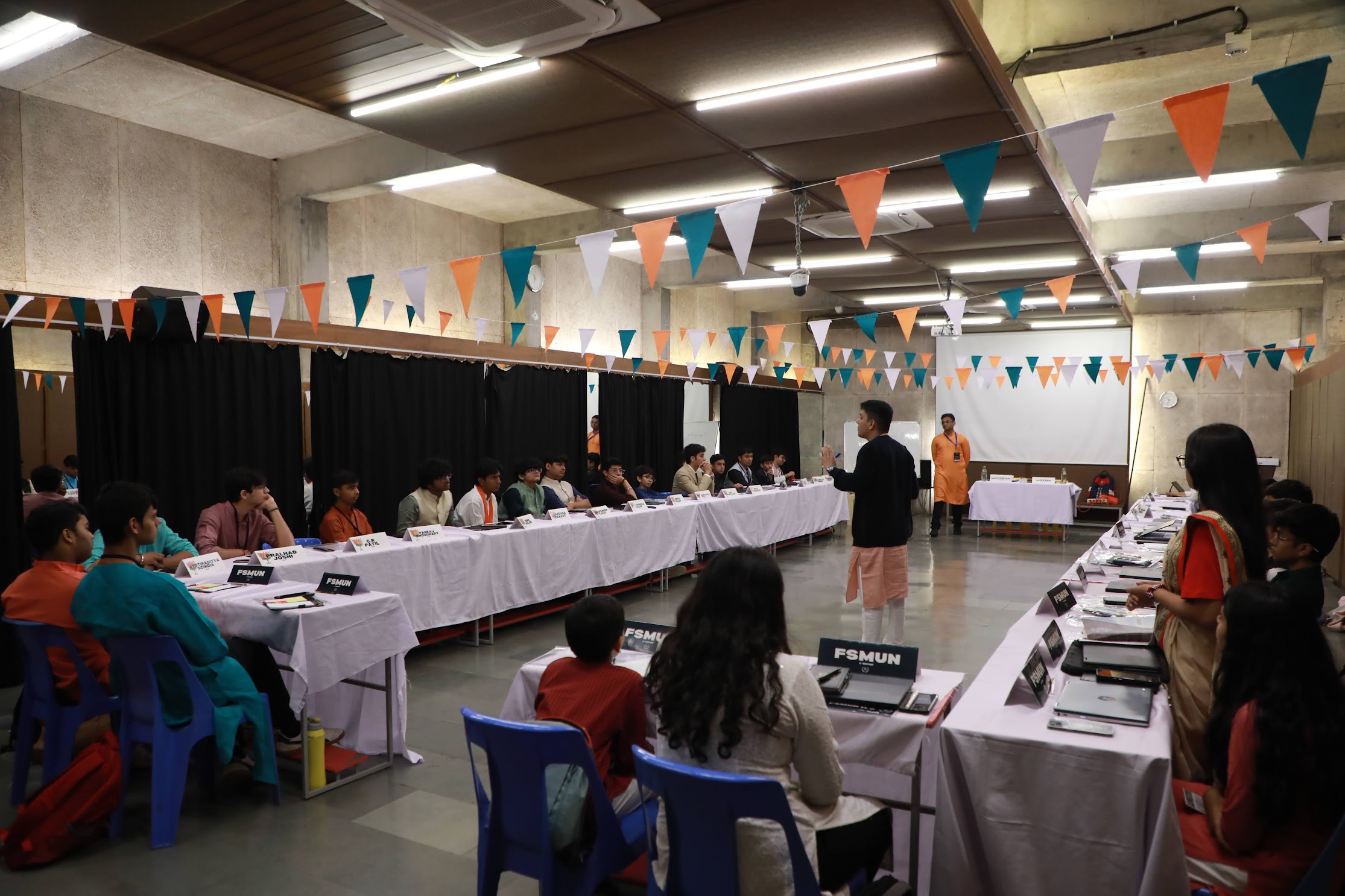
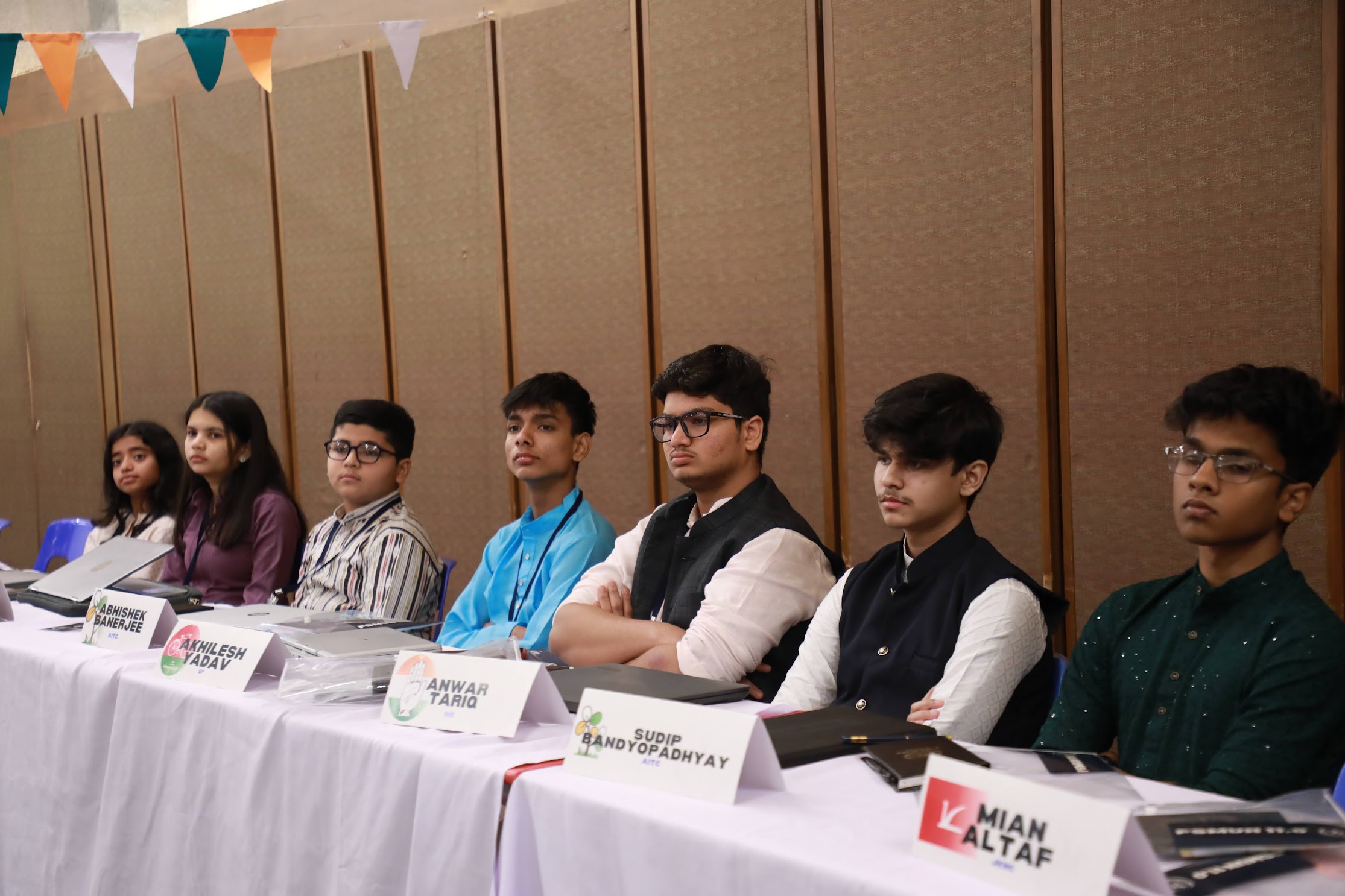
At FSMUN 11.0, I participated in the Lok Sabha committee as a delegate representing Kodikunnil Suresh from the Indian National Congress. This being my second MUN experience, I had the opportunity to research the agenda extensively, refine my public speaking skills, and present my arguments with greater confidence. Engaging in structured debates not only deepened my understanding of the topics discussed but also significantly enhanced my communication and critical thinking abilities.
LO1 – Identify own strengths and develop areas for growth
FSMUN allowed me to recognize my ability to conduct thorough research and build well-supported, logical arguments. I could effectively structure my speeches, ensuring that my points were backed by relevant evidence. However, I noticed that while my preparation was strong, I needed to improve my ability to think spontaneously in response to rebuttals. This experience highlighted the importance of adaptability and quick thinking, which I aim to develop further in future MUNs and public speaking opportunities.
LO2 – Demonstrate that challenges have been undertaken, developing new skills
One of the biggest challenges I faced was representing a political figure whose views did not always align with my personal beliefs. This required me to step outside my comfort zone and develop a more diplomatic and persuasive approach. Instead of relying solely on personal convictions, I had to understand and defend my assigned portfolio’s perspective with strong reasoning, which ultimately strengthened my ability to argue objectively, professionally, and respectfully. Along with representing my point of view, it was crucial to be respectful to all the delegates present in the room.
LO3 – Initiate and plan a CAS experience
Preparing for FSMUN involved meticulous planning. I initiated my research by studying parliamentary procedures, past debates, and my assigned politician’s policies. In my first MUN, I had taken a note of the skills I demonstrated well and the skills I should work on in order to repaint better argument in my next MUN. This helped me understand and review the areas which needed improvement, so that I could be my best self and defend my argument with substantial evidence. I structured my arguments strategically, anticipated counterpoints, and planned responses accordingly. Additionally, I practiced speech delivery to ensure clarity and impact, allowing me to enter the conference well-prepared and confident.
LO4 – Show perseverance and commitment in CAS experience
MUN conferences require sustained effort, and FSMUN was no exception. Throughout the sessions, I remained engaged, actively debating and refining my arguments. Even in moments of intense questioning or opposition, I remained committed to my stance, ensuring that I defended my portfolio with consistency and confidence. This perseverance not only helped me perform well but also strengthened my resilience in high-pressure environments.
LO5 – Demonstrate skills and benefits of working collaboratively
Collaboration was key in the committee sessions. I worked with allies to form strategic coalitions, refine policy stances, and negotiate resolutions. This teamwork taught me the importance of aligning perspectives, acknowledging different strengths, and building consensus to achieve a common goal. Understanding when to lead discussions and when to support others helped me improve my collaborative and leadership skills.
LO7 – Recognize and consider the ethics of choices and actions
Representing a public figure required me to navigate ethical considerations carefully. I had to balance party loyalty with national interest, ensuring that my arguments were justified from a governance perspective. This experience reinforced the importance of ethical decision-making in leadership and policymaking, as every stance taken had real-world implications.
FSMUN 11.0 was a transformative experience that helped me grow in research, diplomacy, and adaptability while deepening my understanding of collaborative leadership and ethical decision-making.