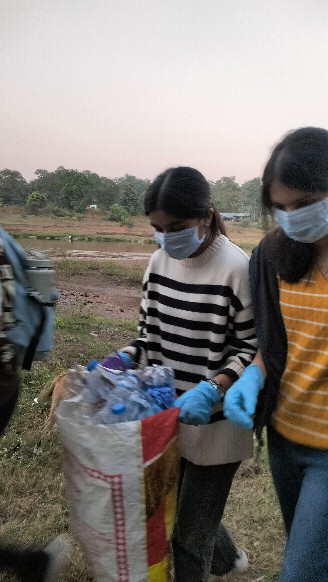
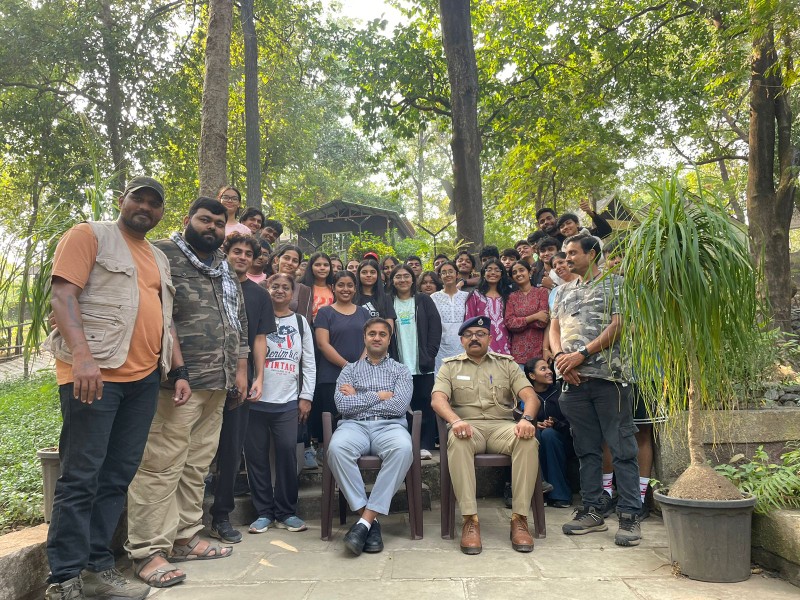
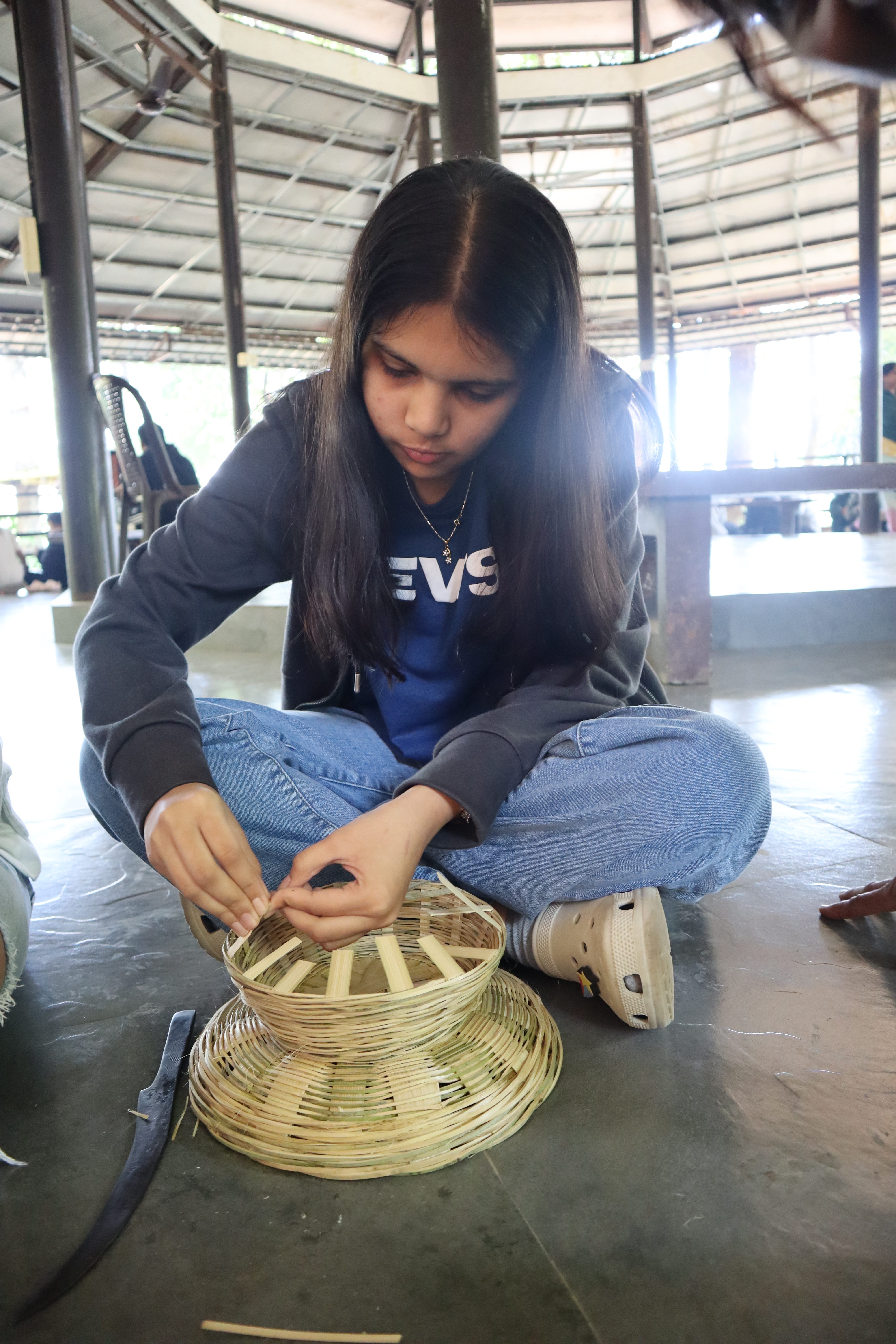
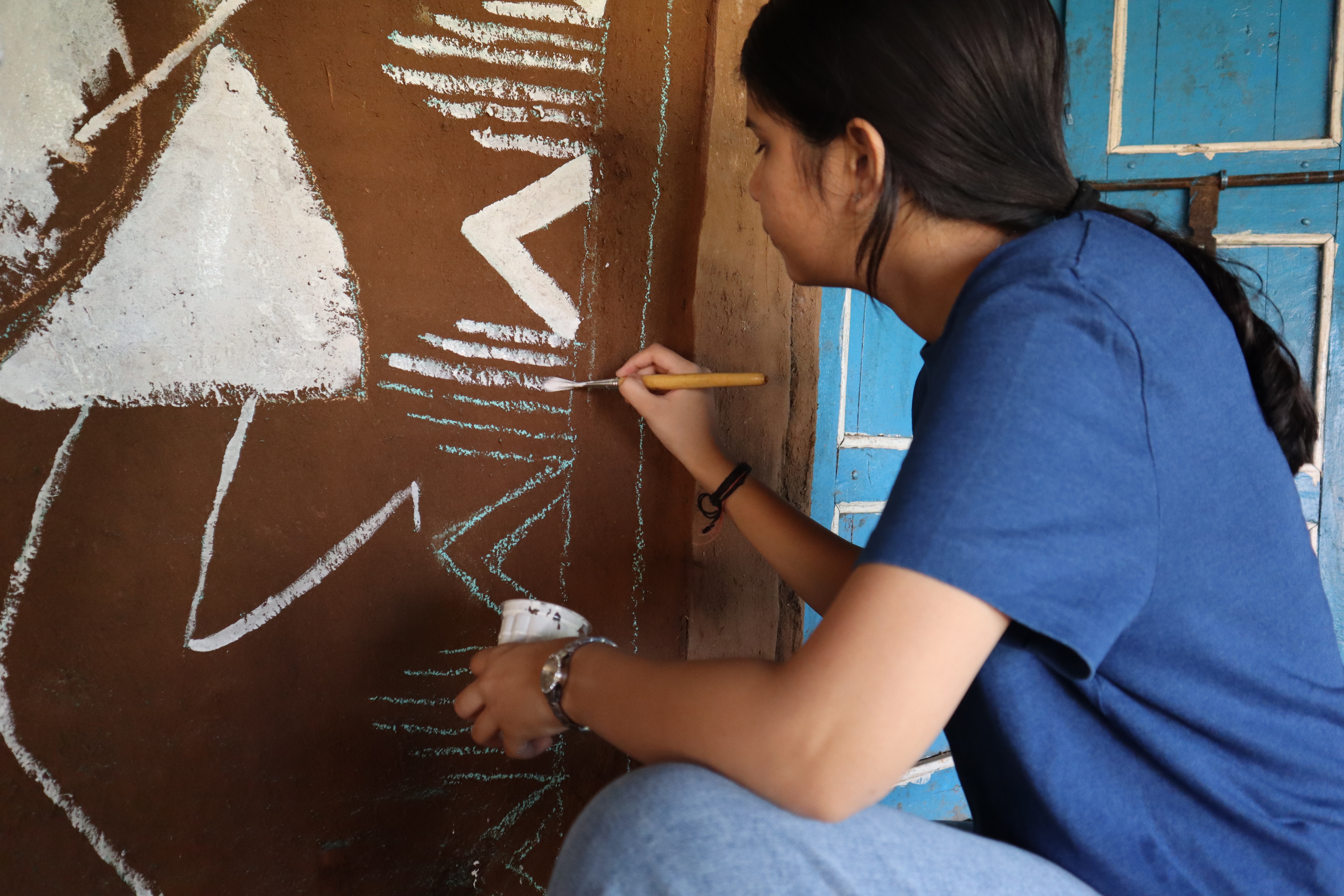
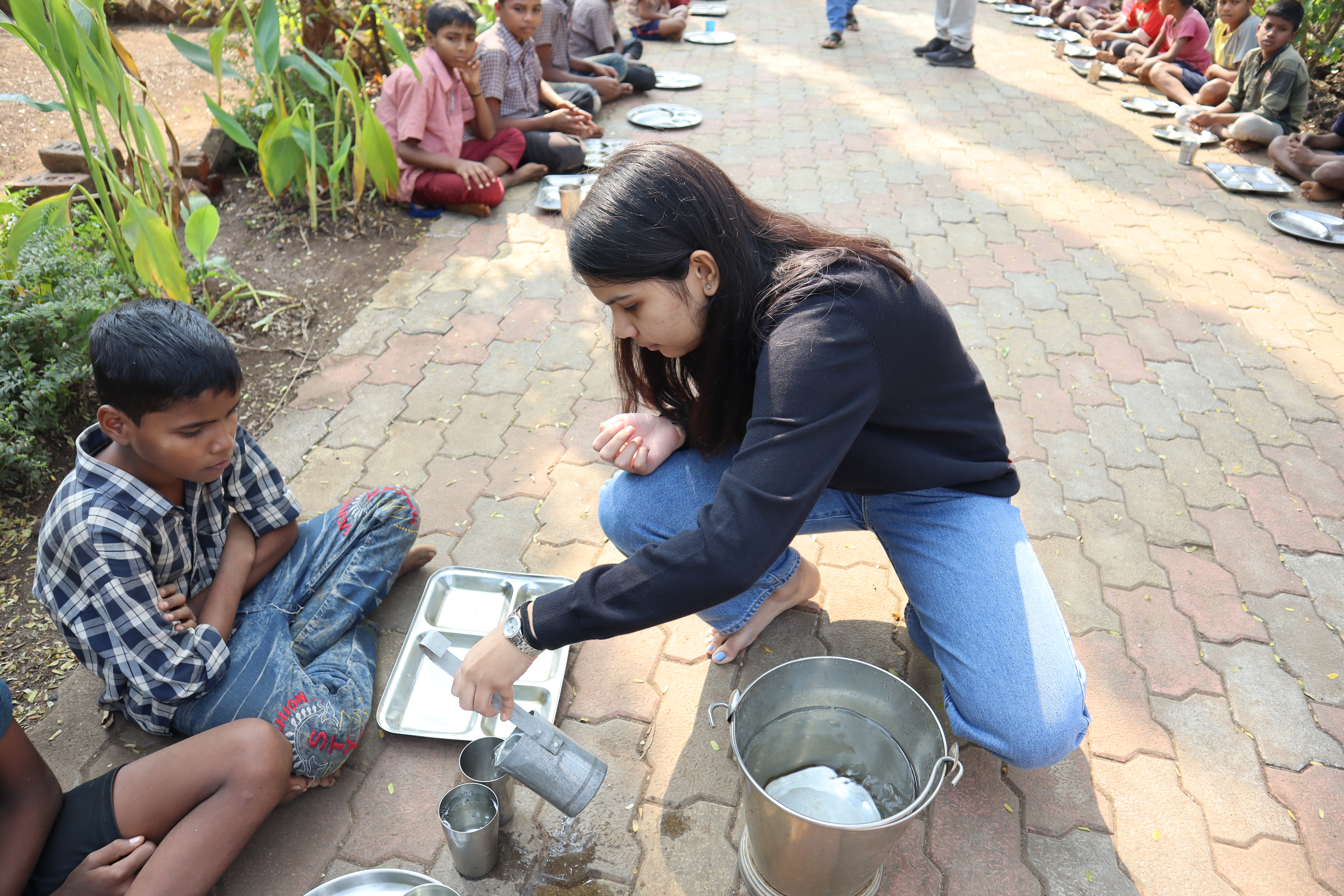
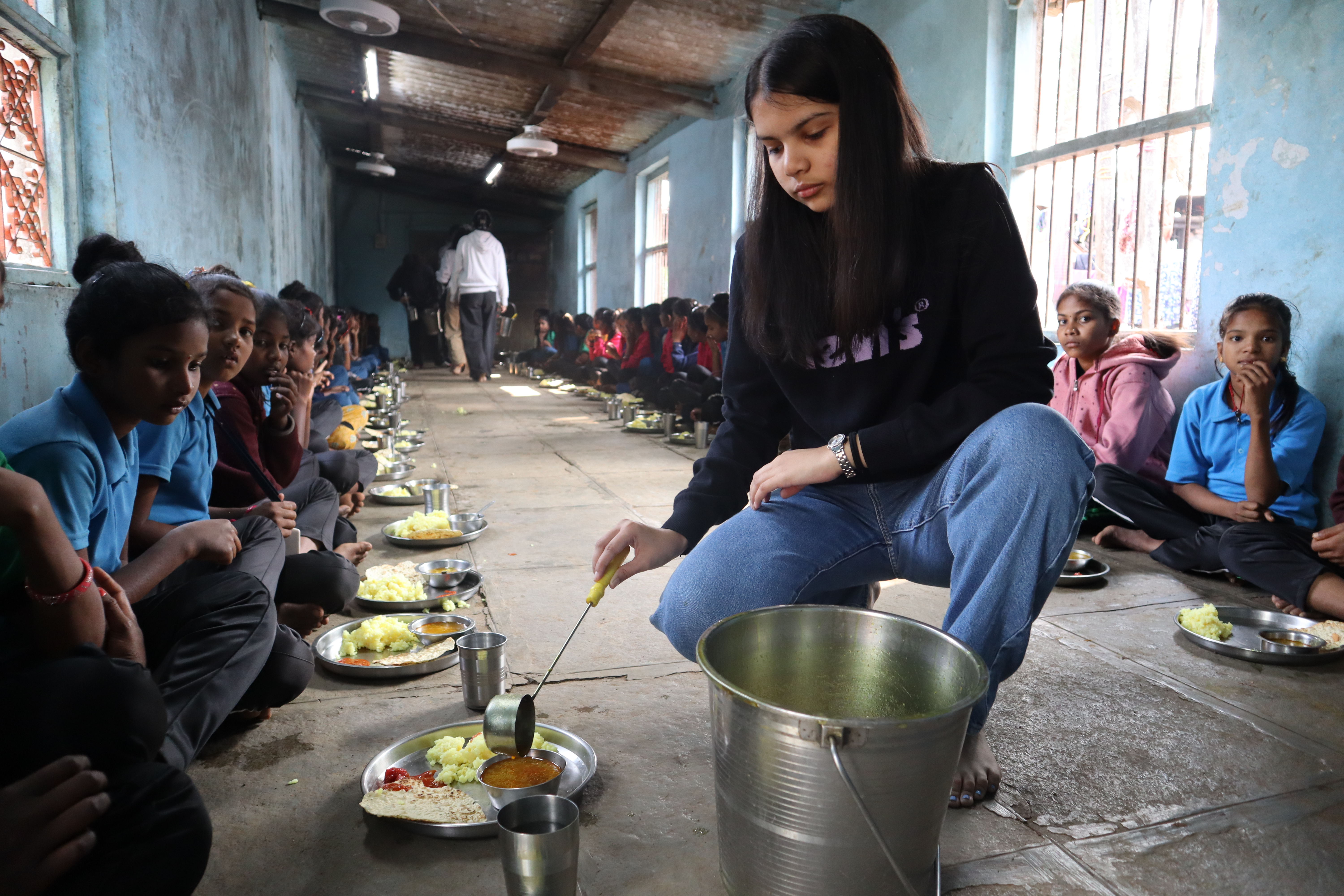
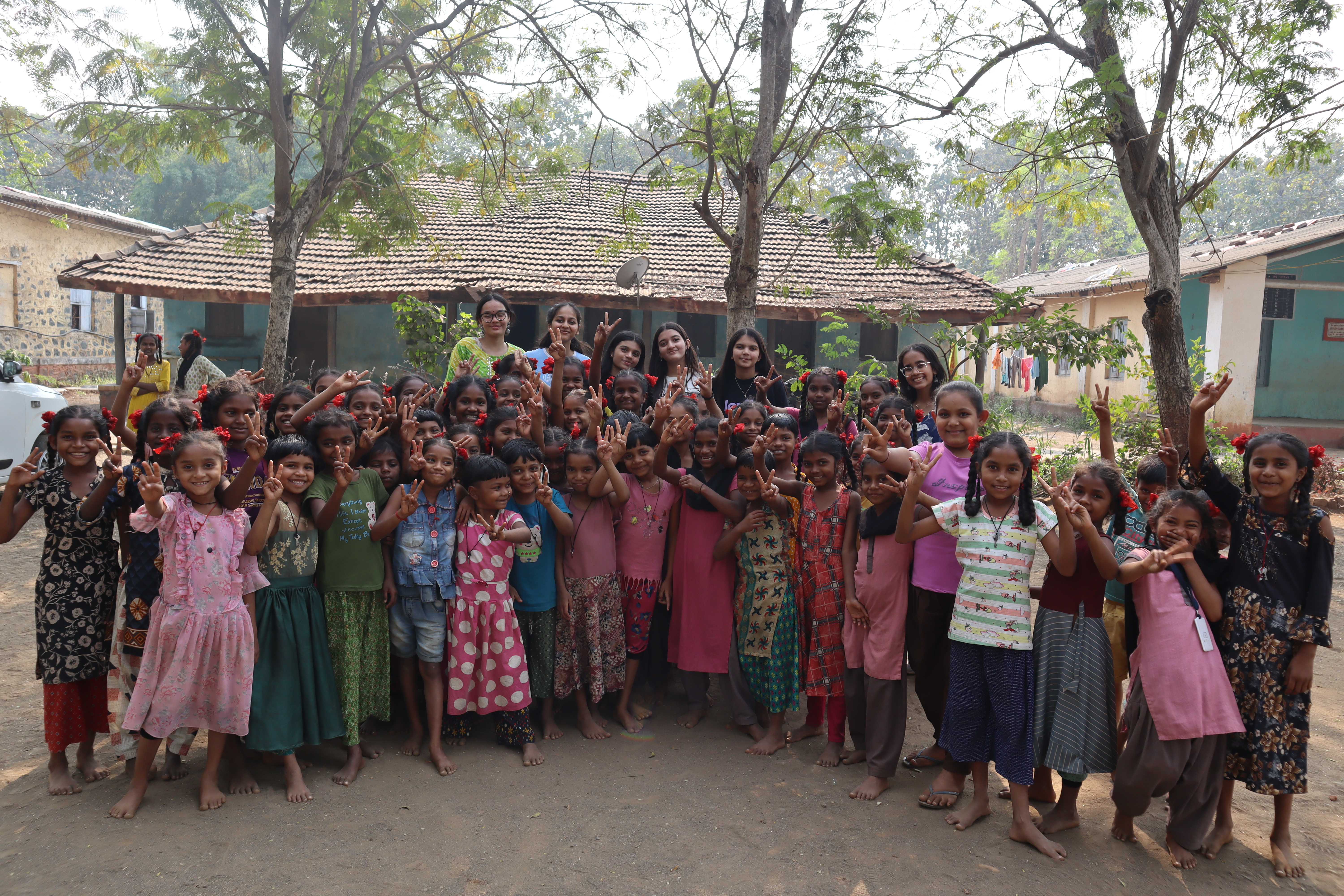
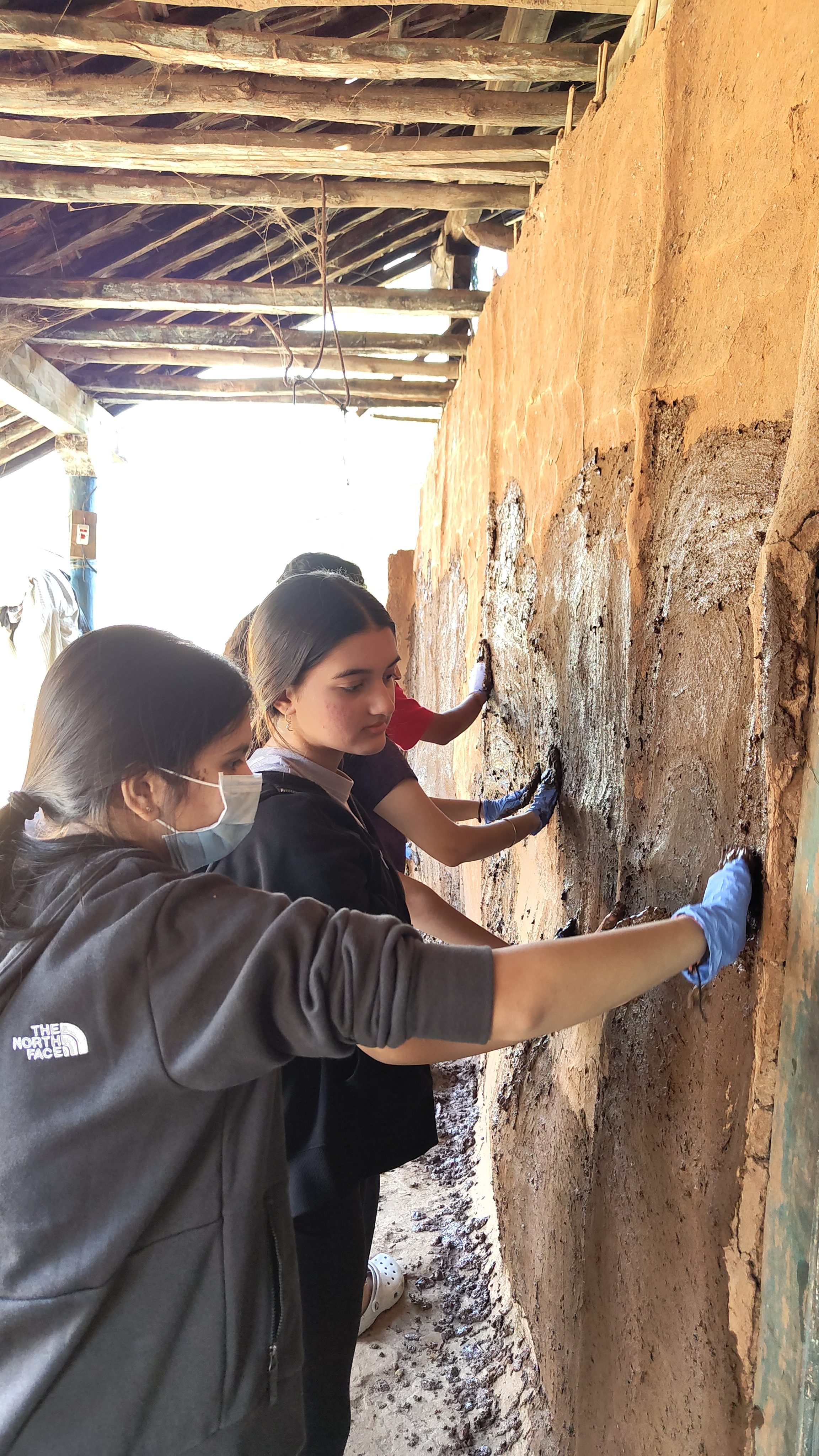
During our rural immersion ,we spent seven days at the Ambapani Eco-Tourism Campsite near Dang, engaging in various activities that encompassed the elements of Creativity, Activity, and Service. The experiences included bamboo weaving, Lippan art, Warli painting, rifle shooting, adventure activities, and interacting with the local villagers. We also participated baaj making, shopping at the haat bazaar, trekking, visiting a milk centre, exploring an ashram, conducting a cleanup drive, and enjoying a river bath.
Throughout the trip, we had the opportunity to meet and connect with many new people, including volunteers, villagers, and teachers. It was a truly enriching experience to immerse ourselves in their way of life, gaining deeper insights into their culture, traditions, and community practices.
LO 1 – Identify own strengths and develop areas for growth
At the campsite, we participated in several activities that pushed us out of our comfort zones. I discovered my strengths in creative tasks like Warli painting and bamboo weaving, while also focusing on improving areas such as communication in unfamiliar cultural environments and building strength through challenges like trekking and rifle shooting. This experience allowed me to grow personally, develop new skills, and work on areas that needed improvement.
LO 2 – Demonstrate that challenges have been undertaken, developing new skills in the process
Adapting to the natural village environment, which was unfamiliar, pushed me out of my comfort zone.Activities like Lippan art and cow milking pushed me out of my comfort zone and encouraged me to try new things. In doing so, I enhanced my critical thinking and social skills, enabling me to tackle these challenges successfully and enjoy the trip.
LO 4 – Show commitment to and perseverance in CAS experiences
By staying dedicated to all the planned activities, even when they were outside my comfort zone Activities like river bathing and Lippan art were unfamiliar and initially challenging, but I approached them with determination.By fully committing to every activity, including cultural interactions, creative tasks, and community engagement, I was able to immerse myself in the experience, connect with the people, and gain meaningful insights into their way of life.
LO 5 – Demonstrate the skills and recognise the benefits of working collaboratively
Many activities, such as team games and Haat bazaar shopping, required teamwork and coordination with others. Collaborating with my teammates helped me develop effective communication and cooperation skills. By working together, we were able to complete tasks efficiently, discuss different perspectives, and support one another, making the experience both enjoyable and meaningful.
LO 6 – Demonstrate Engagement with Issues of Global Significance
We observed challenges like poverty, limited access to education, inadequate hygiene, and insufficient water and electricity supplies affecting the villagers. A notable concern raised by the Lady Sarpanch and villagers was the lack of medical assistance and proper sanitation facilities, which shows the critical need for improvement in healthcare services.
Additionally, the tribal community faced financial struggles, with traditional practices like bamboo weaving and Dangi dance being undervalued and not paid sufficiently.These problems are similar to challenges faced by many rural communities around the world. Learning about these issues made me more aware of global inequalities and encouraged me to think about ways to support sustainable development in such communities.
LO 7 – Recognize and consider the ethics of choices and actions
Observing issues like poverty, limited education, poor hygiene, and undervaluation of traditional art forms made me aware of my ethical responsibility to support sustainable and fair practices.
The lack of medical assistance and sanitation emphasised the importance of access to basic healthcare, while the struggles of artisans highlighted the need for preserving cultural heritage and ensuring fair compensation. Participating in activities like the cleanup drive also showed me how small, positive actions can contribute to addressing larger global challenges, inspiring me to act responsibly and ethically.
Evidence: