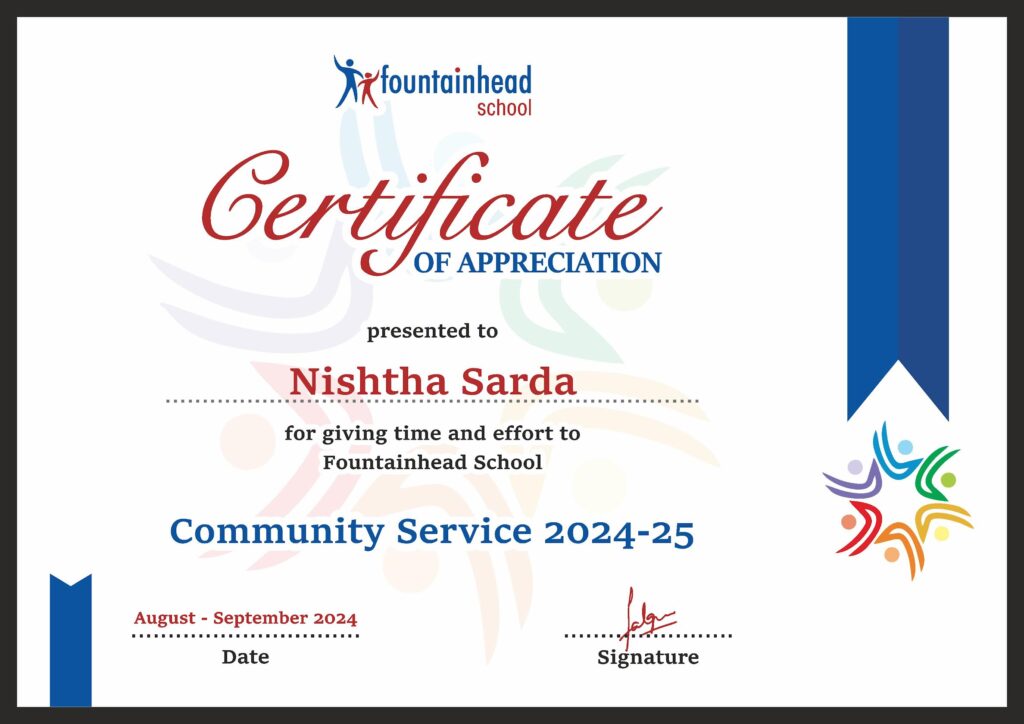
Community service was an incredibly enriching experience, not only for me but also for the children, as it helped all of us develop our social and communication skills. Students from various government schools visited ours, where they had the opportunity to explore their interests in areas such as dance, arts and crafts, IT & technology, science, and more. Based on their preferences, they were divided into different groups to engage in hands-on learning and exploration. I volunteered in the arts and crafts group, working with a batch of around 10 students each day. The way they lived their lives and the things that they did, were quite different than ours henceforth, throughout the session we shared stories about each other and bonded over the similarities we possessed. Due to the same, my bond with them increased, so much so that, every next session that they came they wanted me as their volunteer only and they even got me gifts. Not only did they have fun during this experience, however I had an amazing time as well. Teaching their various things and skills, to watching them make the product on their own. Sometimes, the students even corrected me for any mistakes that I made, henceforth making this a fruitful learning experience for the both of us. Through this little time, I was able to learn quite a lot of things.
Learning Outcomes
The 2 major learning outcomes that I was able to demonstrate were ‘LO4: Show perseverance and commitment in CAS experience’, and ‘LO5: Demonstrate skills and benefits of working collaboratively’. Answering the most significant questions for the LO4, initially, it was challenging to adapt to the children’s pace and understand their individual preferences. Many of them had different learning styles and attention spans, requiring extra patience and creativity. This required perseverance, as some sessions demanded more energy and enthusiasm than others. Despite these challenges, the smiles on their faces and their progress made it all worth it. Commitment was also visible through my regular attendance, thoughtful planning, and active participation were essential. I had to prepare arts and crafts materials, develop engaging ideas for each session, and ensure every child felt included and motivated to learn. Generally, I find it easy to commit because I enjoy contributing to meaningful causes. However, persistence can be tested when faced with setbacks, such as when children struggled to grasp concepts or lost interest. But I pushed through by trying new approaches to keep their attention.
LO5 on the other hand, was shown through showcasing my easy and smooth collaboration skills. Working with others is generally easy for me because I value open communication and teamwork. I enjoy listening to different perspectives, which automatically helps promote a positive collaborative environment. It was relatively easy, as the children were enthusiastic and curious. However, ensuring everyone stayed focused and involved required effort, especially since they had varying levels of skill and interest. Moreover, there were also moments when some children were shy or hesitant to participate. I approached them with patience, encouraging them by acknowledging their efforts and making them feel valued. Throughout this experience, leadership was crucial in guiding the children and maintaining a structured learning environment. Teamwork played an essential role when students helped each other or shared their creativity, fostering a sense of community.
Conclusion
To conclude overall, I developed attributes like communicator, caring, and reflective. I communicated effectively to teach and bond with the children, showed empathy in understanding their needs, and reflected on how to improve my teaching approach. The highlight was the moment when the children confidently presented their creations, showcasing their pride and joy. Their thoughtful gifts also deeply touched me. This was also beneficial to me since Arts and crafts relate closely to my interest in communication design, as both require creativity, problem-solving, and visual expression.
Evidences