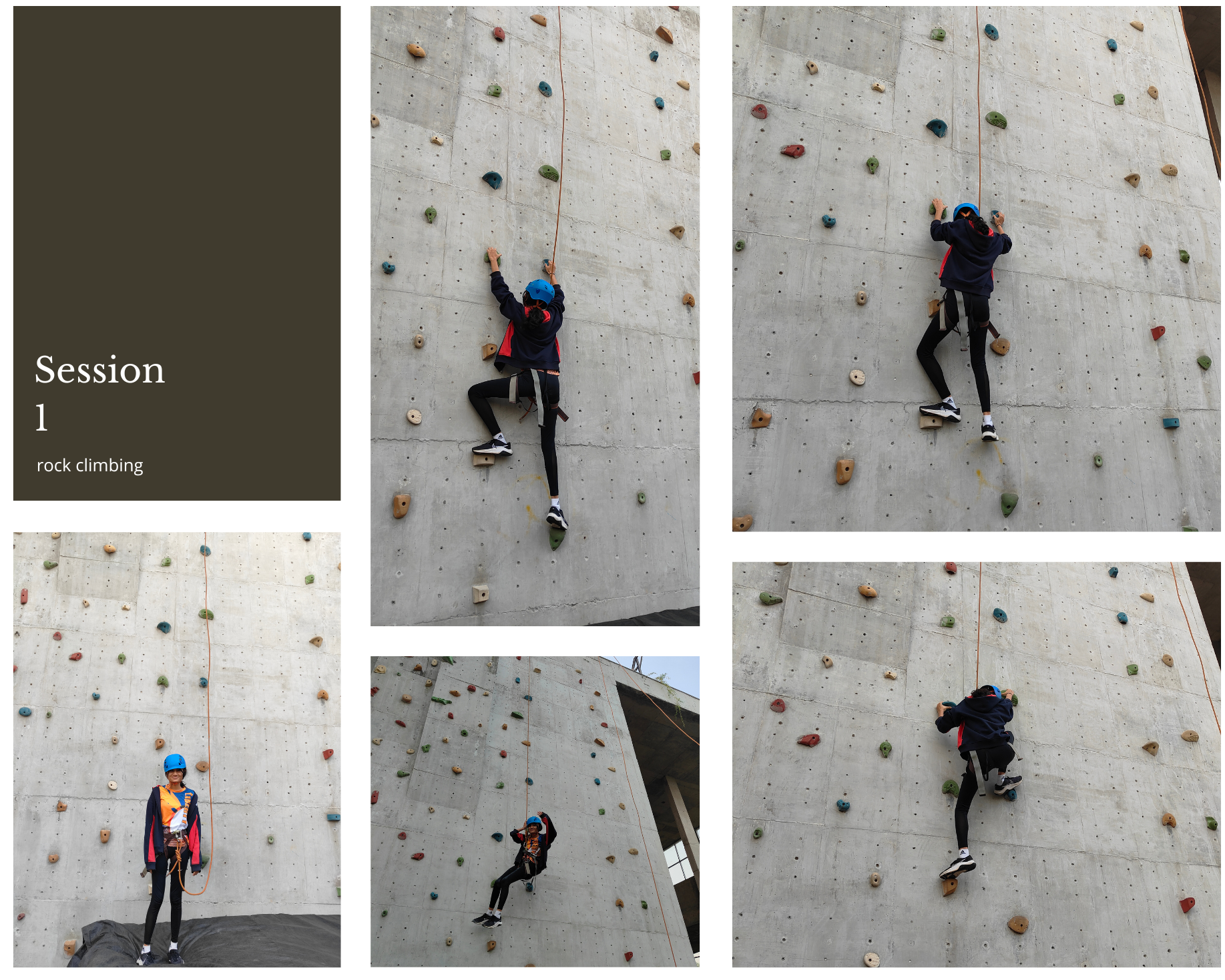
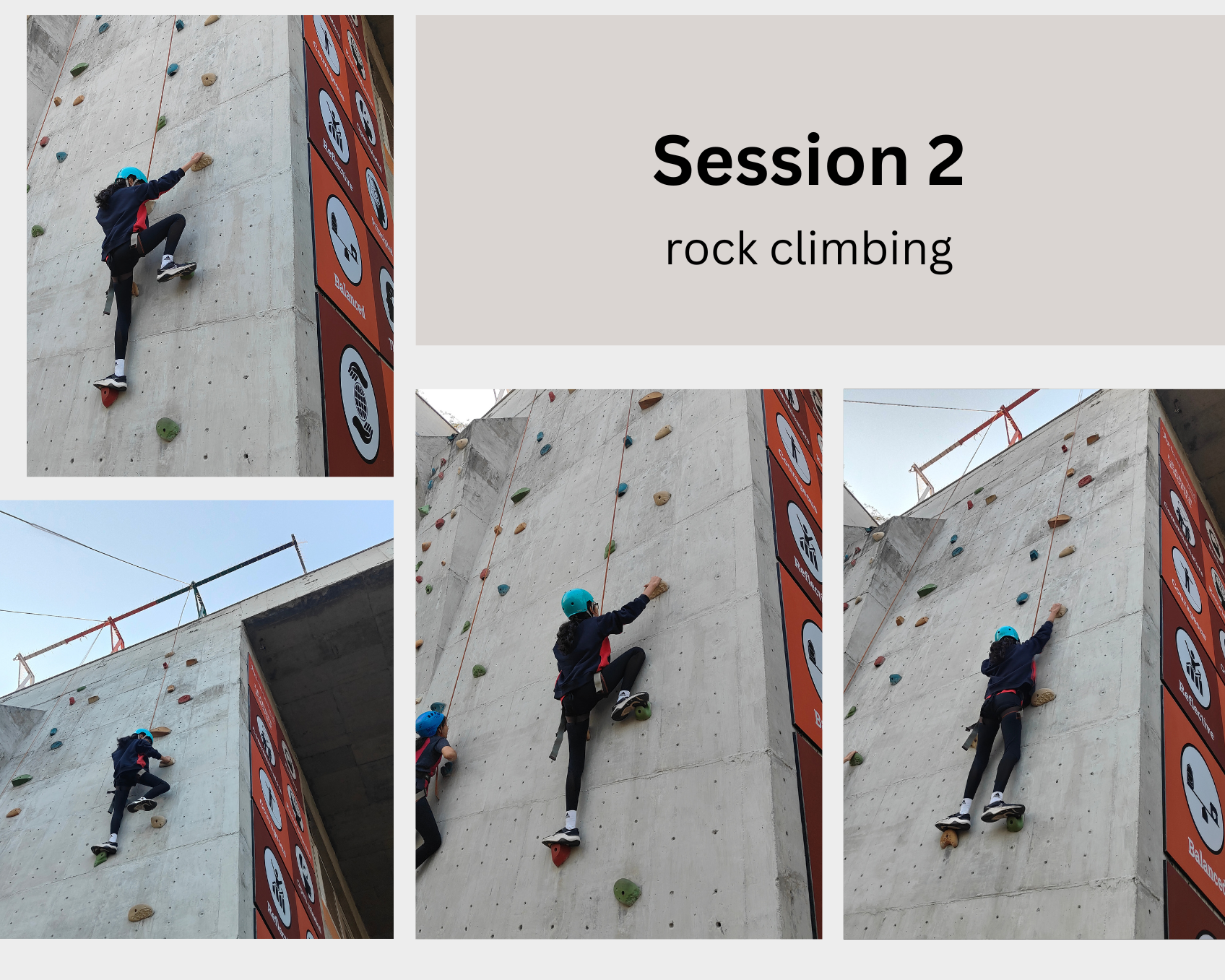
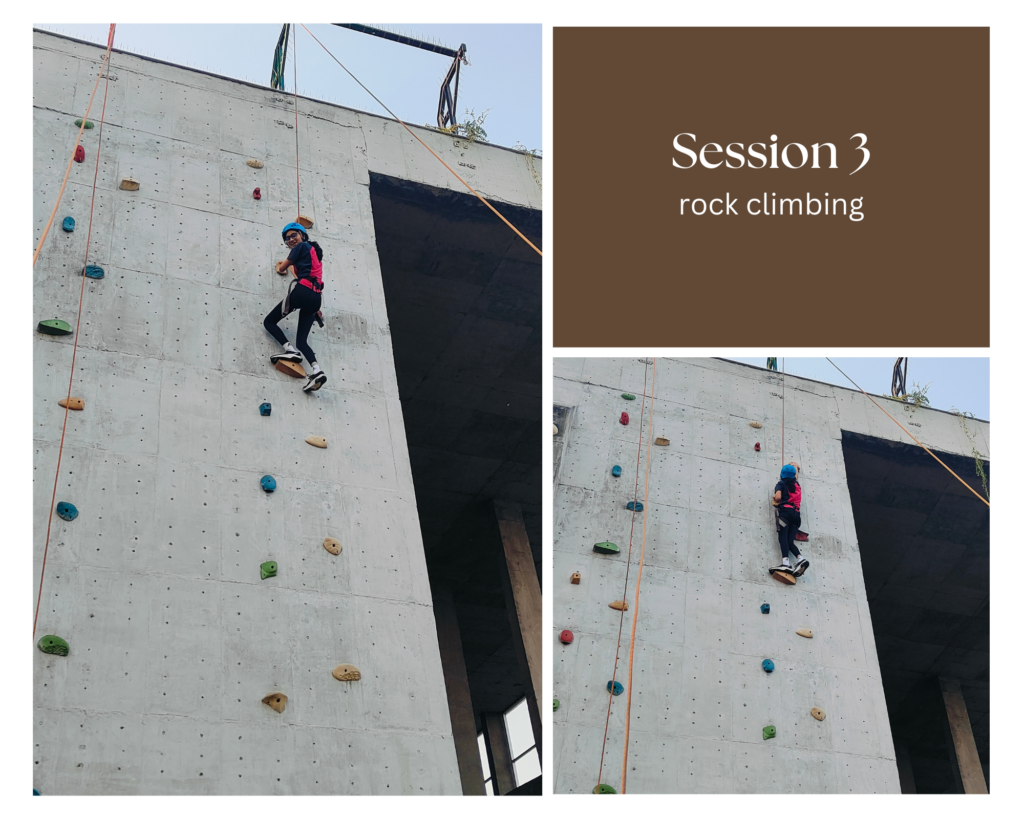
Rock climbing was one of the activities I did, that I would have never done otherwise. It was truly something out of my comfort one however, something that I realised was quite fun and I would like to do it again. Over the course of 4 sessions, I slowly learnt and developed my skills in rock climbing and while I was terrified in the beginning of the first session, by the end of the last session I was able to successfully reach the top of the wall. Below are the images of my session (do not have the images for session 4)
Learning Outcomes
I could connect this activity to three learning outcomes, ‘LO1 – Identify own strengths and develop areas for growth Screen reader support enabled, LO2 – Demonstrate that challenges have been undertaken, developing new skills and LO4 – Show perseverance and commitment in CAS experience. The first LO, LO1 (Identify own strengths and develop areas for growth) was implemented at the start of the rock climbing sessions. It was outside my comfort zone, but as I progressed, I identified areas for improvement, such as technique and confidence. Over the four sessions, I developed my climbing skills and recognised my ability to push past initial fears. LO2 (Demonstrate that challenges have been undertaken, developing new skills) was implemented since rock climbing was a new challenge for me, and through consistent practice, I acquired new skills like grip strength, balance, and problem-solving for different climbing routes. My progress from fear in session one to reaching the top in session four demonstrated this learning. Lastly, LO4 (Show perseverance and commitment in CAS experience). LO4 was used since despite feeling terrified at the beginning, I remained committed to the activity, attending all four sessions and steadily improving. Moreover, I attended these session religiously by going to early-in’s every morning.
Takeaway
This experience taught me the value of stepping outside my comfort zone and embracing new challenges. Initially, I was hesitant and fearful, but through perseverance and commitment, I was able to develop confidence and new skills. I realized that progress takes time and effort, and with determination, I can overcome fears and accomplish goals. Additionally, this activity reinforced the importance of resilience and adaptability—two qualities that are crucial for personal growth. The learner profile attributes that I demonstrated during this time included being a risk-taker, since I stepped into an unfamiliar activity, faced my fears, and challenged myself to try something new. Another one was balanced, since this was an activity which required both physical and mental strength, teaching me how to stay focused, composed, and in control. Moreover, I was also reflective. I assessed my progress after each session, recognised my improvements, and identified areas for further growth. Lastly, I demonstrated the learner profile attribute principled. I remained committed to the sessions, pushed through my fears, and didn’t give up, even when it felt difficult.
TOK Connection
My rock climbing experience connects to Theory of Knowledge (TOK) through the concept of how personal experiences and emotions influence the acceptance or rejection of knowledge. Initially, my fear and hesitation acted as obstacles to fully engaging with the activity, demonstrating how emotions can shape our perception of what we believe we are capable of. However, as I gradually developed skills and gained confidence, I was able to reassess my prior assumptions, showing that knowledge is dynamic and evolves with experience. Additionally, this experience highlights the role of experiential knowledge, as my understanding of rock climbing was not just theoretical but gained through direct engagement. This aligns with the idea that different ways of knowing, such as sense perception and intuition, play a crucial role in learning. My ability to evaluate my progress and recognise growth also ties into critical thinking, a key aspect of TOK, as I reflected on how overcoming challenges reshaped my perspective.