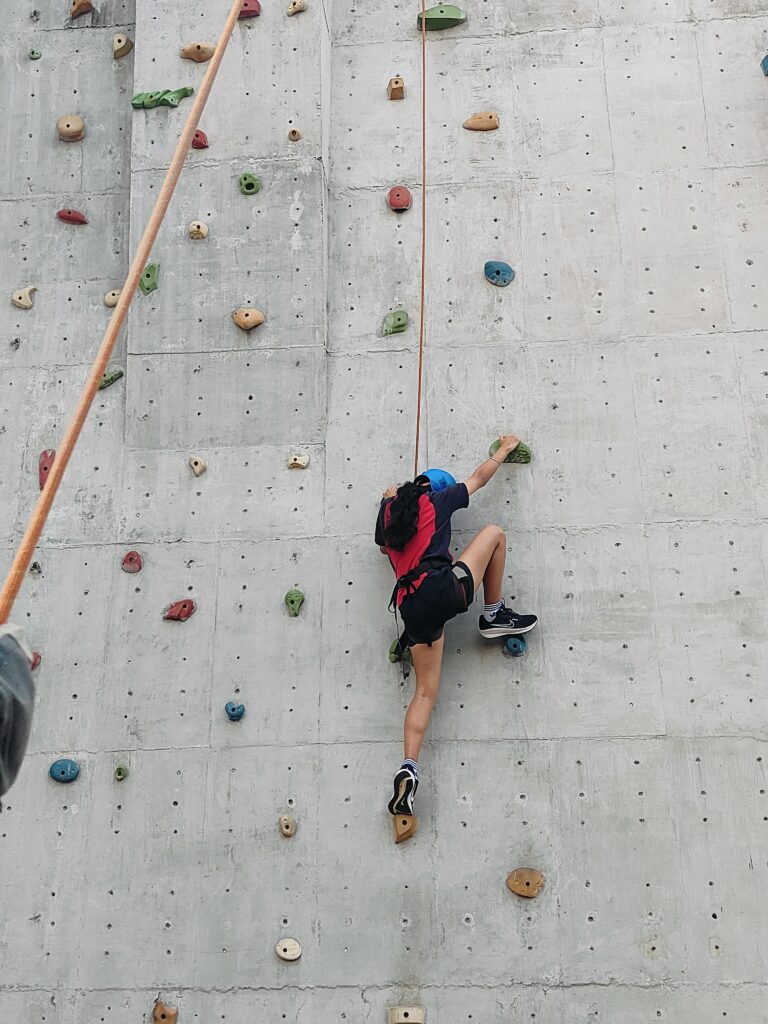
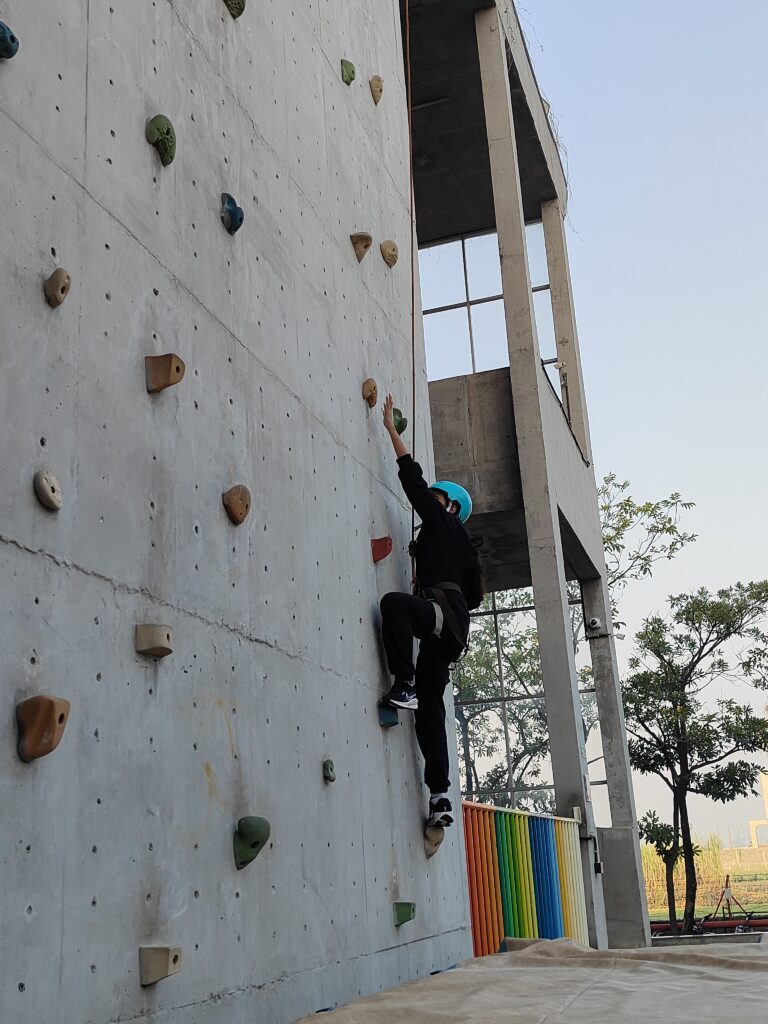
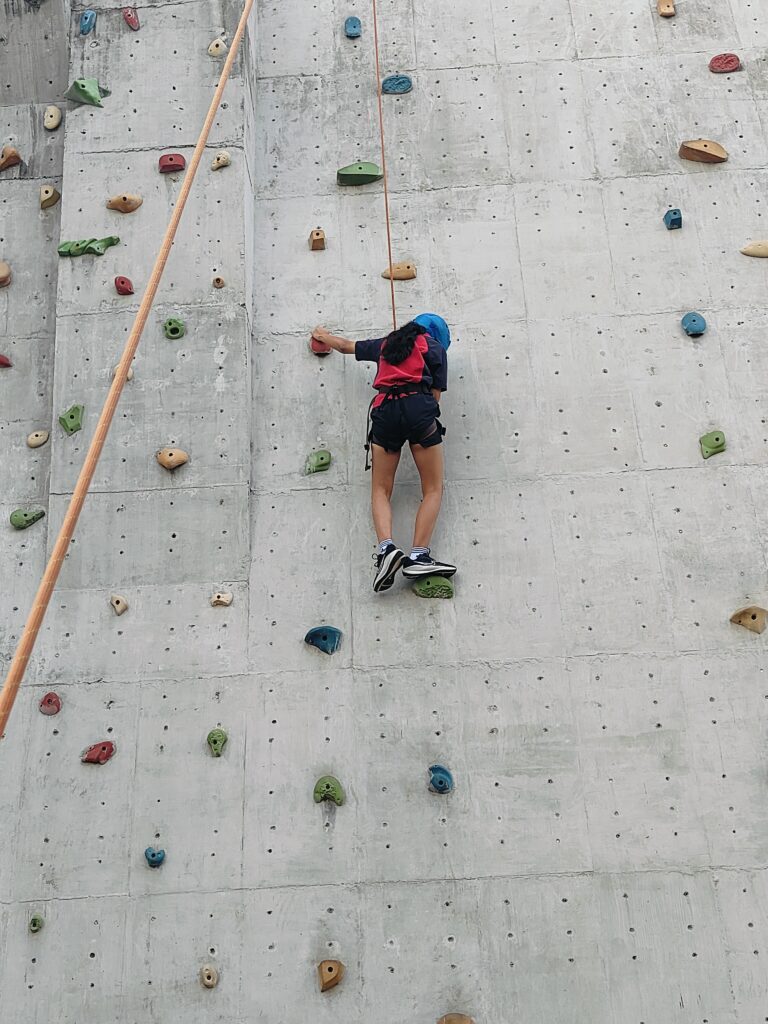
Rock climbing at school was an intense yet rewarding experience. It wasn’t just about climbing walls—it was about pushing my limits, figuring out my strengths and weaknesses, and improving over time. Each climb presented a new challenge, requiring a mix of physical strength, mental focus, and strategic thinking. Initially, I struggled to make it to the top, but with each session, I refined my technique and improved my performance. Climbing became more than just a sport; it turned into a test of endurance, perseverance, and self-discipline.
LO1: Identifying Strengths and Developing Areas for Growth
Through rock climbing, I identified key strengths that worked in my favor—my strong grip, arm strength, and overall athletic ability. My upper body endurance allowed me to pull myself up efficiently, and I found that I had decent control over my movements. However, I quickly realized that my weaknesses were just as important to acknowledge. Balance and focus were areas I needed to develop. I often found myself relying too much on my upper body instead of using proper foot placement, which made my climbs more exhausting than necessary. Additionally, I struggled with maintaining concentration throughout longer climbs. To improve, I focused on engaging my core for stability and making deliberate, calculated movements instead of rushing through. Over time, I became more aware of how to distribute my weight and use my legs more effectively to support my climbs.
LO2: Taking on Challenges and Developing New Skills
At the beginning of this journey, I couldn’t even reach the top of the wall. It was frustrating but also motivating. I set small goals for myself—first, making it halfway, then adjusting my technique, and finally aiming to complete the climb faster each time. The process required multiple trials, adjustments, and persistence. Each failure taught me something new, whether it was the importance of pacing myself, gripping holds properly, or keeping my body close to the wall for better control. The most satisfying part of the experience was seeing tangible progress. By the end, I was not only reaching the top consistently but also climbing with better efficiency and confidence.
LO4: Showing Perseverance and Commitment
Committing to this activity wasn’t always easy. There were mornings when I had to wake up earlier than usual to attend practice sessions before school, and there were days when I felt unmotivated, especially after a rough climb. However, I made sure to show up to every session, even when I wasn’t feeling my best. Overcoming mental resistance was just as important as building physical endurance. In the end, staying committed despite moments of frustration made my progress even more rewarding. Looking back, I’m proud that I pushed through, because the results were worth the effort.
Final takeaways
Rock climbing turned out to be more than just a physical activity—it was a lesson in patience, persistence, and problem-solving. I became more aware of my strengths and weaknesses, learned to tackle challenges head-on, and developed a sense of discipline in the process. Additionally, this experience allowed me to implement the UNSDG Goal of Good Health and Well-being, as it pushed me to stay active, build endurance, and develop both physical and mental resilience. I also embodied the Risk-Taker and Balanced learner profile attributes—stepping outside my comfort zone to attempt challenging climbs while ensuring I maintained a healthy approach to both training and recovery. This experience reinforced the idea that growth comes from consistent effort and that overcoming small setbacks can lead to bigger achievements.