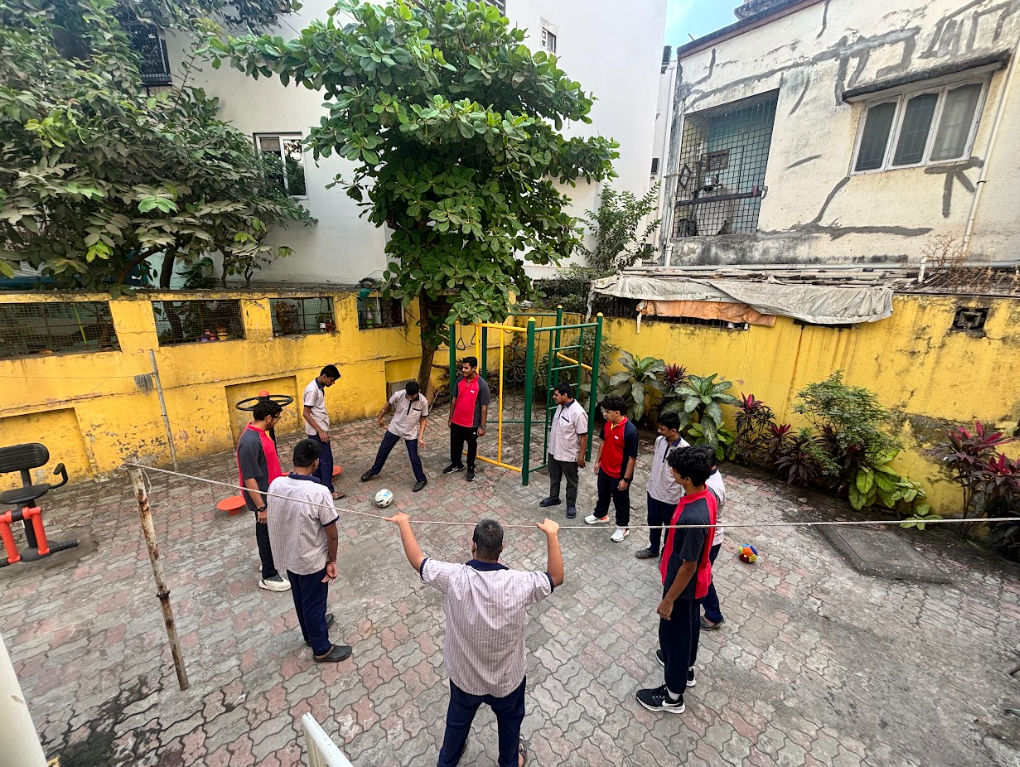
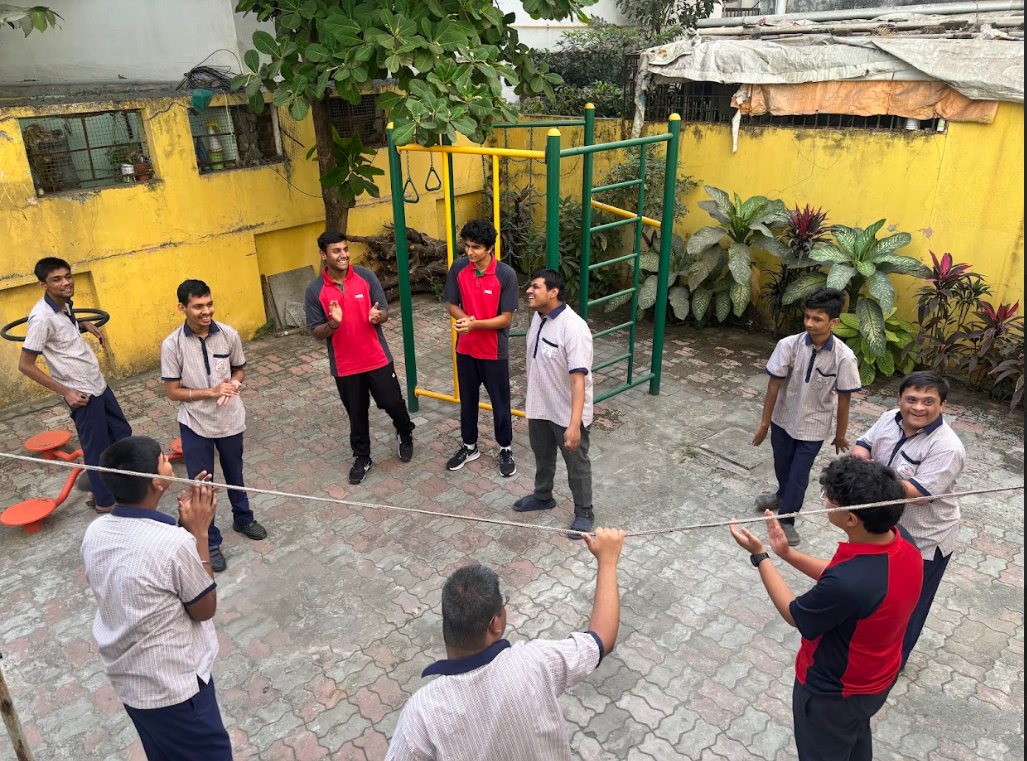
My friends and I had the opportunity to visit a school specially built for disabled children, where we engaged them in various fun activities. We organized sports like football and dodgeball and also facilitated creative tasks such as drawing and coloring. This experience was deeply meaningful, as it allowed us to connect with the children and understand that they, too, find joy and excitement in participating in different activities. Our visit aligned with SDG 10: Reducing Inequality by promoting inclusion and ensuring that every child, regardless of ability, has access to enriching experiences.
LO2: Demonstrate That Challenges Have Been Undertaken, Developing New Skills
Interacting with disabled children was initially challenging for me, as I was unsure how to communicate effectively or adapt activities to their needs. However, I quickly learned to be patient, observant, and flexible. For example, during the football game, I had to modify the rules to ensure that every child could participate, regardless of their physical abilities. This required creativity and problem-solving skills, which I developed through the experience. Additionally, I improved my ability to empathize and connect with individuals who have different life experiences, which is a skill I will carry forward in all aspects of my life.
LO3: Initiate and Plan a CAS Experience
Planning the activities for the visit required thoughtful preparation to ensure they were both engaging and accessible for the children. My friends and I collaborated to design activities that balanced physical play and creative expression. We decided on football and dodgeball for the sports segment, adapting the rules to accommodate the children’s abilities. For the creative part, we made them draw various things using crayons, and paints, ensuring there were enough supplies for everyone. We also planned how to explain the activities clearly and provide assistance when needed. This planning process required careful consideration of the children’s needs, fostering an inclusive environment where everyone could participate and enjoy themselves.
LO5: Demonstrate Skills and Benefits of Working Collaboratively
Working collaboratively with my friends was essential in making this experience successful and impactful. We divided responsibilities efficiently—some of us managed the sports activities while others handled the creative tasks. During the visit, we communicated constantly to ensure everything ran smoothly and that each child received the support they needed. Collaborating also allowed us to share ideas and adapt when challenges arose, such as modifying the games to match the children’s abilities. This experience highlighted how teamwork not only makes tasks easier but also fosters creativity, improves efficiency, and ensures that everyone involved feels supported and included.
LO6: Engagement with Issues of Global Significance
Disability inclusion is a critical global issue, as millions of disabled individuals worldwide face discrimination, lack of access to education, and limited opportunities for social participation. By visiting the school and interacting with the children, I was able to contribute to raising awareness about the importance of inclusivity and equal opportunities for disabled individuals. This experience deepened my understanding of the challenges they face and inspired me to advocate for their rights and inclusion in society. It also highlighted the interconnectedness of global issues and the role that individuals can play in addressing them, no matter how small their actions may seem.
LO7: Recognise and Consider the Ethics of Choices and Actions
While organizing and conducting activities for the disabled children, I became more aware of the ethical responsibility to treat everyone with dignity and respect. We ensured that every child, regardless of their abilities, was included and had the opportunity to participate without feeling excluded or judged. Our actions were guided by fairness—adapting activities to suit individual needs and being patient when providing assistance. This experience made me reflect on the importance of ethical decision-making, especially when working with vulnerable groups, and how thoughtful actions can positively impact others’ lives while promoting equity and inclusion.
Conclusion:
Visiting the school for disabled children was a meaningful and transformative experience. It not only allowed me to engage with the global issue of reducing inequality but also helped me develop essential skills like planning, collaboration, and ethical awareness. This experience reinforced the importance of creating inclusive environments where everyone feels valued and supported. It has inspired me to continue contributing to social causes and promoting equal opportunities for all.