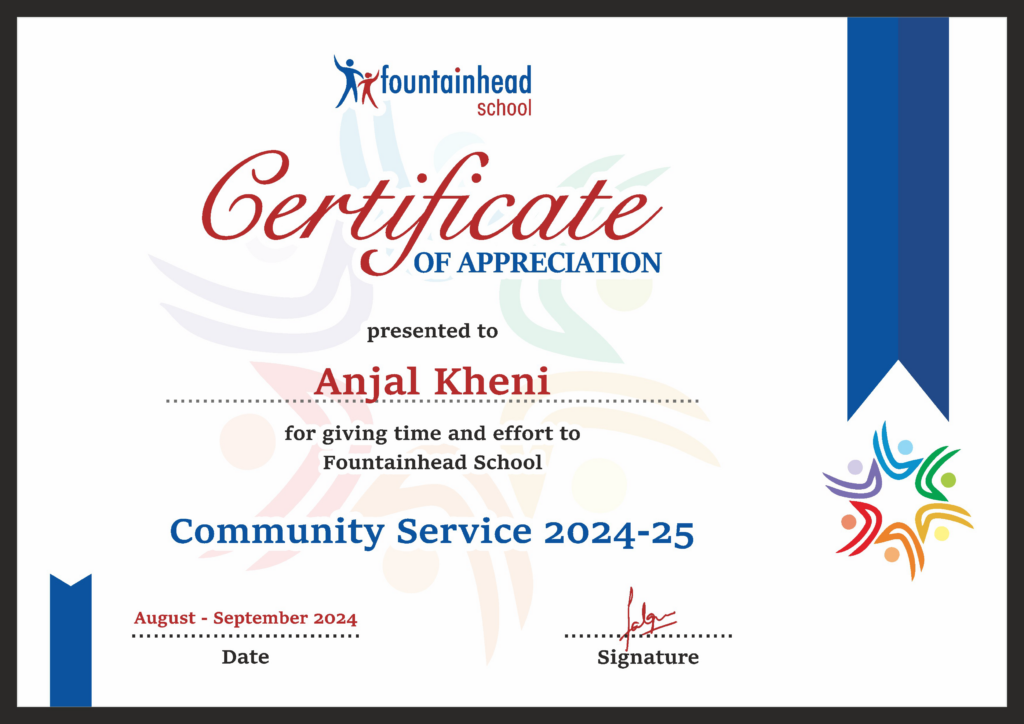
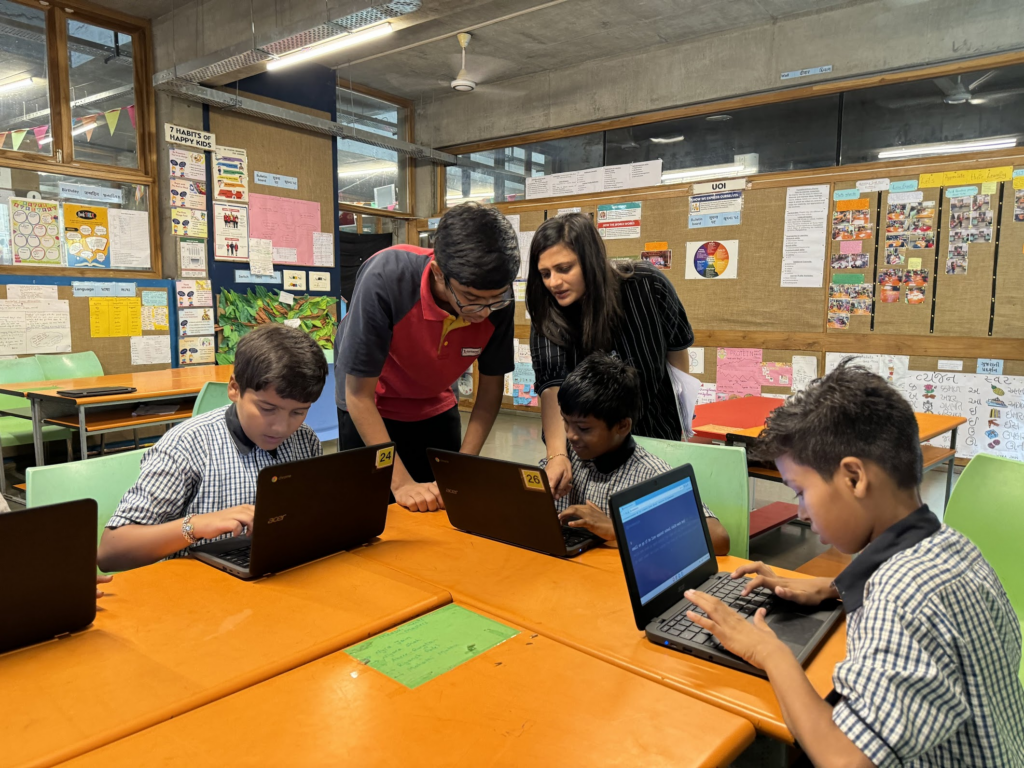
Community service was an event where students from nearby government schools came to Fountainhead, and we had to teach them different skills like Arts, Sports, Science, and ICT. The program lasted for three weekends, from 24-Aug-2024 to 15-Sep-2024. I chose ICT, and along with my friends, we got to teach about 50 kids in total.
Teaching ICT was not as easy as it seemed at first. The school gave us a rough plan, but we had to figure out how to teach and engage the kids properly. We covered topics like typing, creating documents, understanding computer functions, and more. I was responsible for a group of around 15-20 students, and while focusing on them, I also had to keep an eye on the other tables. It was a bit overwhelming because kids would call for help from all directions, and sometimes, explaining the same thing multiple times got frustrating. Plus, we had limited Chromebooks, so two students had to share one, making things even slower. Some kids understood fast, while others needed constant reminders, which made me realize how hard teaching actually is. Despite all these challenges, I could see that we were making a difference, and the kids seemed happy to learn something new.
LO1: Identify Own Strengths and Develop Areas for Growth
Through this experience, I realized that I am quite good at explaining technical concepts in a simple way. Many of the students had never used a computer before, but I managed to break things down so they could understand. However, I also realized that patience is something I need to work on. Some kids took longer to grasp concepts, and it was frustrating at times to repeat the same thing again and again. Also, managing a large group while making sure each student was learning properly was harder than I expected. This experience showed me that I need to improve my ability to handle different learning speeds and stay calm when things don’t go as planned.
LO3: Initiate and Plan a CAS Experience
Even though the school gave us an outline, we had to plan on our own how to structure the sessions. My friends and I decided on what to teach first and how to explain things step by step so that the kids wouldn’t get confused. We also made a small test in Google Docs for them on the second-last day to see how much they had learned. Planning was difficult because we didn’t know how fast or slow the kids would learn, so we had to adjust along the way. It made me realize that teaching is not just about explaining but also about understanding how others learn and adapting accordingly.
LO5: Demonstrate Skills and Benefits of Working Collaboratively
Since we had to manage a class of 22–24 kids, teamwork was very important. Even though we each had our own tables, we worked together whenever one of us needed help. If one of my friends forgot to mention something while explaining to the whole class, I would jump in and add the missing details. It was an unspoken understanding between us. We also divided responsibilities so that no one was overwhelmed. This experience showed me that teamwork is not just about dividing work but also about supporting each other and adjusting based on the situation.
LO6: Engagement with Issues of Global Significance
In today’s world, computers and technology are a necessity. But many kids from government schools don’t have access to proper education in ICT. This creates a gap between those who can use technology and those who cannot, which is a global issue. If people don’t learn these basic digital skills, they will struggle in the future. By teaching these kids ICT, we were helping reduce this gap in a small way. Even though we only covered the basics, it was a step towards giving them knowledge that could be useful later in life.
LO7: Recognize and Consider the Ethics of Choices and Actions
Teaching ICT to these students made me realize the unfairness of the digital divide. In our school, we use computers daily, but for them, even typing was a new experience. It made me think about how privileged we are and how important it is to share knowledge with those who don’t have the same opportunities. At the same time, we also had to make sure that we taught them about responsible internet use, digital safety, and ethical practices while using technology. This experience made me more aware of the responsibility we have when we have access to resources that others don’t.
Final Thoughts
Overall, this community service was exhausting but rewarding. At times, it was frustrating when kids forgot what they had learned, or when too many of them needed help at the same time. But in the end, seeing their excitement when they understood something new made it worth it. It also gave me a new level of respect for teachers because handling a class is not easy. I think every student should experience something like this at least once, just to understand the effort that goes into teaching and the importance of giving back to society.