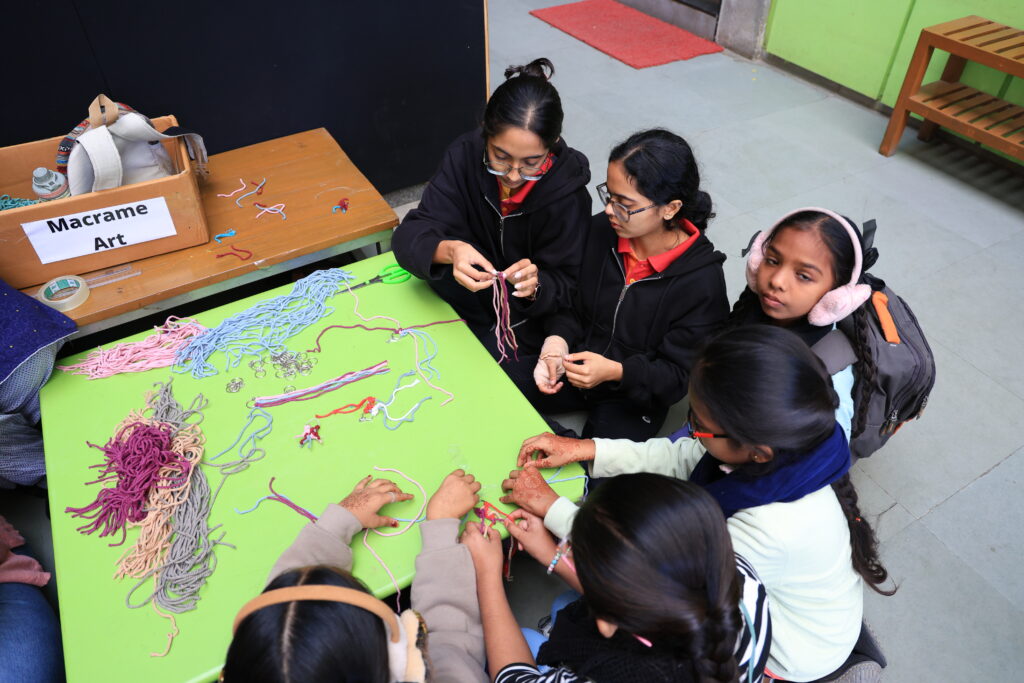
Bal Mela is an annual event committed to offering underprivileged kids the opportunity for learning, creativity, and fun. This year, I was fortunate enough to lead a macrame art workshop, in which I instructed the kids to make simple but beautiful crafts. The experience was not only about teaching a skill but also about encouraging self-expression, patience, and confidence among the participants. Working with these children provided me with the opportunity to see firsthand the difference that access to creative education can make, and this was a truly eye-opening and rewarding experience.
LO6: Demonstrate engagement with issues of global significance.
Participating in Bal Mela helped me contribute to a larger social cause – providing kids from underprivileged backgrounds exposure to creativity and activities. I personally was a volunteer in the Macrame Art section. Teaching these kids how to do macrame wasn’t just about making knots and giving them a new keychain, but it was actually about empowering them by teaching them a new skill, encouraging their creativity and also boosting their confidence.
Kids from underprivileged backgrounds usually do not have access to creative mediums and artistic expressions. Through Bal Mela, I was able to play a small role in bridging that gap and experiencing their enthusiasm and curiosity in wanting to learn anything new, reinforced the existing global issue of education inequality and how creativity is needed for their holistic development as well.
LO7: Recognize and consider the ethics of choices and actions.
One of the major ethical considerations I had to keep in mind during this experience was ensuring that the learning environment was respectful, inclusive and engaging for all of the students. Most of the students hadn’t ever tried macrame before, and hence, it was necessary for us to be patient, encouraging and also adapt to their learning pace. I had to be mindful of not assuming prior knowledge while also maintaining an encouraging atmosphere. Since the children were of varying ages, I had to make sure that I appreciated all of their efforts, and it was important to make sure that every child felt equally valued, regardless of their skill level, knowledge or background.
Having access to quality education and holistic opportunities is something I’ve taken for granted, but through this experience, I understood the ethical duty to share knowledge in a way that is empowering rather than patronizing. Instead of viewing this as an act of charity, I approached it as a way of learning, where I gained insight from their resilience and eagerness to learn as well.