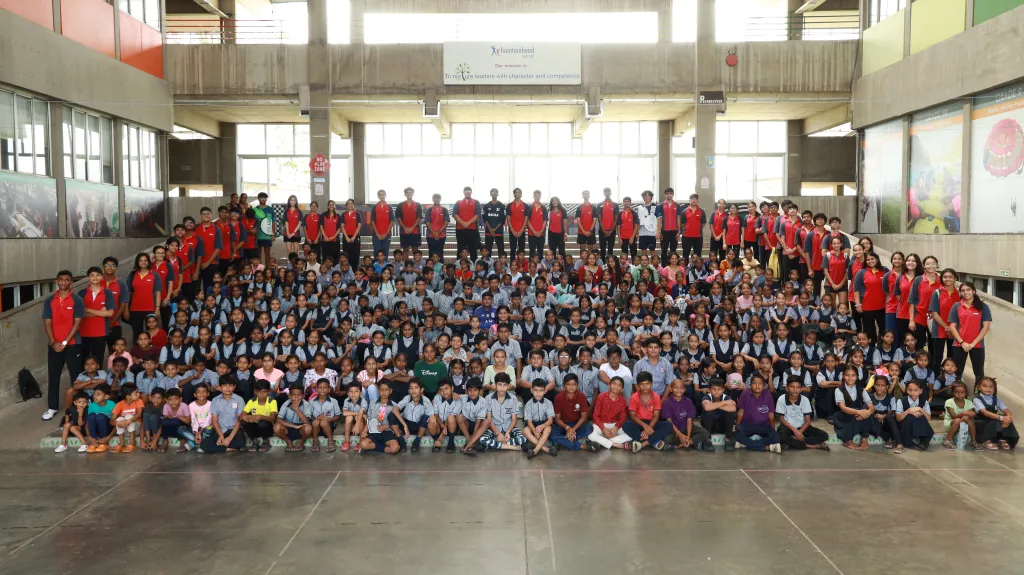
Every year, our school organizes a community service event where young students from government schools visit us to learn different activities like sports, art, and various skills. This year, I volunteered to teach frisbee to over 50 students. I worked together with other volunteers, communicating clearly with the students to make sure they understood the game. Frisbee has been one of my favorite sports for the past 2–3 years, and since it is not a well-known sport, I wanted to share my knowledge and skills with others. This experience also helped me improve my ability to collaborate and communicate effectively.
LO1 – Identify own strengths and develop areas for growth Screen reader support enabled.
This activity connects well with the first learning outcome (LO1) because it allowed me to recognize my strengths and develop new skills. Since I have been playing frisbee for a few years, I was confident in my ability to teach the basics. However, explaining the game to younger students in a simple and engaging way was a new challenge. Through this, I improved my communication and leadership skills, which will help me in the future.
LO2 – Demonstrate that challenges have been undertaken, developing new skills.
The second learning outcome (LO2) is also reflected in this experience, as it was a challenging task to manage a group of 50 students and ensure that they all understood the game. Teaching such a large group required patience, adaptability, and strong leadership. At first, it was overwhelming to get their attention and keep them engaged, but over time, I developed better strategies to manage the group effectively.
LO4 – Show perseverance and commitment in CAS experience.
The fourth learning outcome (LO4) is strongly connected to this activity as well because it required perseverance and commitment. This was not just a one-time event I had to teach frisbee every weekend for a month. Staying dedicated to this task and making sure every session was productive took a lot of effort. Even when it was tiring, I kept going because I knew it was making a difference.
LO5 – Demonstrate skills and benefits of working collaboratively.
The fifth learning outcome (LO5) was demonstrated through the teamwork involved in teaching. I collaborated with other volunteers to make the sessions more engaging and organized. We divided responsibilities, helped each other manage the students, and ensured that everyone got a chance to participate. Working as a team made the teaching process smoother and more enjoyable for both us and the students.
LO6 – Engagement with issues of global significance.
It also relates to the sixth learning outcome (LO6), as it involved engagement with an issue of global significance (SDG 4 – quality education for all). Many students from government schools do not get access to sports like frisbee. By teaching them, I was able to introduce them to a new activity that promotes teamwork, fitness, and coordination. It also made me more aware of how important it is to create learning opportunities for those who may not have them.
LO7 – Recognise and consider the ethics of choices and actions.
Finally, the seventh learning outcome (LO7) is reflected in this experience, as I had to consider the ethics of my choices and actions. Teaching a large group of students required patience and responsibility. I had to ensure that everyone was included, understood the game, and felt encouraged rather than discouraged. I also had to collaborate with my fellow volunteers, making sure we divided responsibilities fairly and worked as a team.
Overall, this experience was both rewarding and educational. It allowed me to share my passion for frisbee while also improving my leadership, teamwork, and communication skills. More importantly, it reminded me of the impact we can have by sharing knowledge and creating opportunities for others.
