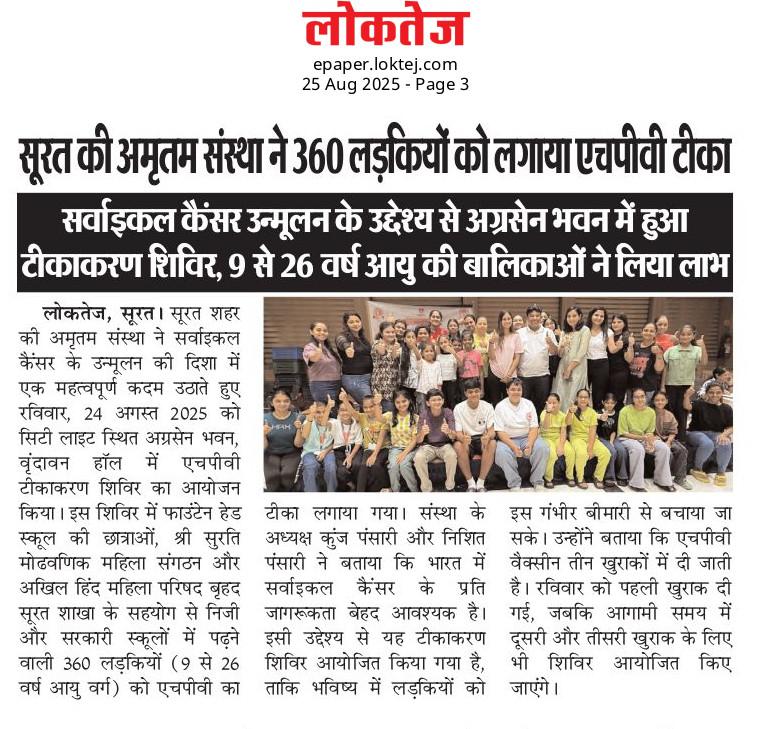
One of the most impactful service experiences I contributed to was supporting the organization of a Cervical Cancer Vaccination Camp aimed at improving access to preventive healthcare for underprivileged girls and women. Guided by Dr. Kirti Sharma and supported by several volunteers—including my friend who led the project—we were able to turn this initiative into a meaningful community service event.
The goal of the camp was to raise awareness about cervical cancer and provide the HPV vaccine at no cost for girls from government schools and at a subsidized rate for women who otherwise would not have been able to afford it. The event successfully vaccinated over 360 participants, making a direct contribution to the long-term health and safety of the community. Along with the vaccination process, volunteers ensured a welcoming environment by arranging breakfast, organizing seating, and helping coordinate the follow-up camp for the second dose.
LO1 – Identifying Strengths and Areas for Growth
Participating in this service project helped me recognize my strengths in teamwork, communication, and supporting large-scale community events. I noticed that I worked well in roles involving participant assistance, organizing flow, and problem-solving during busy hours. At the same time, I discovered areas I could improve—such as handling sudden changes calmly and learning to manage responsibilities more efficiently during high-pressure moments. This self-awareness motivated me to approach future service opportunities with greater focus and confidence.
LO2 – Undertaking Challenges and Developing New Skills
The camp involved several real-world challenges. Since many families were unfamiliar with the HPV vaccine, explaining its importance required patience, cultural sensitivity, and clear communication. I also had to learn how medical teams operate in community settings and understand basic procedures to help maintain smooth coordination. By stepping into roles I had never experienced before, I developed stronger interpersonal skills, adaptability, and a better understanding of community healthcare work.
LO3 – Planning and Supporting a CAS Initiative
Although my friend led the project planning, I actively supported the final stages of preparation and execution. This included assisting with volunteer coordination, helping prepare awareness materials, and contributing to logistical organization on the event day. Being involved in a project that required weeks of preparation showed me how much work goes into creating a service initiative that is safe, efficient, and genuinely helpful.
LO4 – Commitment and Perseverance
The success of the camp depended on consistent involvement. I attended every meeting and helped with tasks such as registration, participant guidance, and organizing queues. Even when unexpected problems occurred—such as delays or equipment issues—I stayed committed until everything was resolved. Contributing steadily throughout the process helped me understand the importance of perseverance in service-oriented work.
LO5 – Collaboration and Teamwork
This experience demonstrated how essential collaboration is in community health initiatives. Volunteers, doctors, nurses, and school staff all played a part in ensuring the camp ran smoothly. My responsibilities often required coordinating with medical professionals and other volunteers to maintain organized vaccination lines and provide clear information to participants. Through this, I learned how effective teamwork empowers service projects to create meaningful impact.
LO6 – Addressing a Global Issue
Cervical cancer remains a major global health concern, especially in regions with limited access to preventive care. By assisting in this vaccination camp, I contributed to SDG 3: Good Health and Well-Being and SDG 10: Reduced Inequalities. Helping make vaccines accessible to underserved groups showed me how local service can directly support global health goals and make a long-term difference in people’s lives.
LO7 – Ethical Responsibility
Ethical considerations were central to the camp. Volunteers had to ensure fairness, confidentiality, and respect toward every participant. It was important to maintain a safe environment, follow medical instructions carefully, and treat each individual with dignity. I also learned the importance of using available resources responsibly to support others and to make decisions with empathy and integrity.
Reflection
Helping with the Cervical Cancer Vaccination Camp was a powerful reminder of how meaningful service can improve lives. I grew as a communicator and team member, gained insight into community healthcare, and witnessed firsthand the value of preventive medicine. This experience encouraged me to continue engaging in service that promotes equal access to health and well-being, and it strengthened my commitment to supporting community initiatives that create lasting positive change.