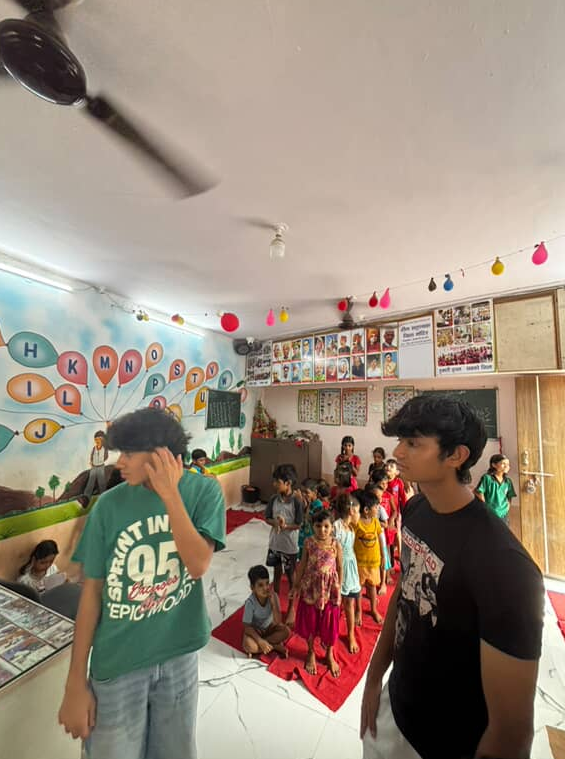
For my CAS Project, I am actively involved in Sowkind, a student-led club that functions like a small NGO with the mission of spreading kindness and education. Along with my peers, I regularly visit schools and ashrams every Saturday to teach, interact with, and motivate underprivileged children. We have already carried out over four visits, with many more planned in the coming months. As a member of the core team, I serve as the Finance Head, where I manage the budgeting, oversee the use of funds, and help plan financial aspects of our activities and donation drives. This role allows me to combine my organizational and analytical skills with service, ensuring that our initiatives remain sustainable, transparent, and impactful.
LO 1: Identify your own strengths and develop areas for personal growth
As Finance Head, I discovered that my strengths lie in organization, analytical thinking, and responsibility. Managing budgets, tracking expenses, and ensuring transparency allowed me to use these skills effectively to support the club’s activities. At the same time, I realized the need to improve my time management and learn how to balance financial responsibilities with active participation in on-ground service. This project has helped me recognize my potential as a principled and reliable team member, while also motivating me to strengthen my organizational and leadership skills.
LO 2: Demonstrate that challenges have been undertaken, developing new skills in the process
Taking on the role of Finance Head in Sowkind presented me with several challenges, particularly in managing funds responsibly and ensuring that every expense was justified and transparent. At first, it was difficult to organize budgets, track contributions, and plan financial resources for future visits while also being actively involved in service activities. However, these challenges pushed me to develop stronger organizational skills, improve my ability to prioritize tasks, and become more detail-oriented. Additionally, I had to learn how to balance financial planning with teamwork, which helped me grow as a communicator by presenting financial updates clearly to the group.
LO 3: Demonstrate how to initiate and plan a CAS experience
As part of the core team of Sowkind, I was actively involved in initiating and planning our activities. Together with my peers, we identified underprivileged schools and ashrams to visit, scheduled weekly sessions, and divided responsibilities among team members. In my role as Finance Head, I planned the budgeting for each visit, ensuring that resources were allocated effectively for teaching materials, donations, and other expenses. The planning process also required collaboration, as I had to coordinate with other departments (such as Marketing and Operations) to align financial decisions with campaign goals and on-ground activities.
LO 4: Show commitment to and perseverance in CAS experiences
My role as Finance Head in Sowkind required consistent commitment and perseverance. Every Saturday, I actively took part in school and ashram visits while also fulfilling my responsibility of managing the club’s finances. Balancing academic work with weekly service activities was sometimes challenging, but I stayed committed by prioritizing my time and ensuring that both on-ground service and financial responsibilities were handled without compromise. There were moments when budgeting and tracking expenses became difficult, especially during donation drives and when multiple activities were planned at once.
LO 5: Demonstrate the skills and recognize the benefits of working collaboratively
Working as Finance Head in Sowkind has taught me the importance of collaboration in achieving our goals. Managing finances required constant communication with the core team, particularly with Marketing, Operations, and volunteer coordinators, to ensure that budgeting aligned with our planned activities and campaigns. I learned to listen to others’ perspectives, negotiate priorities, and coordinate effectively to make informed financial decisions. Through this collaborative process, I recognized that teamwork not only distributes responsibilities but also brings diverse ideas together, improving the quality and impact of our initiatives. Working closely with my peers allowed me to develop interpersonal skills, patience, and adaptability.
LO 6: Demonstrate engagement with issues of global significance
Through my involvement with Sowkind, I have engaged with issues of global significance such as educational inequality and social inclusion. Many underprivileged children face limited access to quality education and resources, which reflects broader systemic challenges that exist worldwide. By managing finances for our visits, donation drives, and educational initiatives, I contributed to creating opportunities for these children to learn and grow, directly addressing these global issues at a local level.
LO 7: Recognize and consider the ethics of choices and actions
As Finance Head in Sowkind, I had to make decisions that involved managing funds responsibly and ensuring transparency in all financial activities. Every choice, from allocating resources for teaching materials to handling donations, required careful ethical consideration to ensure fairness, accountability, and integrity. I had to reflect on the impact of my actions, making sure that the club’s resources were used effectively for the benefit of the underprivileged children we serve. This role made me more aware of the ethical responsibility involved in leadership and service. It reinforced the importance of honesty, transparency, and fairness in decision-making.