About the Clean Up:
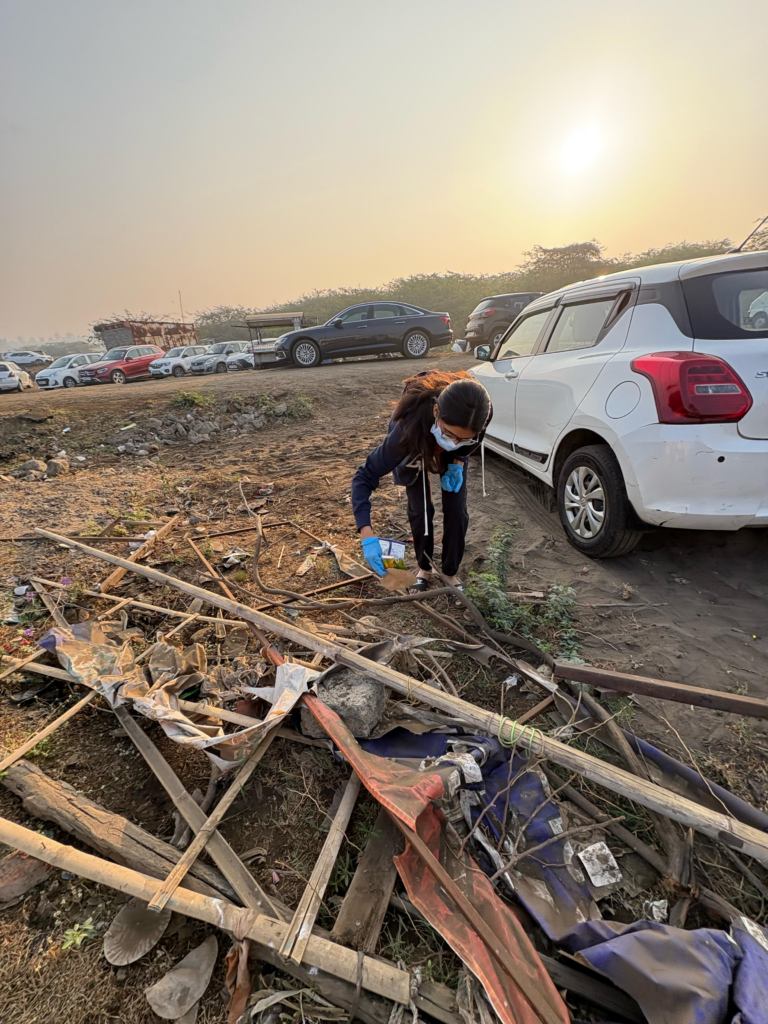
I voluntarily attended three clean-up drives scheduled on Sunday mornings. The city I live in, Surat, is known as the cleanest city of India. However, the amount of trash that is present on roads, sidewalks, beaches, or nearby wetlands is still uncountable. People have taken the title ‘cleanest city’ for granted, and still throw a lot of plastic waste on the roads. Hence, I attended these clean-up drives to perform my part in this society.
LO5: Demonstrate skills and benefits of working collaboratively.
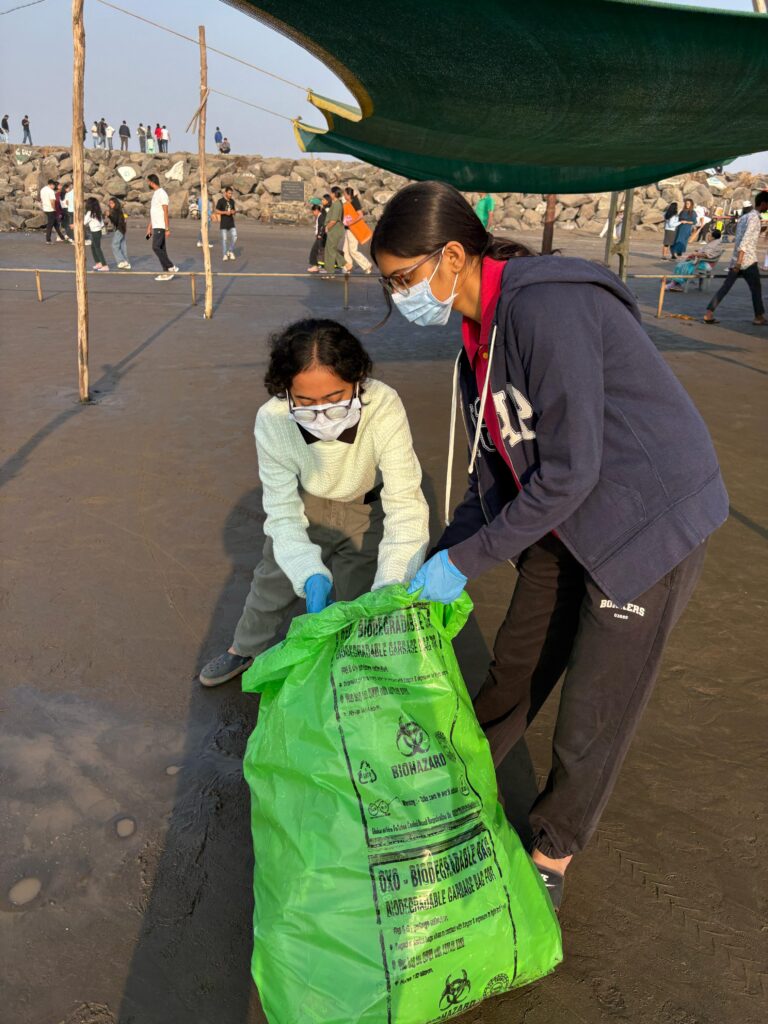
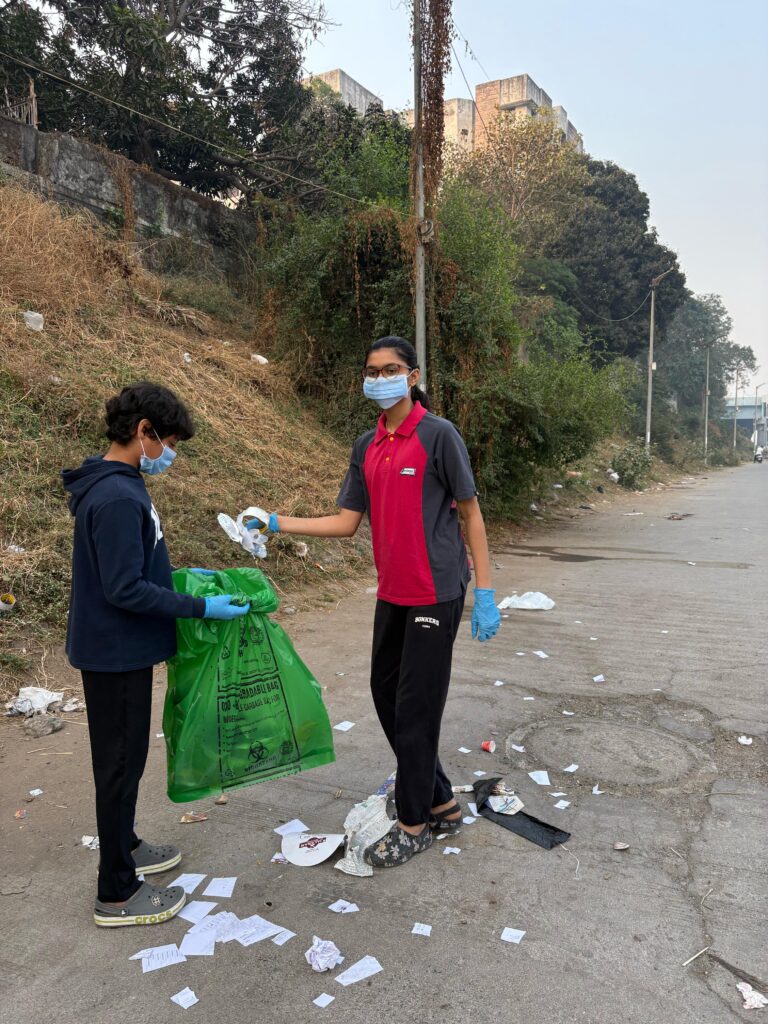
I worked collaboratively with different volunteers to collect plastic. In the first two sessions, I went to the drive with my friends, where we worked together to gather plastic as we walked. One held the plastic bag steady while the other collected the waste, and we kept on switching the roles after a period of time. This way allowed us to work more efficiently and fill up more plastic, sometimes even filling more than one bag! In the last session, grade-6 students were also with us on the drive, so we formed pairs with the 6th graders and supported them while collecting plastic. We worked collaboratively with them, and helped them in holding the bag among other things.
LO6: Demonstrate engagement with issues of global significance
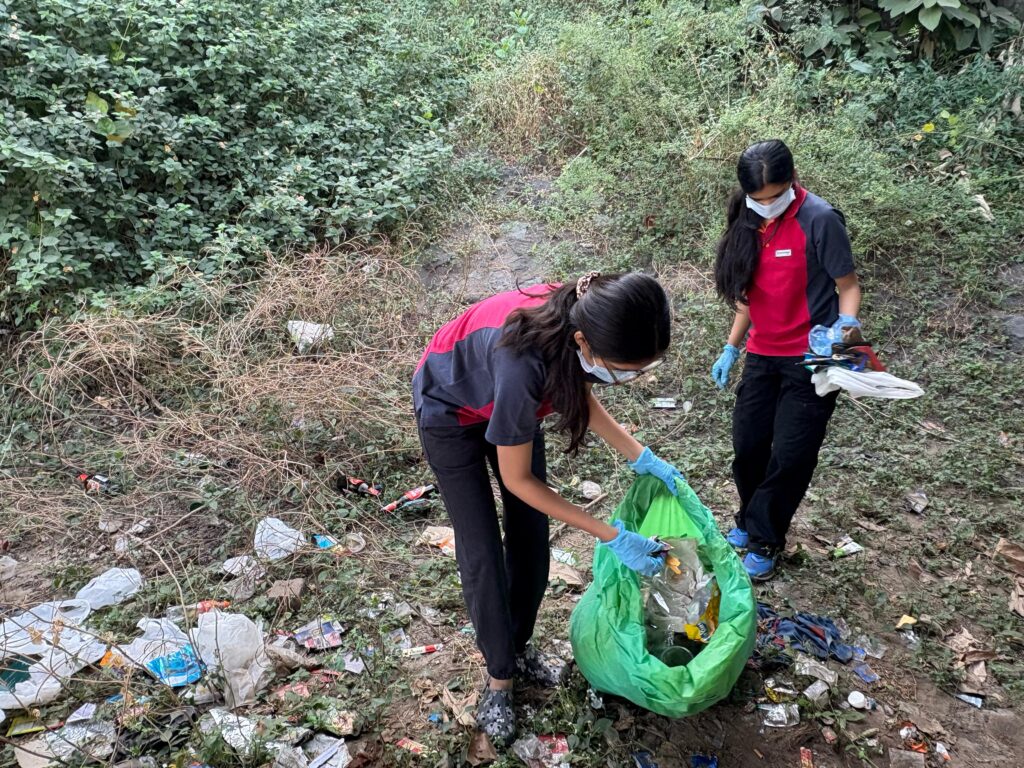
SDG 13 – Climate Action and SDG 15 – Life on Land: These are two of the sustainable development goals that the countries worldwide are striving to achieve. In the world, India is ranked 176th out of 180 countries in the environmental performance index. This is a concerning rank, depicting the scale at which India as a country is not clean, and how this hinders in achieving the global goals 13 and 15. This is an issue of global significance, and I tried to perform my part by cleaning up my city, Surat. Even after being ranked first in India, the amount of plastic waste surprises me. I could even see piled up trashes being burned in a corner of the riverside walks/beaches, releasing carbon monoxide into the atmosphere. This not only contributes to environmental issues, but also leads to long-term breathing problems in humans. And this is not only seen in Surat, but all over India, where if people do not have proper means of disposal, it is eventually piled up and burned. This is the reason why I voluntarily participated in these clean up drives on beaches/wetlands, so that the plastic can be disposed off and no other issues can arise.
LO7: Recognize and consider the ethics of choices and actions
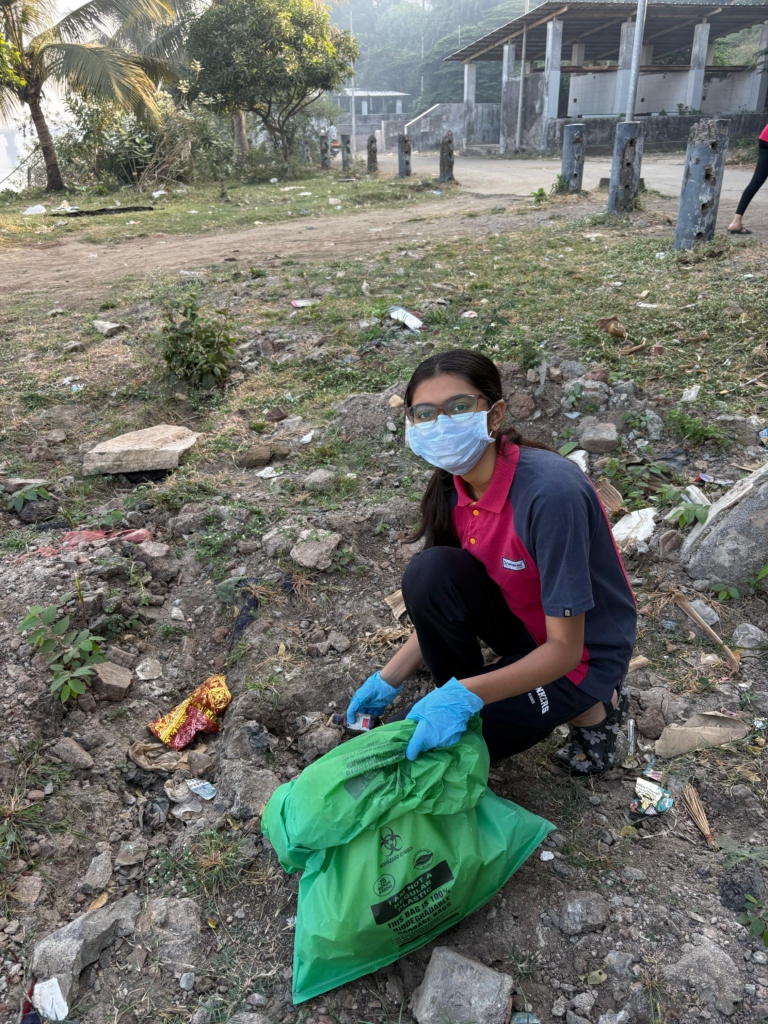
Whenever we casually throw away a piece of plastic on the road, thinking the cleaner will come and pick it up, we are contributing to a problem at a scale bigger than ever imagined. Climate Change, Global Warming, Impact on Animals, and so many more are seen worldwide, that have a negative impact on the overall environment. Therefore, my choice to take part in the clean up drives and strive to make a difference at my personal/local level is an ethical choice, which I hope to continue further as well. Cleaning up the beaches of my city, I have realised how unethical my actions are – ranging from taking a simple plastic bag at the grocery store to using plastic cutlery when eating on the roadside. The waste I picked up were plastic bags and various other plastic products, which made me think back on my purchases, and how those plastic products would eventually end up at the beaches or the riverside, piled up to be burned. To stop this from happening, my contribution to cleaning up the riverside areas and beaches is beneficial for the environment.