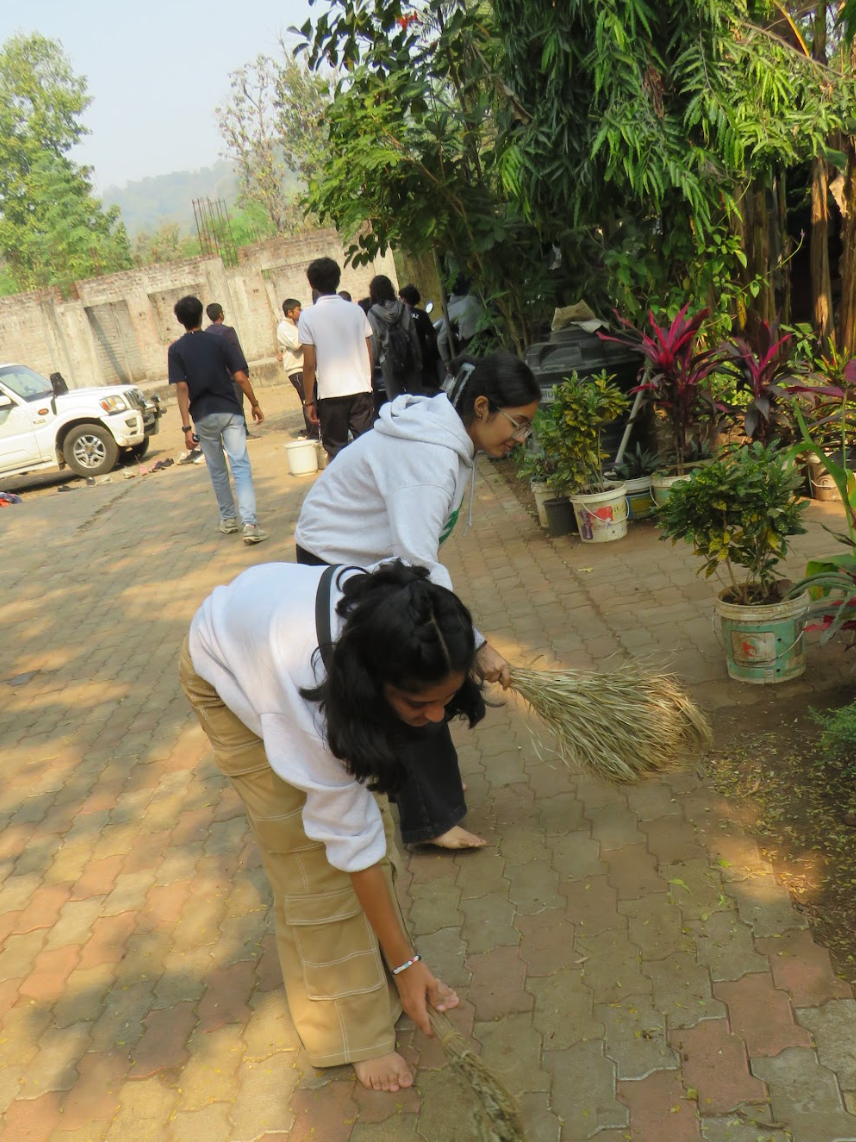
The trip to Ambapani was a highly engaging and insightful trip. Over the course of 6 days, the activities I took part in allowed me to step out of my comfort zone and explore things that I may not in any other setting. These activities consisted of trekking, mud lippan, basket weaving, warli painting, visiting an Ashramshala, etc. I also took part in meaningful activities such as plastic collection and bird watching that allowed me to gain more knowledge about the flora and fauna in the area. Meeting the Sarpanch gave me a new understanding of rural governance and resource management. This trip not only gave me practical skills but also helped me reflect on sustainability, humility, and collaboration in a very real way.
LO1: Identify own strengths and develop areas for growth
I identified my strengths in collaborative work when collecting garbage, Warli Painting and group trekking. I collaborated with my peers to share and divide roles to make the efficiency of the work and the outcome even better. For instance, when painting some of us worked on one wall while the others worked on a different wall, and we helped each other with resources such as creating the right thickness of paint and gathering appropriate resources.
At the same time, I identified areas for growth, such as patience and fine motor skills, which were necessary to complete intricate crafts like weaving with bamboo. This experience helped me reflect on my personal limits and develop strategies to overcome them, such as pacing myself during trekking and practicing focus when learning from the locals.
LO2: Demonstrate that challenges have been undertaken, developing new skills in the process
The trip was filled with challenges that pushed me outside my comfort zone and allowed me to develop new skills. Trekking tested my stamina and persistence, while adventure activities such as climbing and balancing demanded courage and focus. Participating in garbage collection was also challenging, as it required me to overcome the discomfort of handling waste while keeping in mind the importance of environmental care. At the same time, learning mud lippan art and bamboo basket weaving allowed me to develop cultural and creative skills that I had never explored before. By engaging in each activity fully, I gained confidence in taking on new challenges and broadened my skill set both physically and creatively.
LO3: Demonstrate how to initiate and plan a CAS experience
This CAS trip required initiative and planning at multiple stages. On a personal level, I had to prepare in advance by organizing the resources I would need, anticipating challenges like weather conditions, and ensuring I was ready for physical activities such as trekking. During the trip, I showed initiative by engaging with locals and asking questions about their crafts and practices, which deepened my learning experience. I also learned the value of structured planning, as the itinerary was designed to balance service, creativity, and activity. This helped me understand how planning is crucial in making an experience meaningful, organized, and impactful.
LO4: Show commitment to, and perseverance in, CAS experiences
The trip tested my commitment and perseverance throughout. Garbage collection was not an easy task, but I stayed dedicated because I knew the environmental importance behind it. Crafts such as basket weaving and mud lippan art were time-consuming and at times frustrating, but I committed myself to completing them and was proud of the outcome. Trekking also required perseverance, especially when fatigue set in, yet I continued to push forward with the support of my peers. This consistency and determination showed me that meaningful results come when one stays committed to the process, even when the tasks are tiring or uncomfortable.
LO5: Demonstrate the skills and recognize the benefits of working collaboratively
Collaboration was central to the success of this CAS trip. Garbage collection required teamwork to make the work faster and more efficient, and trekking involved supporting and encouraging each other to stay motivated. When learning crafts such as basket weaving, collaboration with locals was key, as they generously shared their skills and knowledge. This experience highlighted the importance of respecting and valuing the expertise of others. I also recognized that collaboration makes tasks more enjoyable and fosters a sense of shared achievement. Working together with peers and community members demonstrated to me the power of collective effort.
LO6: Demonstrate engagement with issues of global significance
Many activities on the trip related directly to global issues. Garbage collection connected to the worldwide problem of waste management and environmental pollution. Learning traditional crafts like bamboo weaving and mud lippan art tied into global conversations about sustainability, eco-friendly practices, and cultural preservation. By exploring local flora and fauna, I gained an appreciation for biodiversity and the global issue of conservation. The experience made me realize that small, local actions—whether picking up litter or practicing sustainable crafts—contribute to addressing challenges that affect the entire world.
LO7: Recognize and consider the ethics of choices and actions
Ethics were a constant consideration throughout this CAS trip. By collecting garbage, I reflected on the responsibility we all share in keeping natural spaces clean. Engaging with locals to learn their crafts required respect, sensitivity, and ensuring their culture was represented authentically and not exploited. I also became aware of the ethical responsibility of sustainability—choosing practices that benefit the environment rather than harm it. Even in trekking and adventure activities, safety and respect for the natural environment had to be prioritized. These experiences helped me understand how every choice we make carries ethical weight, especially when it impacts the community or the environment.