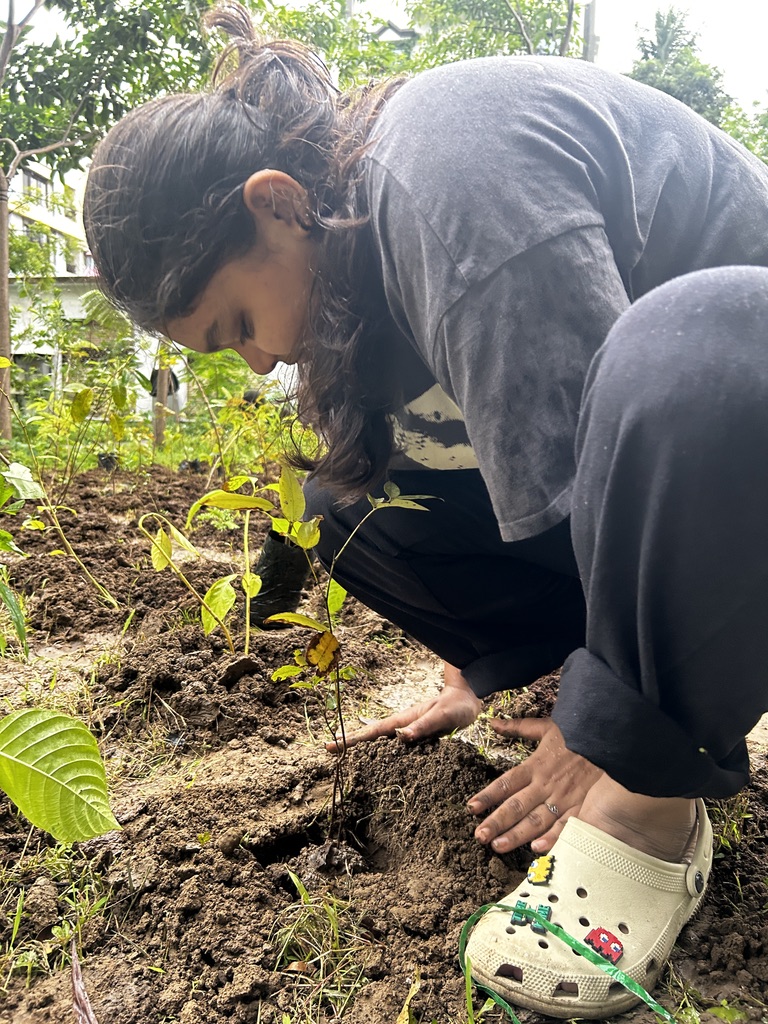
Dates: 6 July, 24 August, 21 September
The aim of this experience was to contribute to environmental sustainability by taking part in a local plantation drive. I wanted to take steps to protect nature while collaborating with others and learning about the long-term impact of small actions on global issues.
LO2 – Demonstrate that challenges have been undertaken, developing new skills in the process:
The plantation drive was physically demanding, especially under the heat. Digging, planting, and carrying saplings required endurance and teamwork. Through this, I developed patience, time management, and practical gardening skills, as well as a deeper understanding of plant care and environmental maintenance. I also learned about Miyawaki farming and why its a great technique to help restore forests and greenery through the NGO that conducted the workshop.
LO4 – Show commitment to and perseverance in CAS experiences:
I stayed committed to the plantation drives even when it was tiring or the weather was harsh. Attending multiple sessions showed my dedication to the cause and taught me that real change requires consistency and effort over time.
LO5 – Demonstrate skills and benefits of working collaboratively:
Working with volunteers and community members required communication, cooperation, and flexibility. We divided tasks and supported each other throughout the activity, initially we stood in a line and passed the plants along such that less manpower was required and it required teamwork and collaboration that I was able to commit to.
LO6 – Engagement with issues of global significance:
Deforestation and climate change are global problems. Participating in this local plantation drive made me realize how small, community-based actions can collectively contribute to global environmental goals like carbon reduction and biodiversity conservation. Although the plantation drives were simple in nature as a seemingly technique that was what made it helpful. It took us an hour to two to cover a great amount of land, so with dedication and resources it can be a simple and small step to give back to nature.
LO7 – Recognise and consider the ethics of choices and actions:
Planting trees is an ethical response to environmental degradation. I also learned to prioritize native species to maintain ecological balance, which deepened my awareness of making sustainable and responsible choices.
Reflection and Learning Outcome:
This experience taught me of sustainability and teamwork. I realized that small actions can create lasting change when done consistently. I grew more aware of my global role in sustainability and strengthened my commitment to environmental protection in daily life.