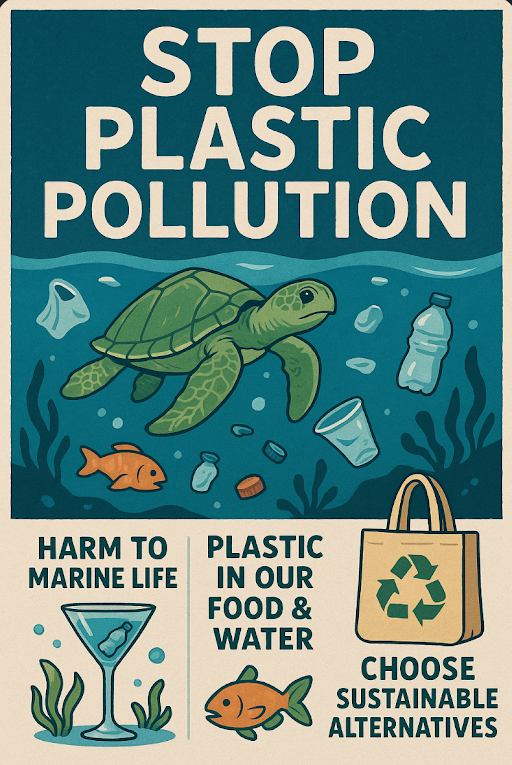
Plastic pollution is one of the most pressing environmental issues in the world today. It harms marine life, pollutes ecosystems, and contributes significantly to global waste. Through this CAS experience, my goal was to raise awareness within my school and local community about the harmful effects of plastic and promote sustainable alternatives such as reusable bottles, cloth bags, and biodegradable materials.
To achieve this, I organized an awareness campaign that included interactive presentations, poster displays, and short talks with students. I also collaborated with my school’s environmental club to set up a collection drive encouraging people to bring in single-use plastics for proper recycling. This project helped me combine creativity and service to make a small but meaningful difference.
LO1: Identify own strengths and develop areas for growth
During this experience, I recognized my strength in public speaking and communication. I was able to confidently explain the causes and effects of plastic pollution and engage my audience effectively. However, I also realized that I needed to improve my organizational skills—especially in planning events and coordinating with others to ensure everything ran smoothly. This experience helped me identify how better time management and preparation can improve the overall impact of a project.
LO3: Demonstrate how to initiate and plan a CAS experience
Planning this campaign required me to research plastic pollution, design visuals, and schedule awareness sessions. I had to plan in advance, prepare materials, and ensure that every step—from gathering resources to execution—was completed on time. This process allowed me to practice project management skills and understand the importance of clear goals and teamwork in achieving successful outcomes.
LO5: Demonstrate the skills and recognize the benefits of working collaboratively
This experience taught me the true value of collaboration. Working with peers and teachers helped the campaign reach more people and become more engaging. We divided tasks such as designing posters, giving presentations, and collecting plastic waste. This teamwork not only made the experience enjoyable but also improved the campaign’s overall effectiveness.
LO6: Demonstrate engagement with issues of global significance
Plastic pollution is a global issue that affects both land and marine ecosystems. By raising awareness, I contributed to the broader movement of environmental sustainability. I learned that even small, localized efforts—like reducing single-use plastics in a school—can make a meaningful difference when multiplied by many individuals taking similar actions.
LO7 – Recognise and consider the ethics of choices and actions
During this CAS experience, I became more aware of the ethical responsibility involved in promoting environmental change. I made sure the information I shared about plastic pollution was accurate, respectful, and considerate of people who may not have easy access to sustainable alternatives. This helped me understand how my actions and messages can influence others and the importance of encouraging change in a fair and responsible way.
Conclusion
Overall, this CAS experience was deeply rewarding. It allowed me to apply my knowledge, take initiative, and work collaboratively toward a meaningful cause. I became more aware of my environmental responsibilities and realized how important it is to inspire others to take action as well. This experience not only strengthened my sense of global citizenship but also motivated me to continue advocating for sustainability in my everyday life.