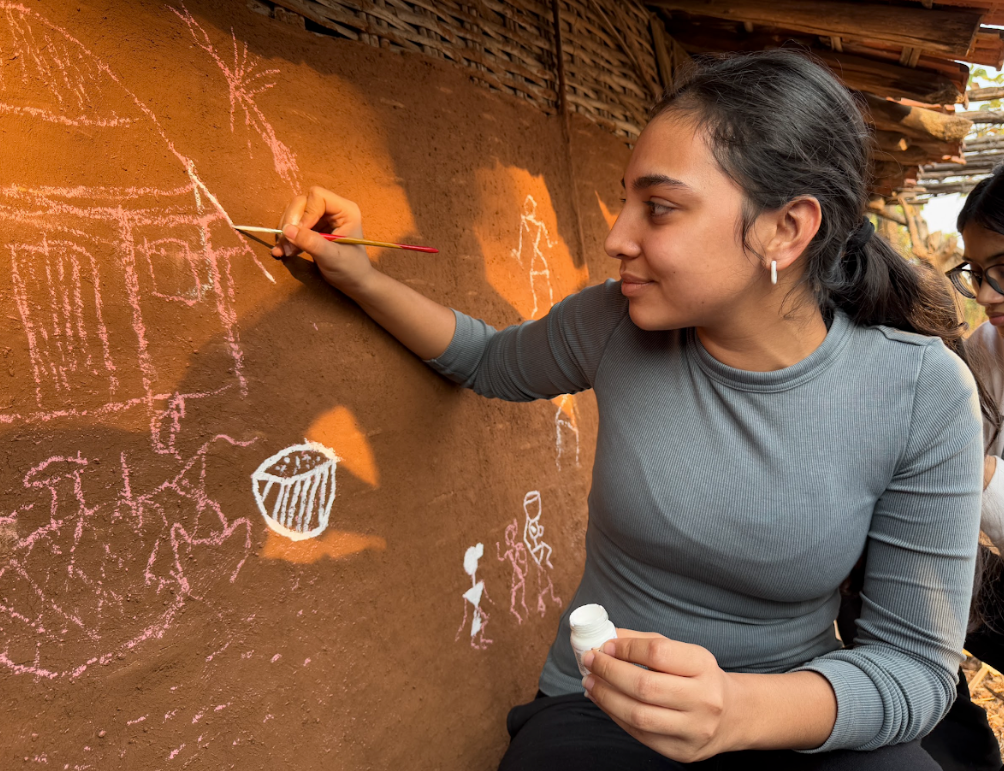
Participating in the recent CAS trip was an insightful and transformative experience that gave me a deeper understanding of the realities of life in rural areas. The trip provided an opportunity to witness firsthand the challenges that people face daily, including limited access to resources, education, and healthcare. It was eye-opening to learn about their lifestyle, the systems and traditions they follow, and the innovative ways they solve problems without relying on expensive or high-tech equipment.
One of the most valuable aspects of the trip was observing how communities find solutions to local problems using creativity, collaboration, and resourcefulness. From water management techniques to sustainable farming methods, I realized that problem-solving does not always require advanced technology—sometimes, understanding the context and working with available resources can make a significant difference. This encouraged me to be an open-minded learner, ready to accept different perspectives and appreciate the unique ways communities tackle challenges. I actively engaged with the people we met, asking questions, suggesting ideas, and learning from their experiences.
Throughout the trip, I also developed perseverance and commitment (LO4). Many activities involved hands-on participation in projects and tasks that required patience, effort, and consistent engagement. Whether it was assisting with educational activities or community improvement projects, I committed myself fully to the work and to understanding the impact of our actions on the community.
The trip also highlighted issues of global significance (LO6), including Zero Hunger, Quality Education, and Reducing Inequality. Seeing the effects of poverty and limited resources firsthand gave me a deeper appreciation for these global challenges and inspired me to think critically about how sustainable solutions can be developed at both local and global levels.
Finally, the experience allowed me to reflect on the ethics of choices and actions (LO7). I became more aware of the responsibility that comes with engaging in community work, understanding the importance of respectful interaction, cultural sensitivity, and empathy. It helped me develop a caring mindset and consider how my actions and decisions can have real-life consequences for others.
Overall, this CAS trip was more than just an eye-opening visit; it was a journey that nurtured empathy, responsibility, and a commitment to creating positive change. It strengthened my understanding of global issues while allowing me to grow as a compassionate and thoughtful individual.