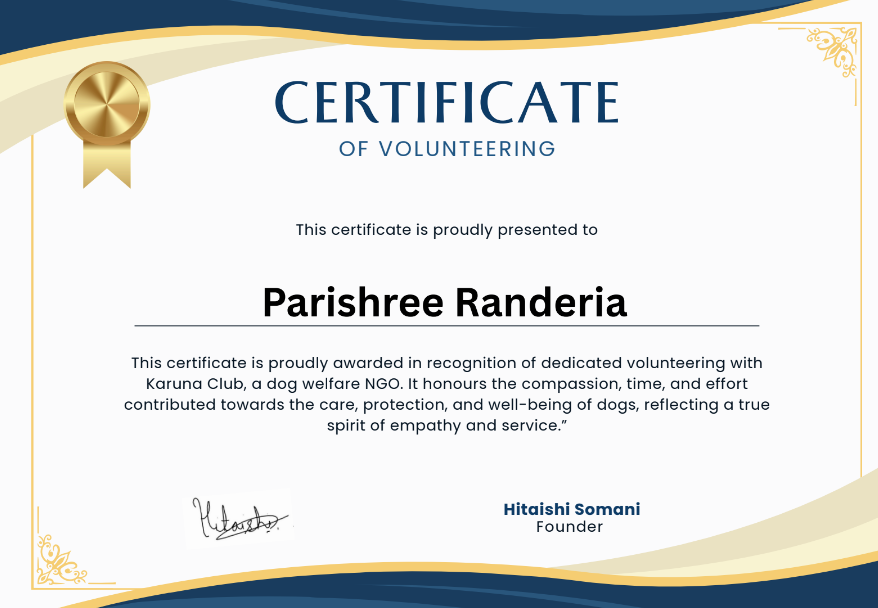
From August 1st, 2024, to August 1st, 2025, I volunteered with a dog welfare NGO that focuses on feeding, rescuing, and caring for stray dogs in my local community. Throughout this experience, I took part in several activities such as feeding stray dogs, assisting in their care, and spreading awareness about animal welfare. This year-long service experience opened my eyes to the realities of animal neglect and the importance of compassion towards all living beings. It was both emotionally rewarding and deeply educational, helping me develop empathy, responsibility, and a sense of purpose in serving the community.
LO2: Demonstrating Challenges and Developing New Skills
Working with stray dogs came with a number of challenges—some physical, others emotional. One of the biggest challenges was overcoming fear and uncertainty when approaching stray dogs who were initially defensive or scared. I had to learn how to approach them calmly and patiently, using body language and gentle gestures to gain their trust.
I also developed new communication and teamwork skills, as the NGO team had to coordinate feeding schedules, discuss rescue operations, and ensure safety while interacting with the animals. Another important skill I learned was empathy-driven problem-solving—understanding how to respond to the dogs’ needs, whether it was finding shelter for an injured one or ensuring that food was shared fairly among them.
This experience taught me that taking care of animals isn’t just about feeding them—it’s about understanding their behavior, building trust, and treating them with respect.
LO3: Initiating and Planning a CAS Experience
While I joined the NGO as a volunteer, I also took initiative in planning small feeding drives in my local area with a few friends. We coordinated with the NGO to get food supplies, mapped out safe feeding zones, and managed our time to make sure the dogs were fed regularly.
I planned routes and schedules that ensured we reached different neighborhoods efficiently while avoiding traffic and hazardous areas. I also helped organize awareness posts and social media updates to encourage others to donate food or join as volunteers. This initiative helped me understand the importance of organization, planning, and consistency in any long-term community service effort.
LO4: Showing Perseverance and Commitment
This experience lasted for an entire year, and consistency was the key challenge. There were days when the weather was harsh or when schoolwork piled up, but I made sure to stay committed to my volunteering schedule. Feeding and caring for stray dogs is not a one-time act of kindness—it requires ongoing dedication, as the animals depend on us for regular support.
There were moments of frustration too—especially when I encountered injured or sick dogs that we couldn’t help immediately due to limited resources. Yet, I learned to stay patient and persistent, focusing on what we could do rather than what we couldn’t. Over time, my perseverance paid off as I saw positive changes—dogs becoming healthier, more trusting, and even being adopted into safe homes.
LO6: Engagement with Issues of Global Significance
Animal welfare is not just a local issue—it’s a global concern that ties into the United Nations’ Sustainable Development Goal 15: Life on Land, which focuses on protecting and restoring ecosystems and promoting harmony between humans and animals. Through this experience, I became more aware of how urbanization and human neglect affect stray animals, leaving them without food, shelter, or medical care.
By volunteering with the NGO, I contributed to a small but meaningful part of this global effort—reducing animal suffering and promoting coexistence between humans and animals. This experience also made me more aware of how local communities can take responsibility for their stray populations through feeding programs, sterilization drives, and awareness campaigns.
LO7: Recognising and Considering the Ethics of Choices and Actions
Ethics played a major role in this experience. Working with stray animals requires compassion but also responsibility. It made me think about how our everyday actions—like wasting food or ignoring injured animals—can have ethical implications. I learned that kindness towards animals should not be an occasional act but a consistent practice of empathy and respect for all forms of life.
During my time volunteering, I also had to make ethical decisions such as ensuring that food distribution was fair and that no animal was left out or harmed in the process. Moreover, I reflected on the ethical responsibility humans have as caretakers of the environment, realizing that strays exist largely due to human neglect and urban development.