Description of Experience and Goals:
For my CAS project, I worked on creating the official yearbook for my grade. The yearbook is an annual tradition and, like any traditional yearbook, it captures the batch’s journey and memories from nursery all the way to grade 12. It has every student’s quotes, photos, and their most cherished memories, showcasing how we grew from being little kids to finally graduating. I always knew I wanted to be a part of the yearbook team because I wanted to contribute to this tradition and preserve these memories for everyone. Since I have a strong passion for graphic designing, the project naturally aligned with my interests and allowed me to create something meaningful.
Reflection on the experience
Working on the yearbook was one of the most nostalgic and bittersweet experiences of my school life. On one hand, I loved flipping through old photos and seeing how far we’ve all come, but at the same time, it made me realize that we are at the end of this chapter and will soon be leaving behind the place we’ve called home. It was a huge responsibility to represent the entire batch, and I understood very quickly that it wasn’t just about designing pretty pages — it was about telling our collective story fairly, respectfully, and creatively. We had to take inputs from everyone, ensure the theme was chosen by vote, and make sure no one felt excluded. This experience gave me the opportunity to combine creativity with responsibility, and it taught me more about teamwork, planning, and ethical decision-making than I ever expected.
Learning Outcomes Achieved:
LO 2: Demonstrate that challenges have been undertaken, developing new skills in the process
One of the biggest challenges was meeting deadlines while also balancing regular schoolwork. Since the yearbook is such a massive project, it often clashed with academic commitments, and I had to learn how to prioritize and manage my time effectively. Deciding on a theme was another challenge — there were so many options, and we had to make sure it resonated with the entire batch. On the design side, I went through dozens of layout drafts before finalizing the one that worked best. At times, I faced both logistic and creative blocks, but working through them helped me grow more patient, resilient, and resourceful as a designer and a team member.
LO 3: Demonstrate how to initiate and plan a CAS experience
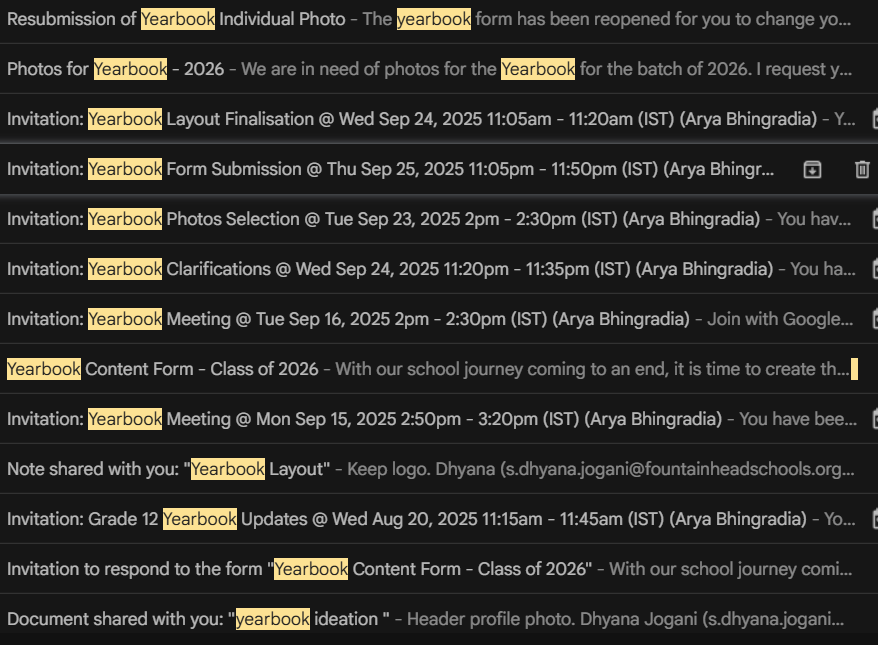
Planning the yearbook was not a small task, and it required us to initiate the process with proper structure and approval at every step. Beyond just brainstorming and designing, we had to regularly communicate with school heads to make sure the project was aligned with the school’s standards. This meant coordinating with the POs, school coordinators, media team, and events team to ensure everything was approved, reviewed, and on track. It was a completely new skill for me to balance creativity with formal communication and responsibility. I learned how to approach people professionally, seek permissions, and present ideas in a way that made sense to multiple stakeholders. This experience showed me that large-scale projects succeed only when proper planning and institutional coordination are in place.
LO 5: Demonstrate the skills and recognize the benefits of working collaboratively
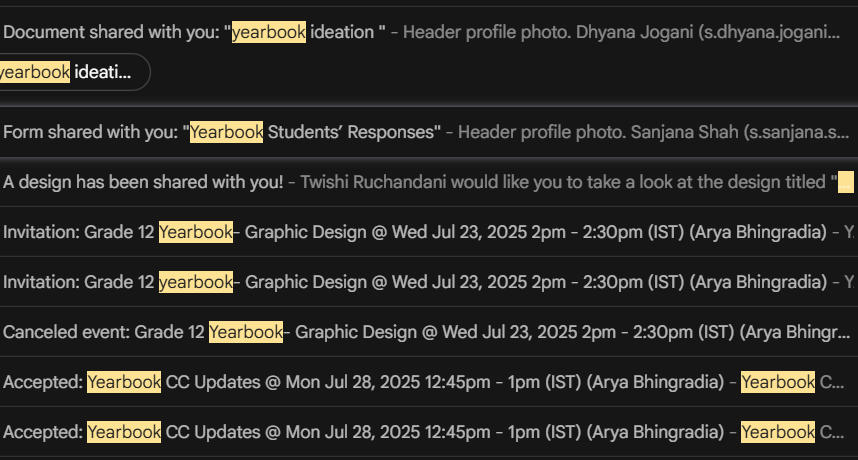
The yearbook was truly a team effort. From the very beginning, we divided roles and responsibilities so that everyone knew what they were accountable for. Each of us started by creating our own ideas, and then we came together to share them. We quickly realized that the best way forward was not to push for just one idea but to compromise a little and combine our ideas to create something that worked for everyone while also being realistic logistically. We worked effectively because we had good communication — checking in with each other regularly, ensuring no work was left behind, and supporting each other when someone was stuck. Collaboration taught me that the best results come when everyone brings their strengths to the table and works towards one shared vision.
LO 7: Recognize and consider the ethics of choices and actions
Ethics played a huge role in this project. We had to ensure that no content was offensive, biased, or inappropriate. We were careful about representation and inclusion so that every student felt seen and valued. We proofread everything multiple times and even let students vote for the theme to avoid favoritism. This made me realize how important it is to act responsibly when you are in charge of something that represents an entire community.
IB Learner Profiles Demonstrated
- Communicator: I demonstrated the Learner Profile Communicator by collecting inputs from students, listening to their suggestions, and making sure their voices were reflected in the yearbook. This helped in building a product that truly belonged to all of us.
- Principled: I demonstrated the Learner Profile Principled by ensuring the content was fair, unbiased, and ethically correct. I was mindful of not excluding anyone and keeping the yearbook respectful and inclusive.
- Open-minded: I demonstrated the Learner Profile Open-minded by considering different design ideas and being willing to adapt to suggestions from my team and batchmates. This openness allowed the final product to be more collaborative.
- Reflective: I demonstrated the Learner Profile Reflective as I constantly reviewed my work and asked myself whether the yearbook was truly representing the spirit of our grade. Reflection helped me make improvements throughout the process.
- Balanced: I demonstrated the Learner Profile Balanced by managing my academics alongside this big project. The yearbook required a lot of hours, but I learned how to balance my time effectively.
IB Skills Developed
- Communication Skills: I developed strong communication skills by regularly coordinating with my team, gathering inputs from every student, and presenting ideas to school authorities, including POs, coordinators, and the media and events teams. I learned how to clearly explain design ideas, negotiate compromises, and ensure everyone’s voice was heard.
- Organization & Planning Skills: The yearbook required meticulous planning. I learned to manage timelines, break down the project into manageable steps, and track progress for multiple components like layouts, photos, quotes, and approvals. Planning checkpoints and setting deadlines helped me stay on top of both the project and school work.
- Creative Thinking & Problem-Solving: Designing layouts, experimenting with themes, and combining dozens of drafts to create a cohesive final design pushed my creativity. I had to find solutions to creative blocks, logistical issues, and layout challenges, often balancing what looked good with what was practical.
- Collaboration & Teamwork: Working as part of a team taught me how to compromise, merge different ideas, and support each other through creative and logistical challenges. We divided roles efficiently, communicated openly, and ensured no work was left incomplete, which showed me the power of collective effort.
- Critical & Ethical Thinking: I learned to think critically about every design choice, photo selection, and quote inclusion, making sure nothing was biased, offensive, or inappropriate. Ethical decision-making became a key skill, especially when representing an entire batch fairly and inclusively

Final Takeaway
This project was more than just creating a book — it was about capturing an entire era of our lives. It pushed me to grow as a communicator, designer, and leader while teaching me the importance of inclusivity, fairness, and teamwork. I will always remember the nostalgic feeling of piecing together childhood photos, reading everyone’s quotes, and realizing how far we’ve come. Most importantly, I take away the lesson that creativity becomes more meaningful when combined with responsibility, collaboration, and thoughtful planning.