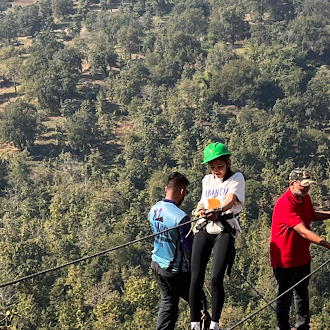
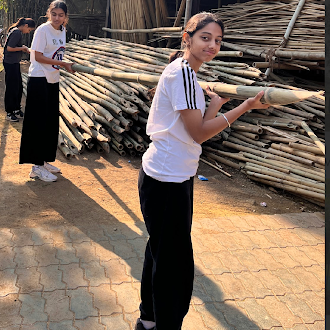
During my CAS trip to Khilad, I set out with the goal of identifying my strengths and weaknesses, developing skills to overcome challenges, engaging with the local community, and understanding environmental and global issues. The experience was packed with meaningful activities, including trekking, cleaning a river, and volunteering at a local government school. Through this, I was able to address multiple CAS learning outcomes while expanding my understanding of personal and global responsibilities.
LO 1: Identifying Strengths and Areas for Growth
One of the biggest takeaways from this trip was my increased self-awareness. I realized that I have a strong social nature and an openness to challenges, which allowed me to engage comfortably with others and adapt to new situations. However, I also discovered areas that needed improvement. I lacked the stamina required for long treks, and I found it difficult to communicate with the children at the government school due to the language barrier—they spoke Gujarati and Dangi, which I do not understand fluently. These challenges have motivated me to work on my fitness and find ways to improve my ability to connect with people across language differences. Being aware of my weaknesses is empowering, as it gives me a clear path toward personal growth.
LO 2: Undertaking Challenges and Developing New Skills
The first trek was unexpectedly difficult. I initially underestimated the endurance it required, which made the steep climbs exhausting. However, by seeking advice from more experienced trekkers and improving my pacing, I gradually built confidence. By the last trek, I managed to complete it successfully, reinforcing the importance of perseverance. Another challenge was communicating with the children at the government school. Since they spoke only Gujarati, I had to rely on creative methods such as gestures, games, and role-playing to engage with them. This experience helped me develop adaptability and non-verbal communication skills, which are crucial for cross-cultural interactions.
LO 3: Initiating and Planning a CAS Experience
Although the trip was organized by our school, I played an active role in preparing myself for the experience. I made sure I packed efficiently for treks, carried the necessary materials for the service activities, and understood my role in each task. One specific instance where I took the initiative was during the dam-cleaning activity. Instead of waiting for instructions, I asked about my responsibilities and found ways to contribute effectively. This experience taught me the importance of preparation and adaptability. In future projects, I hope to take on a more significant role in planning and organizing.
LO 4: Showing Perseverance and Commitment
Many aspects of the trip tested my perseverance, from physically demanding activities like trekking and rappelling to mentally challenging ones like overcoming language barriers. The dam-cleaning activity was particularly exhausting, as it required hours of hard work under the sun. Despite moments of fatigue and discomfort, I remained committed to completing the task. I learned that perseverance is not just about pushing through difficulties but also about staying motivated and engaged even when things become challenging. This lesson is something I will carry forward in all areas of life.
LO 5: Working Collaboratively with Others
Collaboration played a key role in this experience. Whether it was trekking, cleaning the dam, or teaching children, teamwork was essential. Initially, I found it challenging to coordinate with my peers, as we all had different approaches to completing tasks. However, by listening to each other and dividing responsibilities effectively, we managed to work efficiently. This experience reinforced the importance of teamwork, communication, and leadership in achieving a common goal.
LO 6: Engaging with Global Issues
Through this trip, I engaged with several environmental and social issues. Cleaning the dam highlighted the importance of water conservation and the impact of pollution on local communities. Similarly, volunteering at the government school exposed me to the challenges faced by underprivileged children in rural areas, including limited access to quality education. These experiences made me more aware of the global significance of sustainability and education. It also strengthened my belief that small contributions can collectively create meaningful change.
LO 7: Considering Ethics in Choices and Actions
One ethical dilemma I encountered was during the dam-cleaning activity. While removing trash, we came across plastic waste left behind by visitors. It made me reflect on personal responsibility and the impact of human actions on the environment. Before this experience, I had not given much thought to the ethical implications of littering, but seeing the direct consequences of pollution changed my perspective. Another ethical consideration was ensuring that our interactions with the school children were respectful and meaningful. I became more conscious of how my words and actions could affect them and tried to engage with them in a way that was both encouraging and culturally sensitive.
This trip to Khilad was an eye-opening experience that allowed me to grow in multiple ways. I developed resilience, teamwork, adaptability, and a greater awareness of environmental and social issues. The highlight of this experience was seeing the direct impact of our efforts—whether it was making the school children smile or helping to clean up a polluted river.Through this journey, I have not only learned about the world around me but also about myself. CAS is not just about activities—it’s about growth, self-discovery, and making a difference.