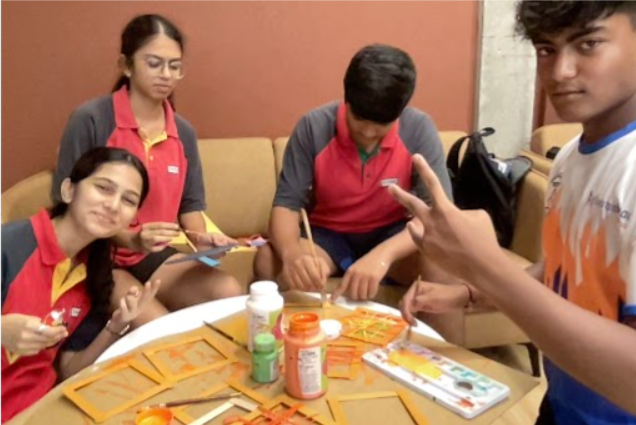
I have always been incredibly proud of my heritage and culture and what better way to celebrate it than through Garba. As part of my CAS project, I took the initiative to organize Garba Fest, a cultural event that brought together our school community for an evening of traditional dance, music, and connection. The project was more than just an event; it was a chance to promote inclusivity, celebrate identity, and lead a team with purpose and creativity. From planning the logistics and decor to coordinating outreach and performances, this experience was a true blend of culture, collaboration, and commitment.


LO1 – Identify own strengths and develop areas for growth
Throughout the project, I recognized my strengths in organization, ideation, and communication. However, I also noticed areas where I needed growth especially in handling unexpected setbacks calmly and learning to delegate rather than take on too much myself. This experience allowed me to reflect on my leadership style and work toward becoming a more balanced and trusting team leader.
LO2 – Demonstrate that challenges have been undertaken, developing new skills
Organizing such a large event came with numerous challenges such as tight deadlines, fluctuating budgets, and managing a large team with differing opinions. Navigating these helped me develop critical skills like time management, negotiation, flexibility, and conflict resolution. I also gained experience in managing real-world logistics, which isn’t something that can be learned in theory alone.
LO3 – Initiate and plan a CAS experience
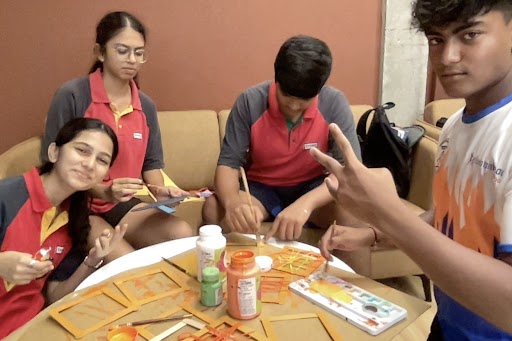
Garba Fest was entirely student-led and planned from scratch by a core team of four to five members, including myself. Together, we initiated the proposal, created a clear vision for the event, and collaboratively mapped out timelines, assigned roles, and led meetings to monitor progress. I personally contributed to areas such as decor themes, floor plans, outreach, and communication with vendors. While the workload was shared, we each took initiative in our own domains. This experience taught me how to transform a shared idea into a structured, actionable project through teamwork and planning.
LO4 – Show perseverance and commitment in CAS experience
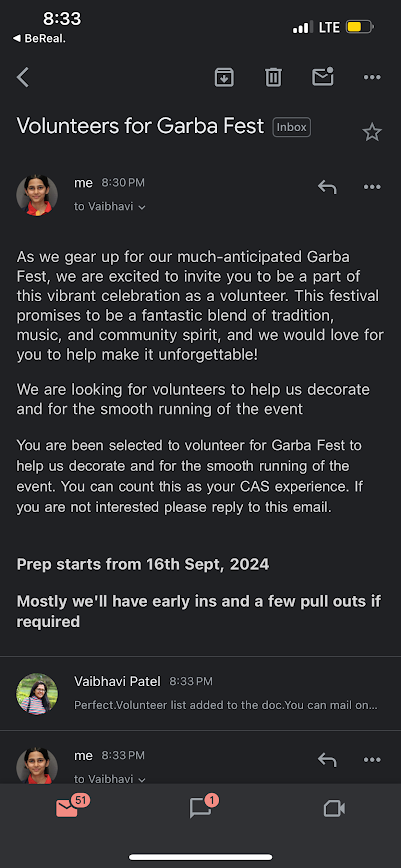
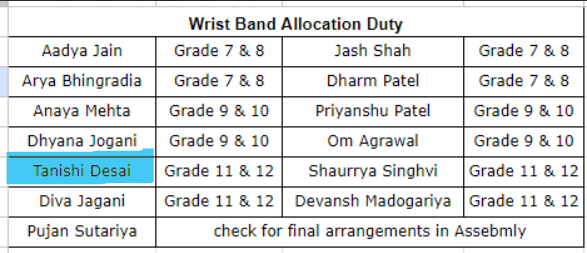
One of the biggest challenges we faced was managing the coordination and varying competence levels of our volunteer team. Ensuring that everyone followed through on responsibilities, showed up on time, and communicated effectively required constant supervision and reminders. At times, it felt exhausting to repeatedly step in and fill gaps or reassign tasks. Despite these setbacks, I remained committed to the project, actively problem solving and staying hands on throughout. Whether it meant last-minute changes or working extra hours during setup, I consistently showed perseverance to make sure the event ran smoothly.
LO5 – Demonstrate skills and benefits of working collaboratively
Working collaboratively was central to Garba Fest, especially within our core team of organizers. We divided responsibilities, trusted each other’s strengths, and communicated regularly to ensure everything stayed on track. This close collaboration taught me the value of shared leadership and the power of mutual accountability.
However, working with a larger group of volunteers presented a different set of challenges—miscommunication, inconsistent participation, and varying levels of initiative. Navigating these dynamics required patience, adaptability, and clear delegation. While it was frustrating at times, the experience taught me how to manage team diversity and improve group efficiency, especially under time constraints. I learned that collaboration is not just about working together—it’s about managing differences to achieve a common goal.
LO6 – Demonstrate engagement with issues of global significance
While Garba Fest was cultural, it also connected to the broader issue of cultural preservation and appreciation in an increasingly globalized world. It encouraged students from different backgrounds to participate in and learn about traditional Indian art forms, fostering a sense of cultural identity, inclusivity, and pride. Promoting cultural understanding in a diverse school environment helped bridge social gaps and encouraged mutual respect.
LO7 – Recognise and consider the ethics of choices and actions
We made conscious choices to ensure inclusivity and sustainability for example, using reusable decor and minimizing food waste. The project was more than just an event; it was a chance to promote inclusivity, celebrate identity, and lead a team with purpose and creativity. From planning the logistics and decor to coordinating outreach and performances, this experience was a true blend of culture, collaboration, and commitment.
Garba Fest was more than a cultural event, it was a journey of leadership, learning, and lasting impact. From the initial planning stages to the final performance, every step tested my ability to think critically, collaborate effectively, and stay resilient in the face of challenges. It deepened my appreciation for my heritage while teaching me how to bring people together through shared purpose and celebration. Most importantly, it embodied the true essence of CAS personal growth through real-world experiences that challenge, inspire, and connect.