CAS Experience – Pi Day Decor Team
As part of my CAS journey, I volunteered for my school’s Pi Day celebration, an event designed to make Math and Physics exciting and interactive. I joined the décor team, where I helped design and set up displays to make the event visually appealing and aligned with the subjects being celebrated. This gave me the chance to use creativity in a structured setting, collaborate with peers, and practice planning and organizational skills in a real event context.
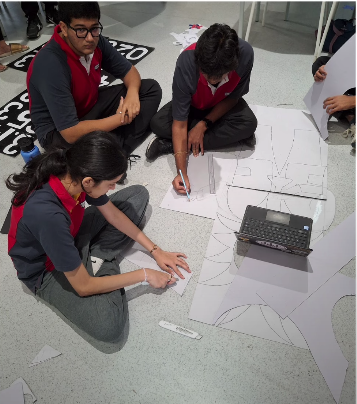
Before the event, our team brainstormed ways to represent mathematical and scientific concepts in engaging ways. We discussed color themes, layouts, and how to best use the available space. With only a short time to prepare, time management and teamwork were crucial. On the day before and the morning of the event, we worked together to put up banners, arrange cutouts, and ensure everything looked cohesive. We faced challenges such as late materials and size miscalculations, but we adapted quickly and supported one another to stay on track.
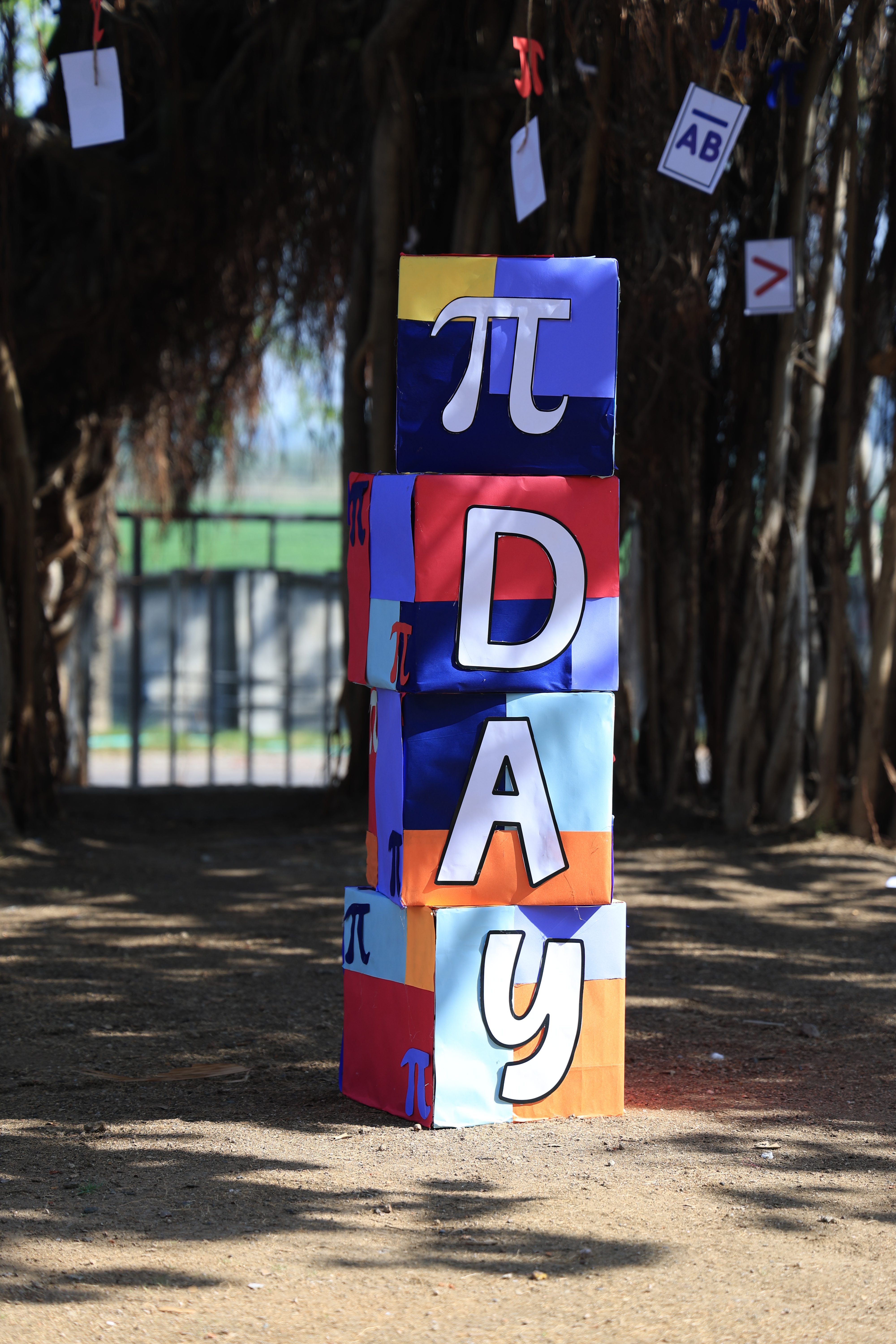
The final decorations included Pi symbols, mathematical puzzles, and physics-related visuals, which created an engaging and interactive atmosphere. Seeing students and teachers interact with the décor was very rewarding—it reminded me that creativity is not only for the arts but can also make academic subjects more enjoyable and accessible.
LO1 – Identify own strengths and areas for growth
This experience helped me recognize that I am strong at visual planning and team coordination. I was able to picture how different elements would come together and work well with others to divide responsibilities. At the same time, I realized I need to improve at time management and adapting calmly when things don’t go as expected.
LO2 – Demonstrate challenges undertaken, developing new skills
Turning creative sketches into real decorations within limited space and time was a challenge. Not all ideas translated perfectly, so I had to think on my feet, adjust proportions, and find practical solutions. This improved my problem-solving ability and gave me confidence in handling unexpected issues.
LO3 – Initiate and plan a CAS experience
Although I was not the overall leader, I took initiative during brainstorming sessions by contributing design ideas and helping organize how tasks would be divided. I was actively involved in the planning process, especially in thinking through how displays should be arranged to maximize impact.
LO4 – Show perseverance and commitment
Balancing Pi Day preparations with academic deadlines was difficult, especially with exams approaching. However, I stayed consistent in attending meetings, contributing ideas, and helping with the setup, even when it meant sacrificing personal time. I also stayed engaged when tasks had to be redone, demonstrating commitment to seeing the project through
LO5 – Demonstrate collaborative skills and benefits of teamwork
Our success relied on strong collaboration. With many tasks happening at once—designing, cutting, assembling—we had to communicate constantly and trust each other. Each person brought unique strengths, and I learned to balance leading with stepping back and supporting others. The teamwork made the process not only more efficient but also more enjoyable.
LO6 – Engagement with issues of global significance
While Pi Day itself was a school event, it connected to the global importance of promoting STEM education. Mathematics and Physics are universal languages, and making them engaging encourages students to appreciate their relevance beyond the classroom. This experience showed me how creativity can be used to make subjects that are often seen as “difficult” more approachable, contributing in a small way to the broader goal of encouraging interest in science and mathematics worldwide.
LO7 – Recognize and consider the ethics of choices and actions
During the process, I became more aware of the importance of responsibility in group work. For example, when mistakes in sizing happened, I had to make sure my actions supported the team rather than leaving extra work for others. I also recognized that sticking to deadlines and being accountable was essential to avoid putting additional stress on the group. This taught me to consider the ethical responsibility of fairness and reliability when working collaboratively.
Conclusion
Being part of the Pi Day décor team was a meaningful and enriching CAS experience. It allowed me to combine creativity with teamwork, helped me grow in areas such as planning and adaptability, and gave me the chance to contribute to a school-wide event that celebrated learning in an engaging way. Across all 7 learning outcomes, I developed stronger skills, built new confidence, and learned the value of persistence, collaboration, and responsibility in making ideas come to life.