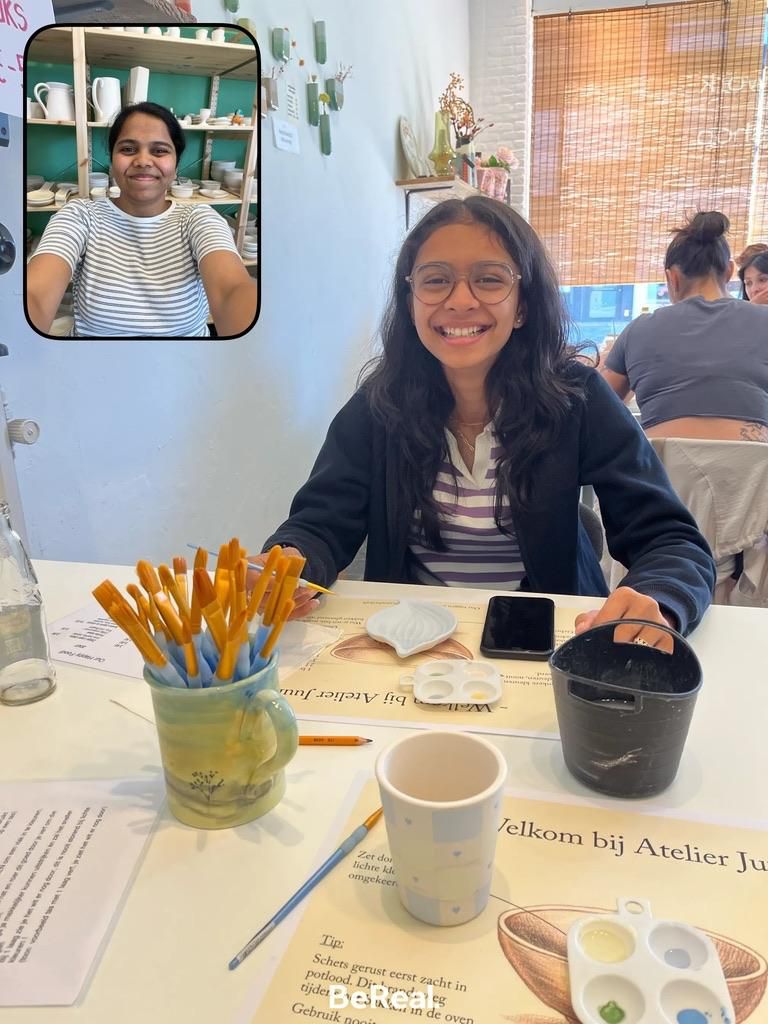
2 months ago, I attended a pottery painting workshop that turned out to be both creative and deeply reflective. The session introduced me to different painting techniques, colour combinations, and design patterns used in decorating pottery. It was hands-on and interactive, allowing me to focus on patience, detail, and mindfulness. I even painted a small shell-shaped tray, which became a tangible memory of the experience.
As someone always interested in the arts, this workshop allowed me to channel that passion into a new medium. My goal in choosing this CAS experience was not only to explore art in a form I had never tried before, but also to practice patience, enhance mindfulness, and challenge myself creatively. The outcome was far more rewarding than I had imagined, it helped me grow both personally and artistically.
The IB Learner Profile attributes I developed were
Reflective: Throughout the process, I reflected on my strengths and weaknesses. I realised that while creativity and design planning came naturally to me, precision and control were areas where I needed more practice. Reflecting on these aspects helped me recognise the importance of slowing down, being patient, and accepting mistakes as part of learning. And
Risk-taker: Trying pottery painting was new to me, and I was unsure of how skilled I would be in this unfamiliar medium. However, I took the risk of experimenting with new techniques and creating something unique. This willingness to take on uncertainty gave me confidence in approaching other new experiences in the future.
SDG 12: Responsible Consumption and Production
Pottery itself is a sustainable and eco-friendly art form. Unlike mass-produced plastic or synthetic items, pottery is made from natural materials like clay that are biodegradable and reusable. By painting and personalising pottery, I gained an appreciation for how handmade crafts promote mindful consumption, as each piece is unique and long-lasting rather than disposable. This experience helped me reflect on how supporting traditional crafts can reduce reliance on unsustainable, factory-made goods. It also showed me the value of reusing and repurposing items creatively, instead of constantly buying new ones. Through this activity, I became more aware of how art can encourage sustainable habits and respect for resources.
LO1 – Identify my own strengths and develop areas for growth
During the workshop, I realised that creativity and imagination are my strengths, as I was able to come up with a design idea quickly. However, I also noticed that I need to work on precision, and brush control. Pottery painting requires attention to small details, and I identified this as an area for improvement. This awareness helps me understand how I can further develop my artistic abilities.
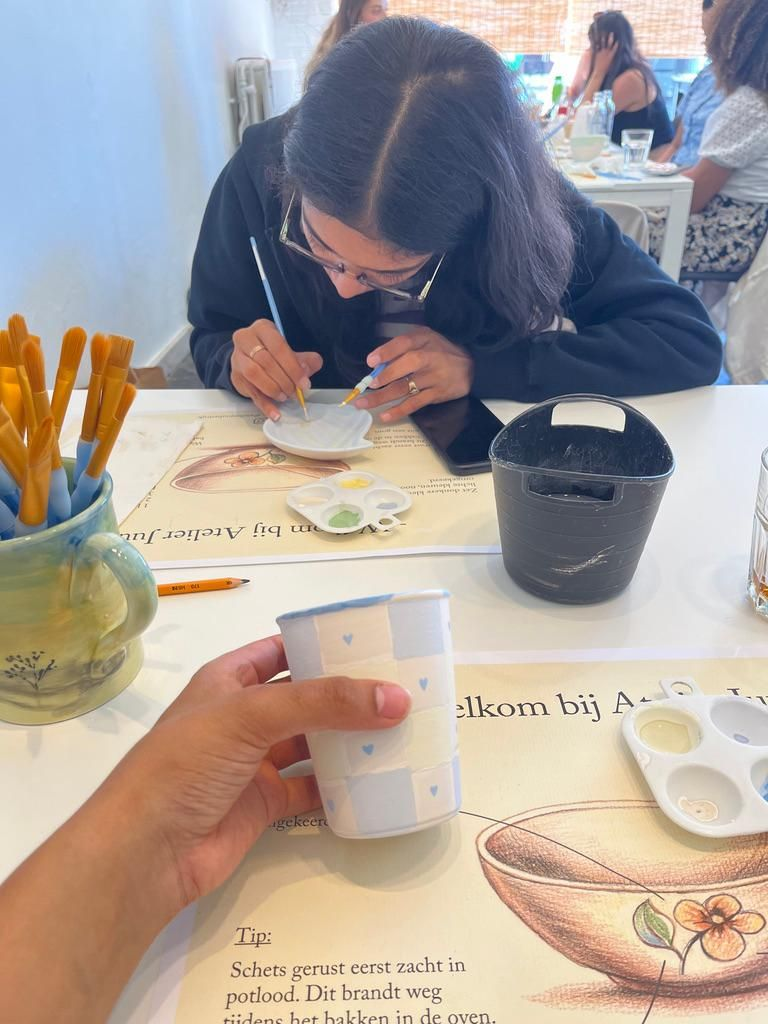
LO2 – Demonstrate that challenges have been undertaken, developing new skills
This was my first time painting pottery, so it was a completely new challenge. I had to learn how to apply paint evenly on a curved ceramic surface, how colours blend differently on pottery compared to paper or canvas, and how to plan a design before starting. Through this process, I developed new skills in artistic expression and improved my ability to adapt to a new medium of art.


LO6 – Engagement with issues of global significance
Pottery is not just an art form but also a cultural tradition that has been practiced globally for centuries. By participating in this workshop, I was able to appreciate the cultural significance of pottery and understand how such traditional crafts promote sustainability by reusing and repurposing natural materials. This made me more aware of how art connects to cultural identity and environmental consciousness.