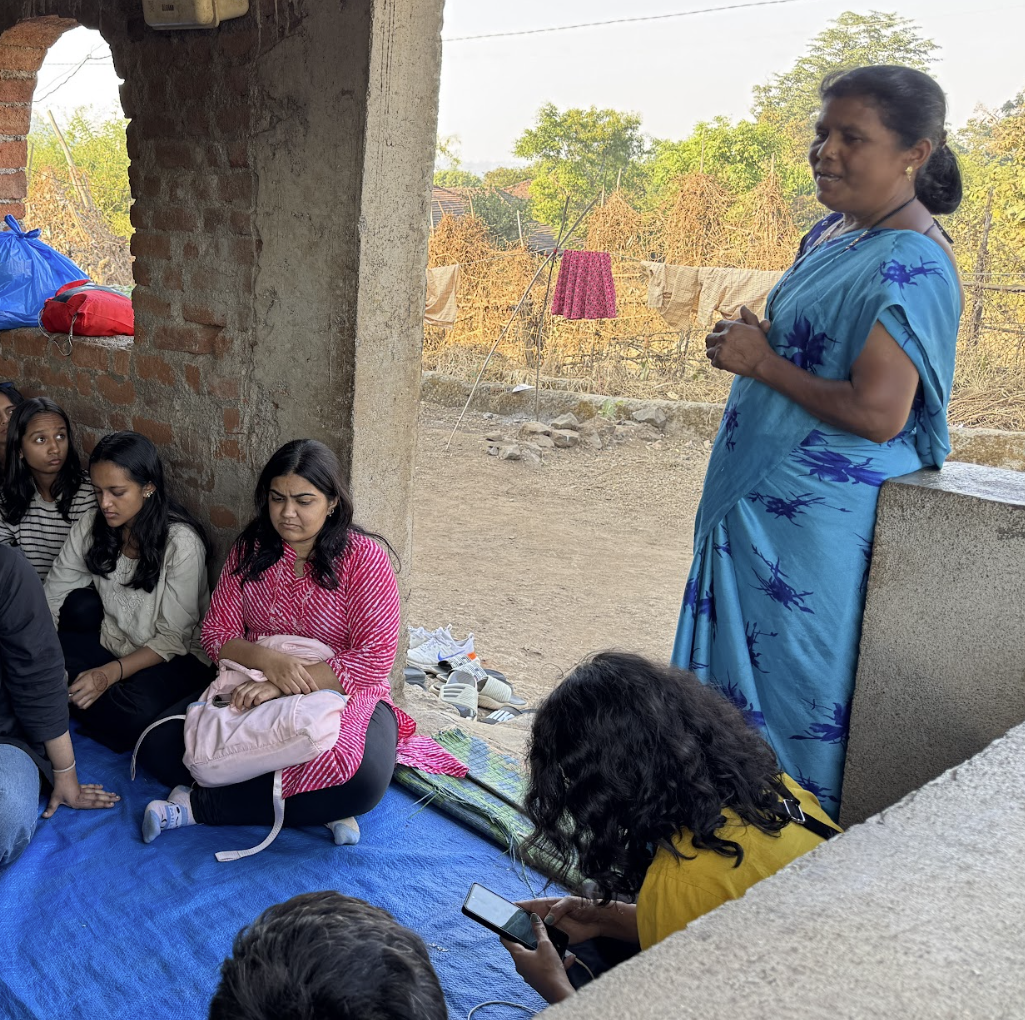
My rural immersion trip to Mokhamal, Dang was a transformative experience that provided a deeper understanding of tribal communities and their way of life. Over six days, we engaged with local residents, visited schools and hospitals, and explored their economy and culture. Through hands-on activities like helping with daily chores and trekking through forests, I gained a practical perspective on rural life. This trip pushed me beyond my comfort zone, offering valuable insights into the challenges these communities face and how they adapt and thrive with limited resources.
LO1 Identify own strengths and develop areas for growth
During this trip, I gained a deeper understanding of my ability to adapt to a completely new environment and engage with people from diverse cultural backgrounds. Immersing myself in the daily lives of the tribal community required me to step out of my comfort zone, communicate effectively, and build meaningful connections. However, I also realized that I needed to develop greater patience, especially in challenging and unfamiliar situations. One such instance was during the long trekking journeys, where we spent hours crossing rough grounds while listening to the stories and traditions of the local tribes. Although the experience was enriching, it tested my endurance and attention span, teaching me the importance of remaining present, open-minded, and appreciative of new learning experiences, even in physically demanding circumstances.
LO2 Demonstrate that challenges have been undertaken, developing new skills
One of the most significant challenges I faced during the trip was adapting to a drastically different lifestyle with minimal resources. Unlike the conveniences I was familiar to, I had to adjust to a simpler way of living, which required quick thinking and adaptability. I actively engaged in learning new skills, such as cooking meals from scratch using traditional methods and taking part in tribal activities like rice weaving, which deepened my appreciation for the community’s self-sufficient lifestyle. Additionally, exploring Warli art, a traditional painting style, encouraged me to step out of my comfort zone and embrace creativity in a completely new way. This experience not only challenged me physically and mentally but also allowed me to develop resilience, patience, and an appreciation for different cultural traditions.
LO3 Initiate and plan a CAS experience
Despite the fact that the school had organized the activities, I took the initiative to actively participate in them. I engaged with local school children, assisted in cooking and serving meals, contributed in the traditional painting(warli art). I ensured that I was fully involved in each task, making my participation meaningful. This experience taught me the importance of taking responsibility for my role, even when working within a pre-planned structure.
LO4 Show perseverance and commitment in CAS experience
Adjusting to the rural environment came with its challenges, particularly due to the absence of modern benefits. However, I remained dedicated to fully participating in all the activities, embracing the experience with an open mind and positive attitude. Rather than focusing on the difficulties, I chose to appreciate and enjoy every special moment from gathering around the bonfire and listening to music to witnessing the breathtaking sunrise during our trek and admiring the serene beauty of the sunset at the temple. These experiences made me realize the value of simplicity and being present in the moment, enhancing my overall learning and enjoyment of the trip.
LO5 Demonstrate skills and benefits of working collaboratively
Throughout the trip, teamwork played a crucial role in ensuring that tasks were completed efficiently. Whether it was constructing the trellis, engaging with local school students, or coordinating meal preparation, collaboration was the key. One of the most challenging yet enriching experiences was navigating the tribal market with my team to purchase ingredients for our meals. We had to strategically plan our purchases, negotiate prices, and ensure that all required ingredients were bought in the right quantities while maintaining good quality. This required effective communication, problem-solving, and decision-making within the group. Working together not only simplified tasks and increased efficiency but also helped me develop stronger social and teamwork skills, reinforcing the importance of collaboration in unfamiliar situations.
LO6 Engagement with issues of global significance
During my rural immersion trip, I gained a deeper understanding of global issues such as poverty, lack of access to quality education, and sustainable living. Many communities around the world, including the one I visited, struggle with limited resources, poor healthcare, and minimal educational opportunities, which significantly impact their quality of life. By interacting with the locals, visiting schools, and participating in their daily activities, I realized how important it is to address these challenges through sustainable solutions. This experience also made me reflect on the importance of protecting traditional knowledge and eco-friendly practices, as rural communities often live in harmony with nature, making use of locally available materials and minimizing waste. It strengthened my awareness of economic gap and the need for collective action to promote equal opportunities and sustainable development, encouraging me to be more conscious of my role in contributing to social change.
LO7 Recognize and consider the ethics of choices and actions
During my rural immersion trip, I became more aware of the ethical considerations involved in my actions and decisions. As visitors to the village, it was essential to respect the local culture, traditions, and way of life, ensuring that our presence was positive and non-disruptive. One of the key ethical challenges was being mindful of how we engaged with the community whether through interactions with the locals, participation in their daily activities, or even capturing photographs. It was important to ensure that our actions were respectful and not underhanded. Additionally, while working on activities such as helping in the kitchen, getting groceries, and engaging with school children, I made sure to approach each task with honesty, integrity, and responsibility. This experience the importance of ethical decision-making, reminding me that even small actions can have a significant impact on the people and communities we engage with.
Evidence: