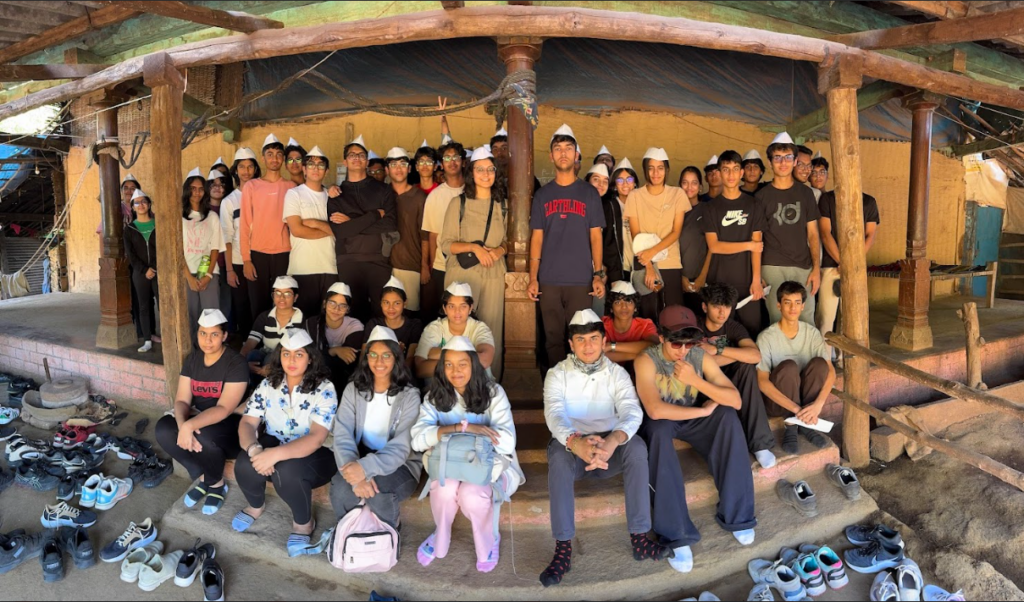
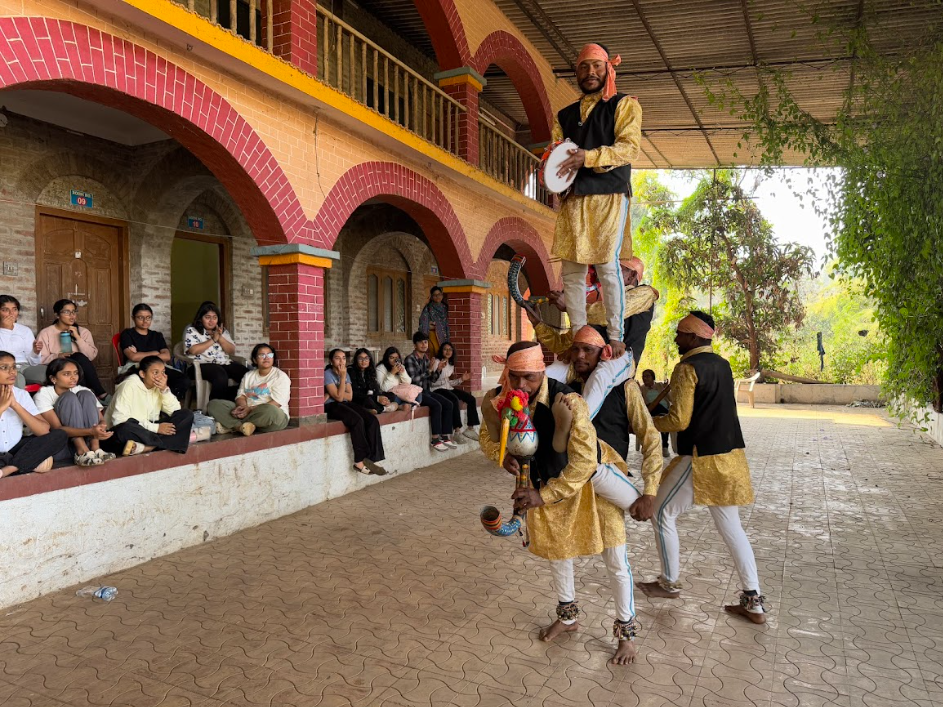
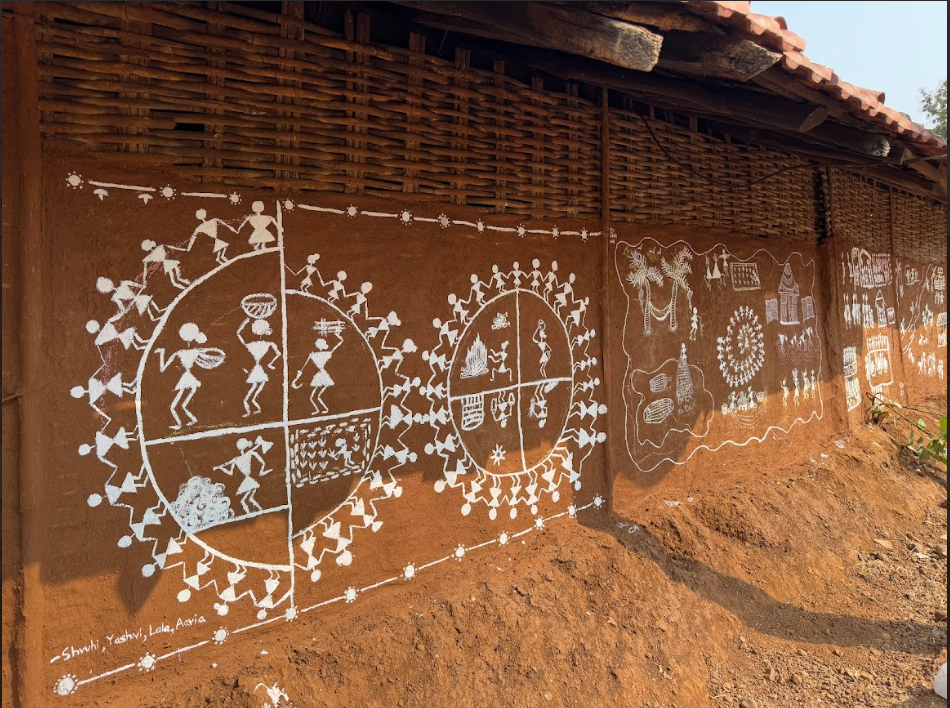
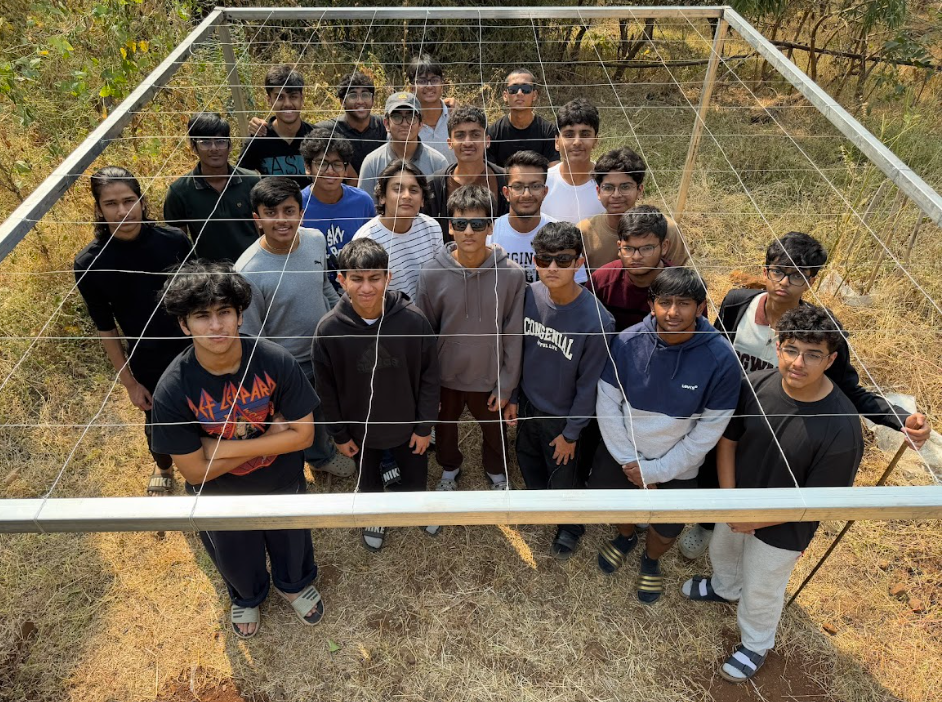
As part of CAS experience, we went on rural immersion to Mokhamal village in Dang, Gujarat, where we were able to experience and learn about rural life. The purpose of the trip was to allow us to study the lifestyle of tribal people, their income generation, living conditions, education system, and traditional practices. We toured tribal residences, a factory for milking, and farmland, as well as explored stunning waterfalls. Moreover, we engaged in cultural activities like Warli painting, basket making, and watching the captivating Dangi tribal dance. This trip was an eye-opener and a life-changing experience, which gave me insightful knowledge about rural life, sustainability, and social issues.
LO1: Identifying Strengths & Areas for Growth
This trip enabled me to evaluate my strengths and identify areas for personal growth. One of my personal strengths was being adaptable, and I adapted quite easily to the new rural environment, participating in new activities like farming and weaving. Nevertheless, I also knew that I had to work on effective communication in new places, particularly with villagers who communicated in Dangi, a language that I did not know. From this experience, I gained a greater appreciation of how to communicate with individuals from diverse backgrounds and learn to cope with new situations.
LO2: Overcoming Challenges & Developing New Skills
This journey involved many physical, social, and emotional challenges. Farming was entirely foreign to me, and learning to harvest dried crops and bind them using traditional techniques took effort and patience. The other significant challenge was the language issue, as Dangi was spoken by the majority of the villagers. At first, it was challenging to communicate, but eventually, I identified similarities between Gujarati and Dangi, and this enabled me to acquire new language skills. Moreover, trekking over uneven terrain and engaging in physically challenging activities stretched me out of my comfort zone, enabling me to develop resilience and flexibility.
LO3: Initiating & Planning a CAS Experience
Prior to undertaking this journey, we mapped out our trip in advance, identifying the main activities and goals we wanted to accomplish. We learned about the history of the village, its economy, and its cultural importance to equip ourselves for a genuine and stimulating learning experience. Within our group, we organized logistics, established learning objectives, and provided ourselves with relevant resources for activities like donating books and stationery to the local schools. This experience taught me the value of proper planning and preparation in undertaking a successful CAS experience.
LO4: Showing Perseverance & Commitment
Engaging in physically strenuous activities, like harvesting crops, hiking through rugged terrain, and adapting to country living conditions, needed dedication and determination. Farming, specifically, was more labor-intensive and quite different from my normal exposure, but I was determined to get involved in the learning experience. The nighttime hike through rugged terrain further pushed my physical and mental limits, reinforcing the importance of staying committed and persevering despite challenges.
LO5: Working Collaboratively & Learning from Others
Collaboration was essential in ensuring this journey was successful. We collaborated with one another to bridge the language gap, help each other in agriculture, and synchronize our interactions with the locals. Seeing how the villagers depended on collaboration for daily survival also highlighted the significance of cooperation, tolerance, and mutual obligations. Group collaboration enabled us to manage tasks effectively and acquire useful skills from our peers and the villagers.
LO6: Engaging with Global Issues
This trip gave me a deeper understanding of several global issues, including poverty, education inequality, and lack of access to proper sanitation. While these issues are often discussed in classrooms, witnessing them firsthand made them feel more urgent and real. Seeing how limited access to quality education and healthcare affects rural communities reinforced the importance of sustainable development and social equity. This experience encouraged me to seek means of contributing to solving these issues, both at home and worldwide.
LO7: Identifying Ethical Decisions & Social Responsibility
On a visit, we acknowledged our moral duty to help the community in a positive manner. We donated items such as books, clothing, and stationery to a nearby school so that students had at least the basic resources for learning. To see them smile and thank us was very touching and reinforced the need for ethical choice and social responsibility. It showed that even the little that we do can make an enormous difference and motivated me to keep volunteering for community service.
Final Reflection
Our rural immersion experience in Mokhamal was a life-changing experience that gave me an appreciation for rural communities, their strength, and their lifestyle. During this trip, I acquired important skills in communication, collaboration, flexibility, and determination. The highlight of the trip for me was the night trek, which brought adventure and self-development to the trip. This experience has opened my eyes, solidified my dedication to community service, and reaffirmed the need for ethical and environmentally sound solutions to global issues.