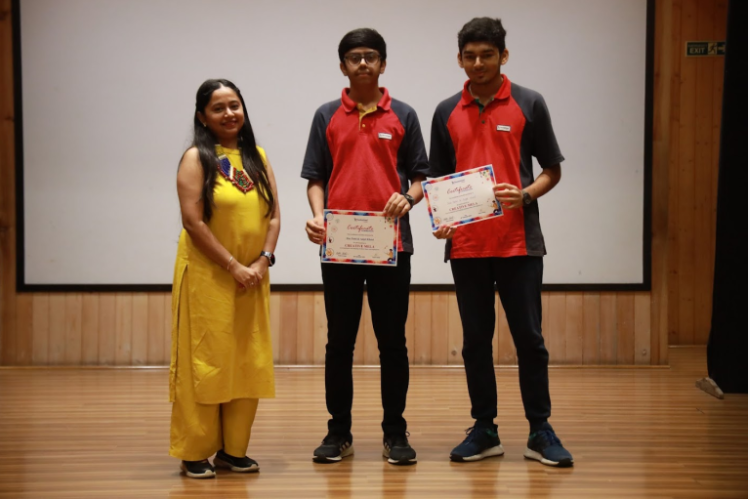
Creativity is a powerful tool that allows us to express ourselves while developing new skills. As part of my CAS experience, I had the opportunity to conduct an origami workshop for students in grades 3 to 6 at Creative Mela, an event designed to engage young learners in various artistic activities. Through this workshop, I aimed to introduce children to the art of paper folding, helping them explore their creativity while enhancing their patience and problem-solving skills. The experience was both rewarding and enlightening, as I witnessed the excitement and curiosity of the students unfold—just like the intricate origami creations they made!
Learning Outcomes Catered
LO1: Identify Own Strengths and Areas for Growth
Before conducting the workshop, I had to reflect on my own origami skills and teaching abilities. While I was confident in my ability to create various origami figures, I realized that explaining the steps in a simple and engaging manner required practice. This experience helped me refine my communication skills and adapt my teaching style to suit different age groups.
LO2: Demonstrate That Challenges Have Been Undertaken
One of the major challenges I faced was ensuring that every student could follow along at the same pace. Some students found certain folds difficult, while others quickly grasped the techniques and wanted to move ahead. To overcome this, I had to be patient, provide step-by-step guidance, and offer individual assistance whenever needed. Balancing the needs of all students was a challenge that pushed me to be more adaptable and resourceful.
LO3: Initiate and Plan a CAS Experience
Planning the workshop required careful preparation. I had to select appropriate origami models that were neither too easy nor too difficult for the students. Additionally, I prepared sample models in advance and structured the session to ensure smooth progression. By organizing the materials, setting learning objectives, and structuring the session effectively, I demonstrated my ability to take initiative and lead an engaging activity.
LO4: Show Commitment and Perseverance
Conducting a workshop required patience and consistency. Some students struggled with specific folds and became frustrated, but I encouraged them to keep trying. By staying committed to helping each participant complete their origami creations, I ensured that every child felt a sense of accomplishment.
LO5: Work Collaboratively With Others
During the workshop, I had to engage with multiple students simultaneously, which required teamwork and collaboration. I encouraged students to help each other if someone was struggling, fostering a sense of peer learning. The collaborative environment made the workshop more enjoyable and interactive for everyone involved.
LO7: Recognize and Consider the Ethics of Choices and Actions
An important ethical aspect of this experience was ensuring inclusivity and equal attention to all participants. I made sure that every student, regardless of their skill level, received guidance and encouragement. Additionally, I emphasized the importance of patience and respect when working in a group setting, reinforcing positive behavior among the children.
Conclusion
The Creative Mela origami workshop was a fulfilling experience that not only allowed me to share my passion for creativity but also helped me grow in multiple ways. Teaching younger students required patience, adaptability, and effective communication—all skills that will be valuable in future endeavors. Seeing the joy on their faces as they proudly held up their origami creations was the most rewarding part of the experience. Through this CAS experience, I not only contributed to the students’ learning but also deepened my own understanding of leadership and creative expression.