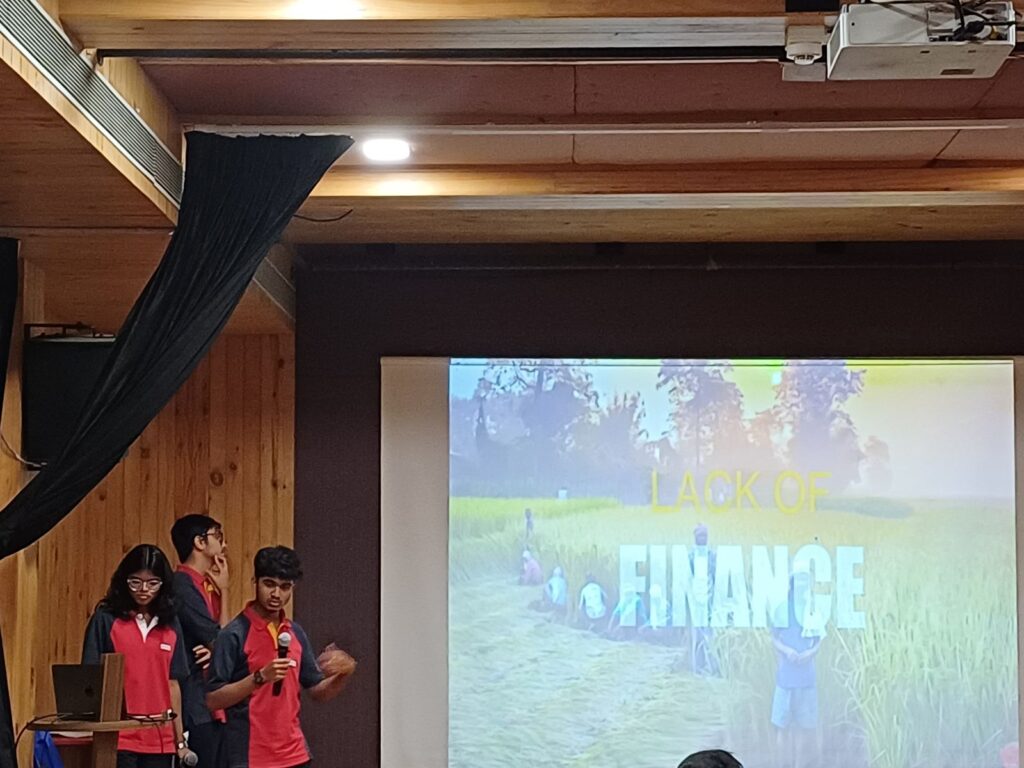
Along with two classmates, I recently got the chance to take part in a business model canvas competition where we addressed the worldwide problem of food spoilage. This contest provided an excellent way to combine creativity, problem-solving, and teamwork.

Learning Outcome 1-Identify own strengths and develop areas for growth
I discovered that my strengths were creative thinking and presenting abilities as I collaborated with my classmates to prevail in the competitions, but I struggled to get the idea across. I became more conscious of my unique abilities as well as the areas in which I lacked confidence after the competition.
Learning Outcome 2-Demonstrate that challenges have been undertaken, developing new skills in the process

Determining how to make our company strategy both unique and workable was one of the most difficult tasks we had to do during the competition. It initially seemed difficult to deal with food spoilage, especially on a national level.We experienced periods of feeling trapped, especially while attempting to develop a workable financial plan that complemented our moral objectives. But rather of allowing these challenges to deter us, we overcame them by coming up with different ideas, looking into successful case studies, and continuously improving our approach.
Learning Outcome 5-Demonstrate the skills and recognize the benefits of working collaboratively
The value of teamwork was brought home to me throughout this tournament as I worked closely with two of my friends. Because each of us contributed unique abilities and viewpoints, our conversations were more lively and the end result was more comprehensive. Although we occasionally disagreed on important issues and had divergent opinions about the best course of action, such arguments strengthened our business plan. We discovered how to encourage one another during trying times, listen to each other, and make concessions when necessary.
Learning Outcome 6-Demonstrate engagement with issues of global significance
Our project’s main focus was on the worldwide problem of food spoiling, which adds to both environmental waste and a food crisis. By collaborating with nearby farmers and retailers and developing better storage alternatives, our business model sought to decrease food spoilage. My awareness of how intertwined global concerns are—how something as local as a farm’s surplus may affect food supply chains and the environment—was enhanced by this experience. It also gave me a sense of responsibility, knowing that our ideas, if implemented, could help address a pressing global issue.