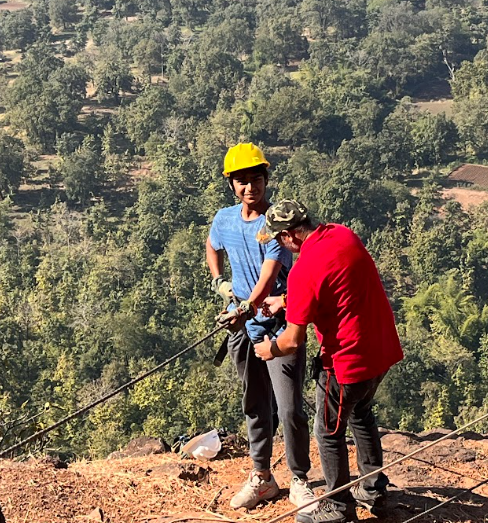
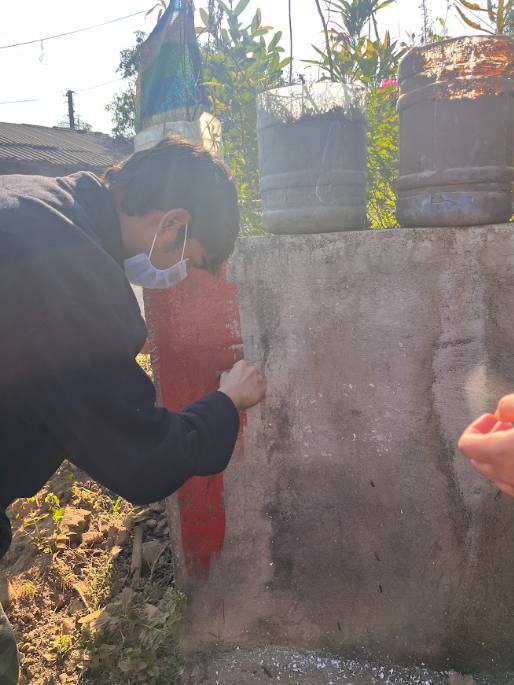
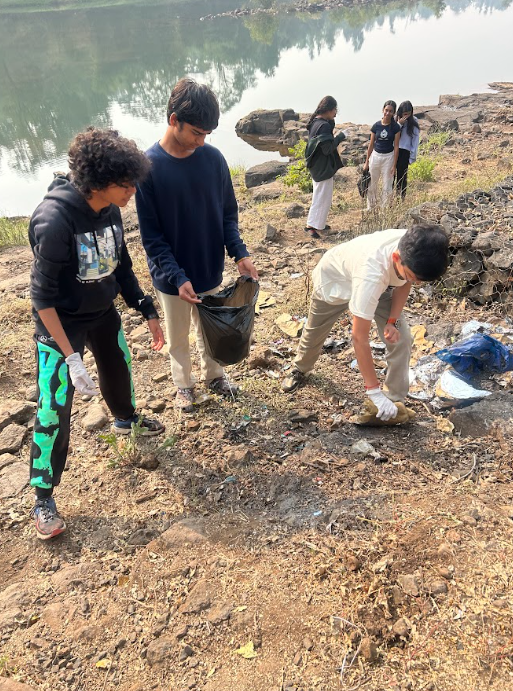
During my rural immersion trip to Kilad, I had the opportunity to participate in three unique activities, which included, rappelling down a cliff, creating Warli paintings on school walls and cleaning a riverbank. Each experience challenged me in different ways and helped me develop valuable skills. More importantly, it gave me a deeper understanding of teamwork, perseverance and the impact of our actions on the environment and local communities.
LO1: Identify own strengths and develop areas for growth
Through these activities, I became more aware of my strengths and areas for improvement. Rappelling helped me recognize my ability to stay focused under pressure, but it also showed me that I needed to work on trusting my instincts and equipment.
LO2: Demonstrate that challenges have been undertaken, developing new skills
Each activity came with its own set of challenges that pushed me to develop new skills. Rappelling was physically and mentally demanding, requiring me to overcome my initial hesitation and follow proper techniques to descend safely. Warli painting was completely new to me, and I had to learn how to create traditional designs while maintaining precision. Cleaning the riverbank was an exhausting task, but it helped me develop patience and the determination to see a job through despite the difficulties.
LO3: Initiate and plan a CAS experience
For the Warli painting and riverbank cleaning, my peers and I had to plan how we would execute the tasks efficiently. We discussed the designs for the paintings, assigned sections to each person and ensured our artwork complemented each other’s. For the riverbank cleaning, we strategized how to cover the area systematically, dividing tasks among the group to maximize our impact. These experiences taught me the importance of proper planning and organization before starting any project.
LO4: Show perseverance and commitment in CAS experience
All three activities required commitment and perseverance. Rappelling was nerve wracking at first, but I pushed myself to complete it successfully. Painting required several hours of careful effort to ensure our work looked meaningful and visually appealing. The riverbank cleaning was especially challenging as the amount of waste was overwhelming, but my team and I remained dedicated to finishing the task despite the physical strain.
LO5: Demonstrate skills and benefits of working collaboratively
Collaboration was key in every activity. In rappelling, I relied on my instructor and teammates for guidance and encouragement. Warli painting required teamwork to ensure the designs followed a uniform theme and looked aesthetically pleasing on the school walls. Cleaning the riverbank was a collective effort. If we hadn’t worked together, the task would have been impossible to complete within the limited time we had. Through these experiences, I realized how crucial teamwork is in achieving common goals.
LO6: Engagement with issues of global significance
The activities also connected to broader global issues. Warli painting is a traditional Indian art form that is slowly fading away. And by engaging in it, we helped preserve and promote cultural heritage. Riverbank cleaning made me more aware of the severity of pollution and the importance of environmental conservation. Seeing the amount of waste along the river reminded me of how human actions contribute to environmental damage, reinforcing the need for sustainable practices.
LO7: Recognise and consider the ethics of choices and actions
These experiences made me more conscious of the ethical implications of our actions.The riverbank cleaning activity highlighted the responsibility we have toward the environment and how careless disposal of waste negatively impacts nature. Even in rappelling, I had to act responsibly by following safety measures to ensure my well being and assuring I do not cause problems for my peers.
Conclusion
The rural immersion trip to Kilad was a multifaceted experience that challenged me in multiple ways. It taught me perseverance, teamwork and responsibility while also allowing me to contribute meaningfully to the community. Whether it was overcoming my fear while rappelling, creating meaningful artwork for a school, or taking action to protect the environment, each activity played a role in shaping my perspective and making me more aware of my impact on the world around me.