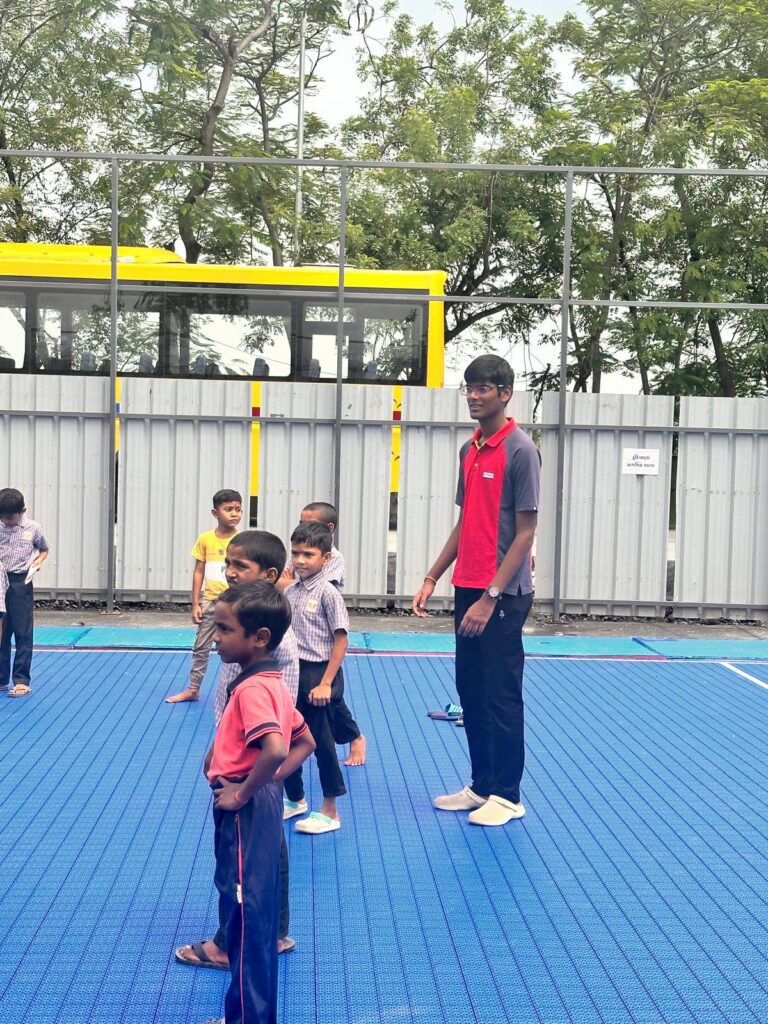
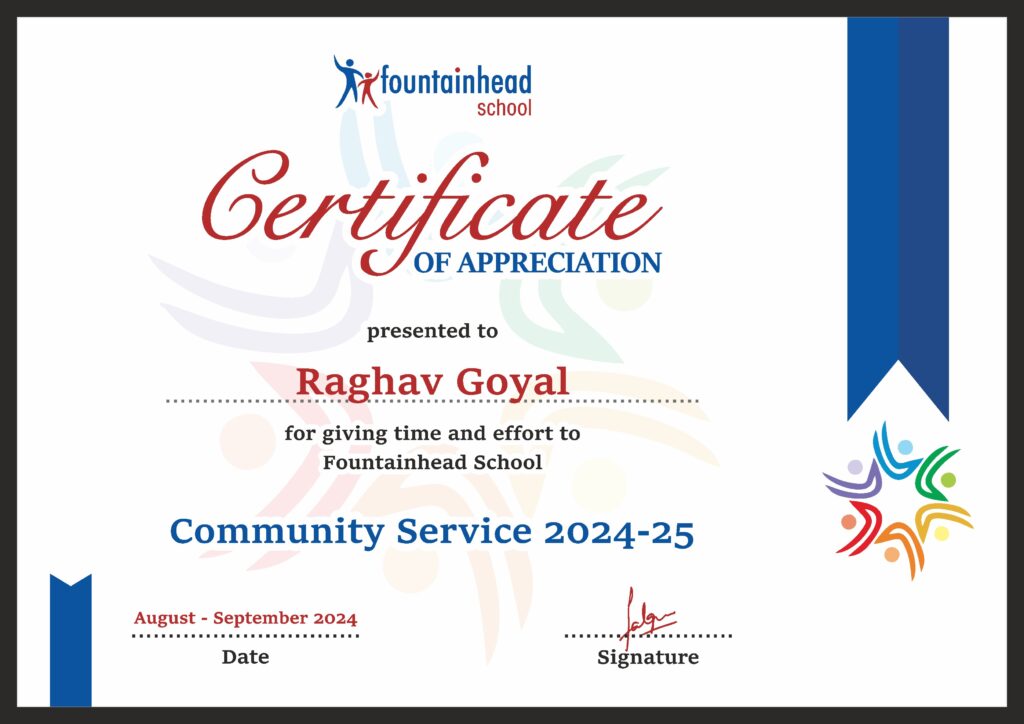
I had the opportunity to volunteer for a community service initiative organized by my school, where I spent three weekends teaching underprivileged children the sport of Frisbee. My primary responsibility was to ensure that they not only learned the game but also developed a sense of teamwork and sportsmanship. Effective communication played a crucial role, as I had to explain the techniques in a simple and engaging manner to ensure they could throw and catch the Frisbee safely without the risk of injury. I also focused on making the sessions interactive and enjoyable, fostering confidence and enthusiasm among the children. This experience allowed me to develop patience, leadership, and teaching skills, while also contributing to the children’s physical activity and social engagement. Seeing their progress and excitement after each session was incredibly fulfilling, making this community service initiative a truly rewarding experience.
LO1 – Identify own strengths and develop areas for growth
This experience helped me gain a deeper understanding of my strengths and weaknesses, providing an opportunity for personal growth. One of the biggest challenges I faced was my lack of effective communication and confidence when teaching specific playing techniques and drills. This was mainly due to my limited proficiency in Gujarati, the primary language spoken by the underprivileged children. As a result, every interaction felt like an obstacle, making it difficult to convey instructions clearly. However, over the course of this experience, I actively worked on improving my communication skills by engaging with the children more frequently and adapting my approach. I learned to use simpler explanations, body language, and demonstrations to bridge the language barrier. Gradually, I became more confident in my ability to connect, instruct, and engage with them, transforming what initially felt like a weakness into a valuable skill.
LO2 – Demonstrate that challenges have been undertaken, developing new skills
Teaching Frisbee to underprivileged children presented several challenges that pushed me to adapt, learn, and develop new skills. One of the biggest hurdles was the language barrier, as most of the children primarily spoke Gujarati, a language I was not fluent in. This made it difficult to explain the techniques and drills effectively. To overcome this, I had to find alternative ways to communicate, such as using hand gestures, demonstrations, and simplified instructions to ensure they understood the game properly. Another challenge was keeping the children engaged and motivated throughout the sessions. Many of them were unfamiliar with Frisbee, so I had to create fun and interactive drills to make the learning process enjoyable. This required me to think creatively, be patient, and adjust my teaching methods based on their progress. Through these challenges, I developed strong communication skills, leadership abilities, and adaptability. By the end of the experience, I had not only helped the children learn a new sport but also gained confidence in my ability to teach and engage with diverse groups, making this an enriching and transformative journey.
.
LO4 – Show perseverance and commitment in CAS experience.
Throughout this three-week community service initiative, I demonstrated perseverance and commitment by consistently engaging with the children and ensuring they received a meaningful and enjoyable learning experience. Teaching a completely new sport to underprivileged children came with its challenges—ranging from language barriers to maintaining their enthusiasm and focus—but I remained dedicated to overcoming these difficulties.
LO5 – Demonstrate skills and benefits of working collaboratively.
Throughout the Frisbee community service initiative, I worked alongside a team of volunteers, and we had to collaborate to ensure that the sessions ran smoothly and were effective for the children. We divided tasks such as setting up the field, demonstrating techniques, and engaging the children in various activities. Effective collaboration meant that we could provide the children with more focused attention, ensuring that everyone had an opportunity to participate and learn. In this process, I learned the importance of teamwork, as we often had to adjust and coordinate in real-time to overcome obstacles like time constraints and managing different learning speeds. We constantly exchanged ideas to improve the session plans and made sure that all activities were engaging and beneficial for the children. Working together allowed us to create a supportive learning environment, where the children could thrive while we supported each other in our roles.
LO6 – Engagement with issues of global significance.
The opportunity to teach Frisbee to underprivileged children connected me to broader global issues, such as access to quality education and physical activity for marginalized communities. In many parts of the world, children in underprivileged environments face barriers to sports and physical education, limiting their opportunities for holistic development. By introducing these children to a new sport, I contributed to promoting physical health, teamwork, and personal growth, which are critical components of any child’s well-being. I became more aware of the importance of providing equal opportunities for children, regardless of their socio-economic background, to participate in sports and activities that help develop their social, physical, and emotional skills. This experience not only enhanced my awareness of these issues but also reinforced my commitment to making a positive impact through service.
To conclude, volunteering in the Frisbee community service initiative was a truly rewarding experience. It allowed me to develop valuable skills in communication, leadership, and collaboration, while also contributing to the personal growth of underprivileged children. Through overcoming language barriers and creating an engaging learning environment, I became more confident and effective in my role as a teacher. The experience also deepened my understanding of global issues related to access to education and physical activity, reinforcing my desire to make a meaningful contribution to such causes. Ultimately, this initiative not only helped me grow but also positively impacted the children’s lives, making it a truly fulfilling and transformative journey.