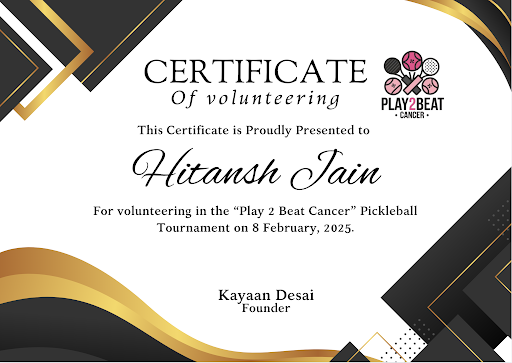
Every year, meaningful initiatives bring students together to support important causes while developing valuable skills. One such event was Play 2 Beat Cancer, a pickleball tournament aimed at raising funds for cancer treatment. This initiative combined sportsmanship, teamwork, and social responsibility, as all proceeds were donated to help those in need. My role in this event was crucial, as I was responsible for securing sponsorships, managing on-ground execution, and serving as an umpire throughout the tournament.
LO1 – Identify own strengths and develop areas for growth
Through this experience, I discovered my strengths in networking and organizational management. Securing sponsorships required strong persuasion and negotiation skills, which I developed through proactive communication with potential sponsors. Additionally, managing the execution of the tournament and handling real-time challenges strengthened my ability to make quick decisions under pressure. However, I identified areas for improvement, such as refining my conflict resolution skills when addressing disputes during the matches. The experience taught me the importance of balancing authority and fairness in leadership roles.
LO2 – Demonstrate that challenges have been undertaken, developing new skills
Organizing a sports event of this scale was not without its difficulties. We faced logistical challenges such as scheduling matches, ensuring fair play, and managing last-minute changes. Handling sponsorship negotiations was also a learning curve, as I had to effectively present our cause to potential sponsors. Additionally, umpiring required quick thinking and maintaining composure under pressure when making crucial match decisions. Through these challenges, I developed strong adaptability, problem-solving abilities, and crisis management skills.
LO4 – Show perseverance and commitment in CAS experience
Despite the many hurdles, my dedication to making this tournament a success never wavered. From long hours of preparation to ensuring smooth operations on the event day, I remained fully committed to my responsibilities. Managing sponsor relationships, overseeing match proceedings, and resolving disputes required continuous effort and attention to detail. Even when faced with unexpected challenges, I remained resilient and focused on delivering a successful event.
LO5 – Demonstrate skills and benefits of working collaboratively
Collaboration was at the heart of this initiative. Coordinating with sponsors, players, event organizers, and volunteers required effective communication and teamwork. My role as an on-ground manager and umpire allowed me to work closely with different teams, ensuring smooth transitions between matches and maintaining fairness in the game. The experience reinforced the value of trust, delegation, and clear communication in achieving shared objectives.
LO6 – Engagement with issues of global significance
Beyond just a sporting event, Play 2 Beat Cancer had a profound social impact. By raising funds for cancer treatment, we contributed to a larger cause that affects millions worldwide. This initiative demonstrated the power of community-driven efforts in addressing global health issues. Knowing that our hard work directly benefited individuals battling cancer was incredibly fulfilling, reinforcing my belief in the importance of using our skills and resources for meaningful change.
LO7 – Recognize and consider the ethics of choices and actions
Throughout this experience, I was constantly aware of the ethical implications of our actions. Ensuring fair play in the tournament required me to uphold principles of honesty and integrity, especially in my role as an umpire. Additionally, securing sponsorships meant balancing business interests with our philanthropic mission, ensuring that our commitments to sponsors aligned with the ethical values of our cause. This event reinforced the importance of making ethical choices in both professional and personal spheres, emphasizing transparency, fairness, and responsibility.
In conclusion, Play 2 Beat Cancer was a transformative experience that allowed me to develop valuable leadership, communication, and problem-solving skills while contributing to a noble cause. This event not only deepened my understanding of social responsibility but also inspired me to continue leveraging my abilities for impactful initiatives in the future.