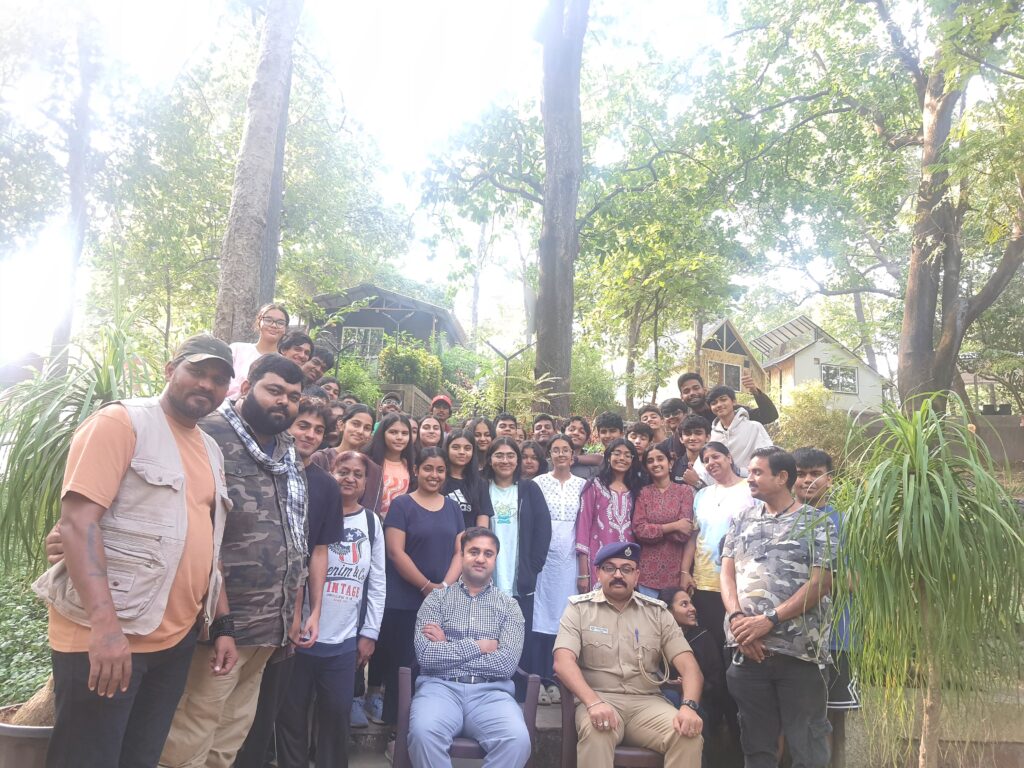
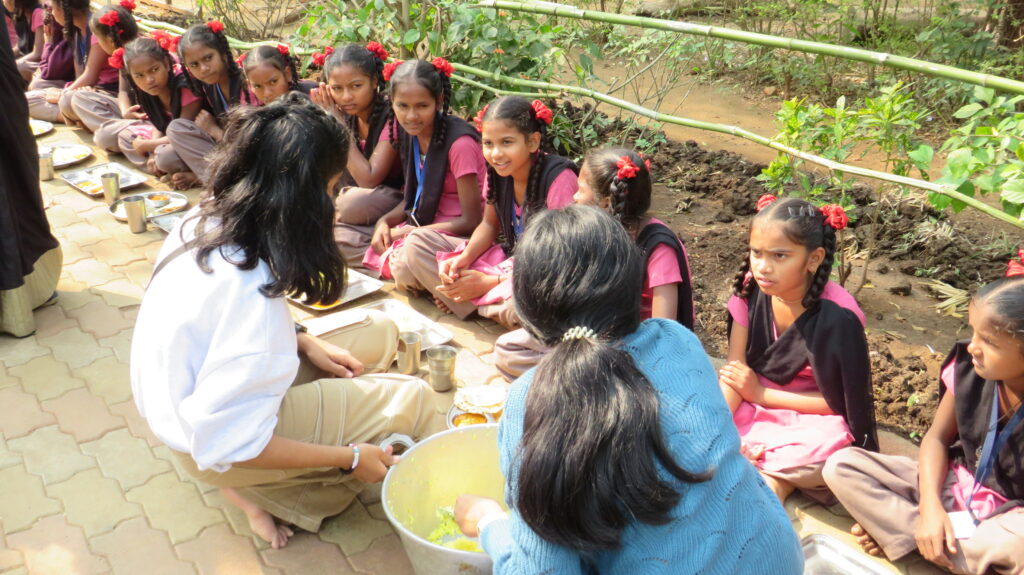
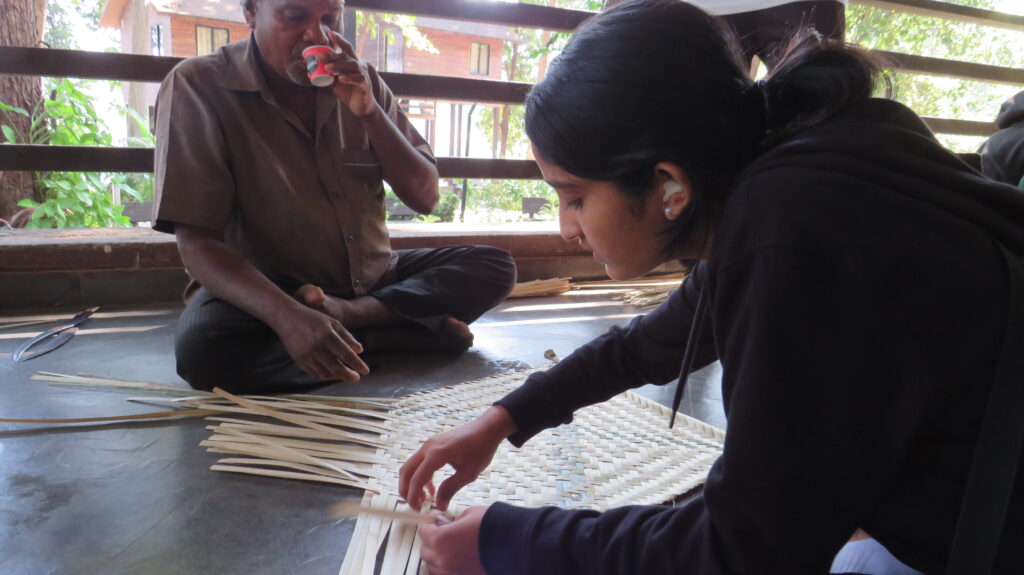
For rural immersion 2024, our destination was Ambapani, Dang. Rural Immersion was held from 16th December to 22nd December. We traveled to the Ambapani Eco Tourism Campsite and performed several activities there. In the span of the 7 days, I covered all components of Creativity, Activity, and Service. A list of activities I got to experience there included:
- Bamboo weaving
- Lippan art
- Warli painting
- Rifle shooting
- Adventure activities
- Village interaction
- Dangi traditional dance
- Baaj making
- Tractor ride
- Haat bazaar shopping
- Trekking
- Cow milking (milk center visit)
- Ashram visit and service for students
- Cleanup drive
- Warm up activities
- River bath
We also got a chance to bond amongst each other as well as with the volunteers, teachers, and villagers. It was an enriching experience to live in the village and revisit nature. We also got to do bird watching and learn about insects and animals around that fascinated us.
LO 1 – Identify own strengths and develop areas for growth
The activities we took part in at the campsite, we had to perform several ones that were out of our comfort zones. I tried out a lot of new things including lippan art, cow milking, and baaj making which were not easy at our first try. I was able to identify the places I was weak at including the baaj making, however, I tried my best to accomplish all tasks. I could also observe my strength in areas like rifle shooting and warli painting.
LO 2 – Demonstrate that challenges have been undertaken, developing new skills in the process
The major challenges in the rural immersion trip included going out of my comfort zone in an area filled with nature. I was in a village environment that was completely new and I was able to adapt to the natural habitats. Performing lippan art and cow milking was a unique experience that brought me to open up more and try it out. I developed my critical thinking and social skills that helped me overcome these challenges and enjoy the activities in the trip.
LO 4 – Show commitment to and perseverance in CAS experiences
It was important for me to showcase commitment towards completing this rural immersion in order to experience everything planned out for us. I was able to be dedicated to each task assigned and I did it with a free spirit to enjoy everything. Despite finding it uncomfortable to do activities like river bath and lippan art, I stayed perseverant and finished the activities and I feel happy to have done it all for the first time.
LO 5 – Demonstrate the skills and recognize the benefits of working collaboratively
At several places, working in a team was highly significant in the trip. We had team games along with the the Haat bazaar shopping which were one of the major team building activities. In all of them, I had to communicate and collaborate with my classmates to ensure a successful outcome and it helped us to finish the task effectively. Everybody had different perspectives to certain stuff, however, we were able to patiently discuss it and have fun as well.
LO 6 – Demonstrate engagement with issues of global significance
When we went to the trip, we noticed several sustainability issues that the villagers went through including poverty in the tribal community, inequalities, unequal education, hygiene, electricity, water supply, etc. A lot of these problems were being solved sustainably by the villagers and the campsite volunteers that was remarkable. However, all of these problems add up to global significance since plenty of villages like Ambapani go through the same and require action to be taken. One of the major issues we observed were for medical assistance that the Lady Sarpanch shared with us while we interacted with her since immediate sanitation and hygiene products or facilities were not available. Another problem we identified was how the tribal community made very little income for their own living and their artforms of bamboo weaving and Dangi dance was not well paid. Being aware about these issues makes me conscious of the lifestyle we have and also pushes me to brainstorm for solutions for them.
LO 7 – Recognize and consider the ethics of choices and actions
Ethical issues involved in the rural immersion trip included the food consumption the students made. We caused a lot of food wastage along with wastage of disposable utensils. It caused an ethical issue on the way the students used the resources provided. However, once we all were instructed, we consciously consumed the food and took care of the utensils. This made us realize how limited the resources can be and how we can value the same.
The learner profile attributes I demonstrated in this trip were Open Minded, Thinkers, Caring, Risk Takers, and Reflective. We demonstrated all of these through various activities and by settling in to the village life in the 7 days we spent there. The ATL skills we developed were Self management skills wherein we had to organize ourselves to be prepared for the activities and to be motivated. We also developed Social skills by working and living around other people where we needed to maintain respect, responsibility and cooperation. Other takeaways from the rural immersion include being and internationally minded learner as well as all the knowledge I gained about village lifestyle. It was a highly unique experience that fascinated me and will forever be a learning experience. Through this learning, I could possibly organize projects in the future to support the people and environment there for a sustainable life.
I am satisfied with the rural immersion and truly grateful to have visited such a place. It was an amazing experience and I successfully participated in all the activities.
Evidence: