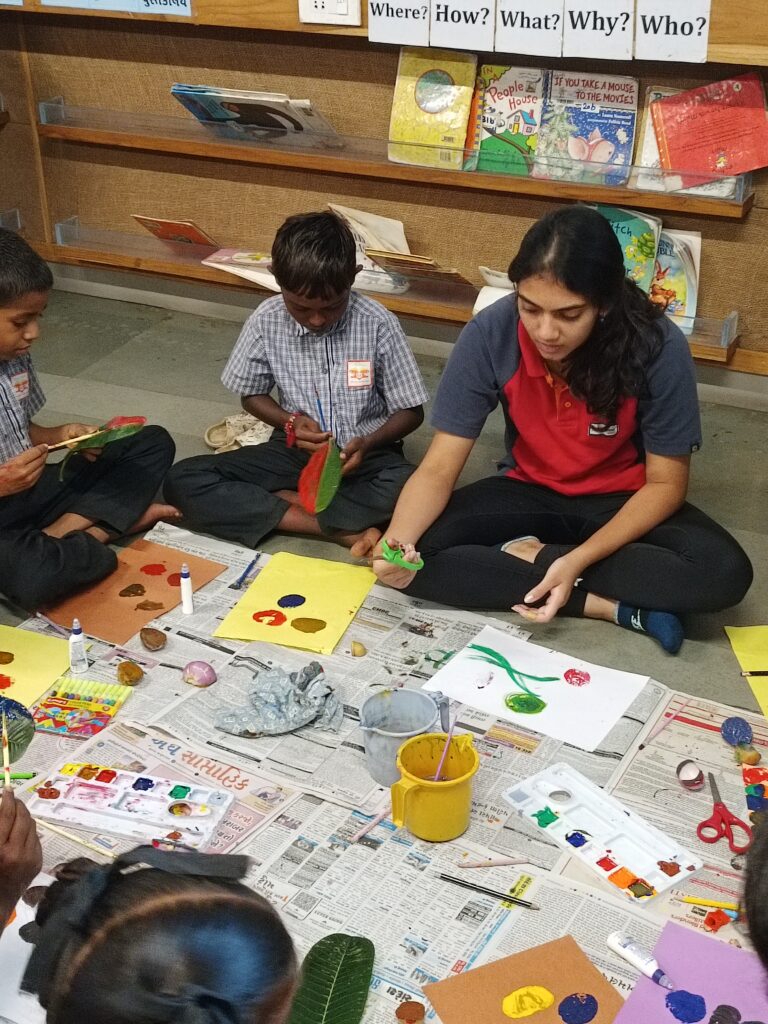
Teaching art and crafts to students from government schools was an enriching experience that gave me the chance to share arts and creative learning with young students. Through the community service I taught young students “Best out of Waste,” I guided the students on making the use of recycled materials to create beautiful projects such that it emphasizes resourcefulness and imagination. This activity not only allowed me to pass on creative skills but also introduced an appreciation for sustainable practices in the young students. The experience taught me valuable lessons about my own strengths, pushed me to develop new skills, and made me realise the importance of contributing positively to society making it a creative and a sustainable place to live.
Learning Outcome 1: Identify own strengths and develop areas for growth
A key strength I discovered was my ability to make students feel comfortable and open up, even though I was meeting them for the first time. I could quickly build a trusting rapport with the children, encouraging them to talk freely about their own ideas and life experiences. This connection allowed me to understand their unique personalities and foster a supportive and enthusiastic environment. However, an area for growth was in building my confidence in leading such a large group, as I was initially nervous about engaging everyone at once. Over time, I became more comfortable managing the classroom and grew confident in delivering instructions to the group as a whole, which helped keep the students focused and engaged.
Learning Outcome 2: Demonstrate that challenges have been undertaken, developing new skills in the process
One of the biggest challenges was creating an inclusive and welcoming space for each student, especially when not all of them were equally outgoing. While some students eagerly shared ideas and took part in discussions, others were more reserved, making it difficult to reach them at first. Since I had never taught such a large group before, getting everyone to speak such that each child felt equally included was difficult. I had to adjust how I taught and experiment with different approaches to make each student comfortable. I developed new skills in creating a more interactive and engaging classroom, using small group activities and hands-on projects to encourage the quieter students to participate. These new skills in adaptability and inclusiveness helped me understand how to reach a variety of personalities and ensured that all students felt they could contribute and share their ideas.
Learning Outcome 4: Show commitment to and perseverance in CAS experiences
This community service required a lot of commitment, especially in terms of helping each student complete their projects and understand the importance of recycling materials creatively. Some students took longer to grasp the concept of “Best out of Waste,” so it required patience and persistence to support their learning at their own pace. Staying committed to their progress, even when it seemed slow, kept me motivated. Each small success, such as when a student completed a craft project they were proud of, reminded me of the importance of perseverance. This experience strengthened my patience and resilience, qualities that I know will benefit me in future challenges that require long-term dedication.
Learning Outcome 6: Demonstrate engagement with issues of global significance
The activity “Best out of Waste” connected directly to the Sustainable Development Goal (SDG) of Responsible Consumption and Production and Quality Education. By teaching students how to use recycled materials creatively, we helped them see that beautiful and useful items can come from resources we might otherwise discard. Access to quality education, including sustainability education, is a right that many children are still deprived of due to socioeconomic barriers. This project allowed me to help bridge that gap by bringing an appreciation for environmental consciousness to students who might not otherwise have this opportunity. Working on such a project highlighted the power of community service to address global challenges on a local level.
In the end, teaching art and crafts to these students had a lasting impact on both them and me. For the students, it was a fun and engaging way to learn about creativity, resourcefulness, and sustainability, empowering them with skills and values they can carry forward. For me, it was an eye-opening experience that deepened my sense of empathy, strengthened my ability to adapt to challenges, and reinforced my commitment to making a difference. This experience has inspired me to continue finding meaningful ways to engage in community service, especially in projects that bring creativity and environmental awareness together.