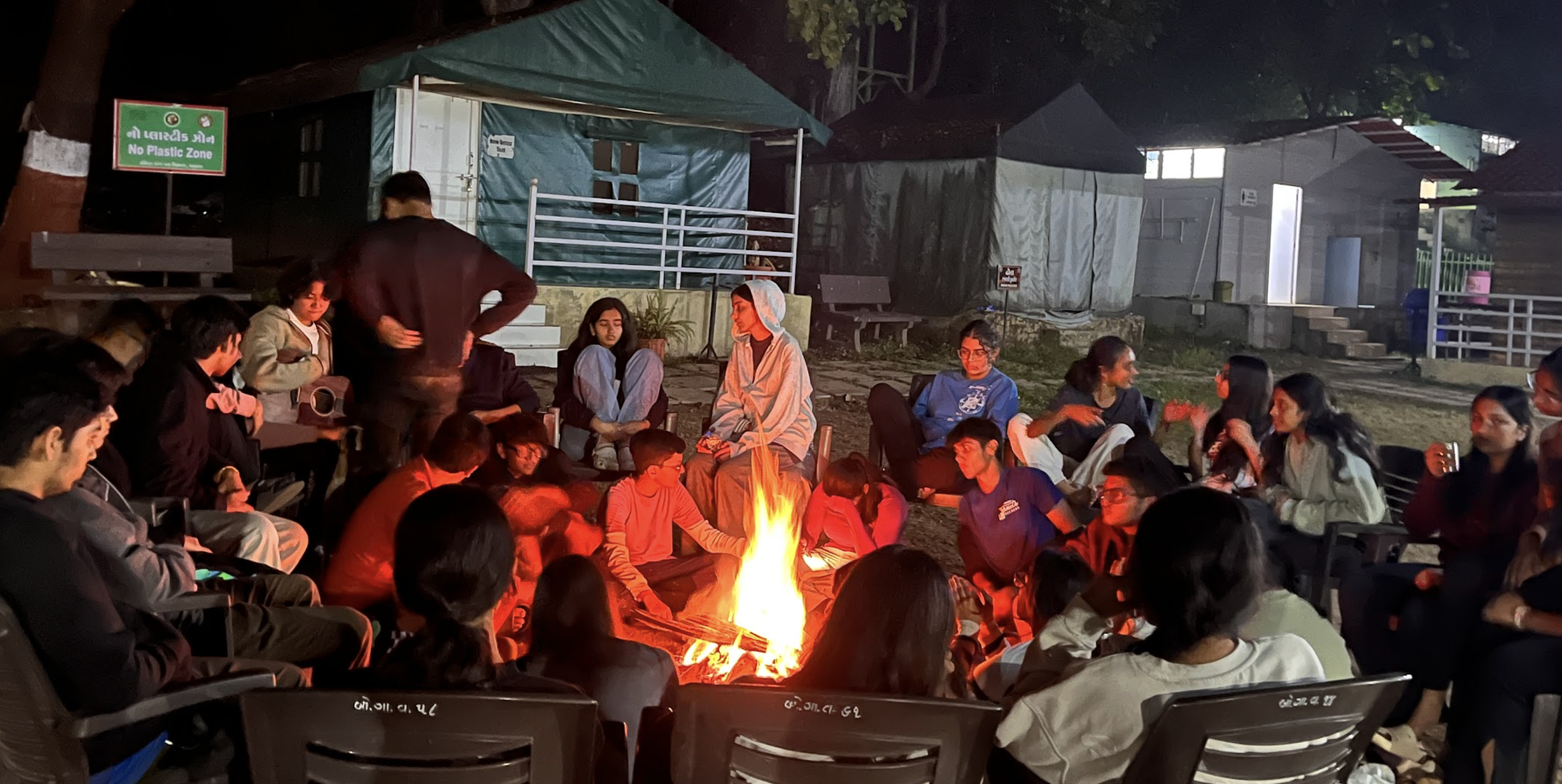
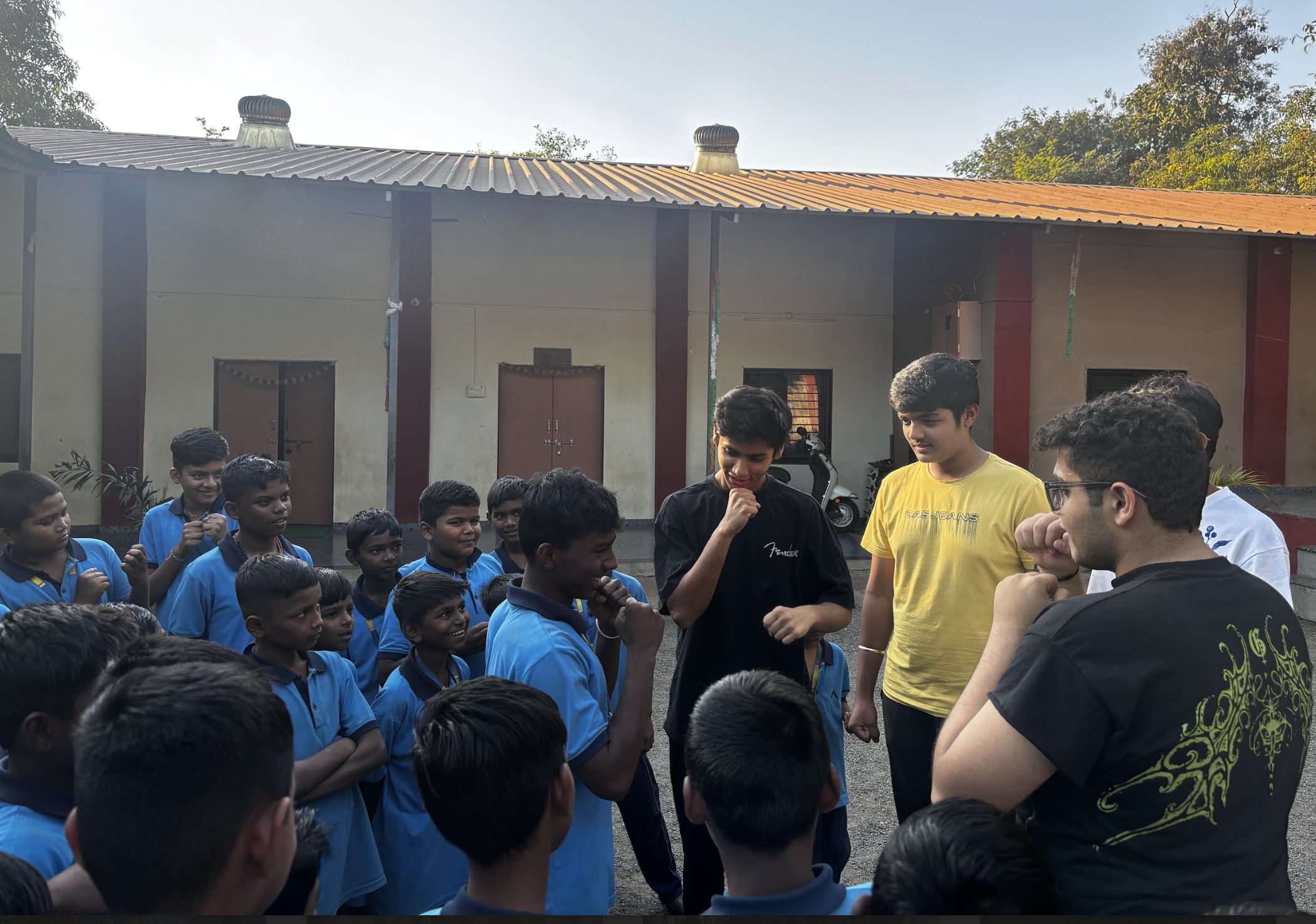
The Grade 11 CAS trip was a meaningful and immersive experience that allowed me to explore all three strands of the CAS framework creativity, activity, and service in a holistic way. The trip’s main goal was to foster essential life skills such as leadership, collaboration, adaptability, and resilience, while offering us a chance to connect with rural communities and contribute to their development. Through hands-on service, adventure-based challenges, and rich cultural interactions, I developed a deeper understanding of sustainable living, environmental awareness, and the power of collective effort.


During the trip, I engaged in a wide range of activities across various CAS domains. For creativity, I participated in Warli painting, wall art, bamboo crafts, and enjoyed performances of local music and dance. On the activity front, I took part in trekking, river bathing, rappelling, farming tasks, and various adventure sports. As part of the service component, I contributed to wall painting, helped with farm work, took part in a village cleanup drive, and interacted with students from a nearby school. The cultural exchange aspect involved learning about village life, connecting with local artisans, and joining in traditional dance. Additionally, we were exposed to sustainable practices by exploring farming techniques, visiting the Krishi Vigyan Kendra, and observing the turmeric processing unit.
LO1: Identifying Strengths and Areas for Growth
Throughout the trip, I discovered my strength in working collaboratively and taking initiative, particularly when interacting with local school children and villagers. These interactions allowed me to step up, lead when necessary, and work effectively in teams. However, adapting to the unfamiliar rural setting proved to be a challenge, revealing that I need to become more flexible and open when navigating new environments. Tasks like wall painting and farming highlighted my patience and persistence, while physically intense activities such as trekking showed me that I need to improve my stamina and physical endurance.
LO2: Undertaking Challenges and Developing New Skills
This trip pushed me out of my comfort zone in several ways. Trekking through difficult terrain, participating in rappelling, and attempting traditional Warli art required focus, determination, and a willingness to try something new. Each challenge presented an opportunity to grow—physical activities tested my strength and endurance, while creative sessions refined my artistic skills. Additionally, engaging with local students despite language differences taught me how to communicate more effectively and with greater empathy.

LO3: Initiate and plan a CAS experienc
The service-based elements of the trip involved significant preparation and coordination. For instance, planning how to interact with school students involved designing creative and engaging activities. Similarly, the wall painting and farming work demanded that we strategize as a group and distribute responsibilities efficiently. I also played an active role in organizing group reflections, helping ensure that every member had a chance to share their experiences and learnings.
LO4 – Show perseverance and commitment in CAS experience
The trip required a consistent level of effort and dedication, especially during physically and mentally exhausting tasks. Whether it was enduring long treks, working under the sun in the fields, or participating in physically demanding adventure sports, I remained committed to giving my best. Even when faced with fatigue, I pushed through and stayed involved in all planned activities, including creative sessions and reflection circles, demonstrating resilience and determination.
LO5 – Demonstrate skills and benefits of working collaboratively.
Teamwork played a vital role throughout the experience. From farming activities to wall painting and adventure sports, collaboration was essential. Working alongside peers and coordinating with community members taught me how to effectively contribute to a team. The mural project, in particular, emphasized the value of clear communication, task-sharing, and mutual support, showing me how much can be accomplished when everyone works toward a common goal.
LO6 – Engagement with issues of global significance.
The trip deepened my awareness of global challenges such as environmental sustainability, agricultural practices, and educational inequality. Visiting Krishi Vigyan Kendra and learning about eco-friendly farming techniques made me reflect on the global importance of sustainable agriculture. Moreover, spending time with students from local schools highlighted the educational disparities that exist in rural areas, inspiring me to think critically about potential solutions and the role of education in community development.
LO7 – Recognise and consider the ethics of choices and actions.
Throughout the trip, I remained conscious of the ethical aspects of our involvement. I made a deliberate effort to engage with villagers and students in a respectful, thoughtful manner—aiming to support rather than impose. During the cultural exchange, I approached their traditions with curiosity and appreciation, ensuring that my actions reflected sensitivity and respect. This experience reminded me of the importance of cultural humility and the impact our behavior can have on the communities we engage with.
During the trip, I demonstrated key IB Learner Profile attributes by thinking critically about sustainability and education challenges in rural communities. I became more knowledgeable through learning traditional crafts and sustainable farming, and improved my communication by engaging with locals despite language barriers.
This CAS trip was a transformative journey that challenged me both physically and mentally while deepening my understanding of cultural and environmental issues. Through creativity, activity, and service, I built key skills like teamwork, adaptability, and ethical awareness, strengthening my commitment to growth and meaningful contribution to society.