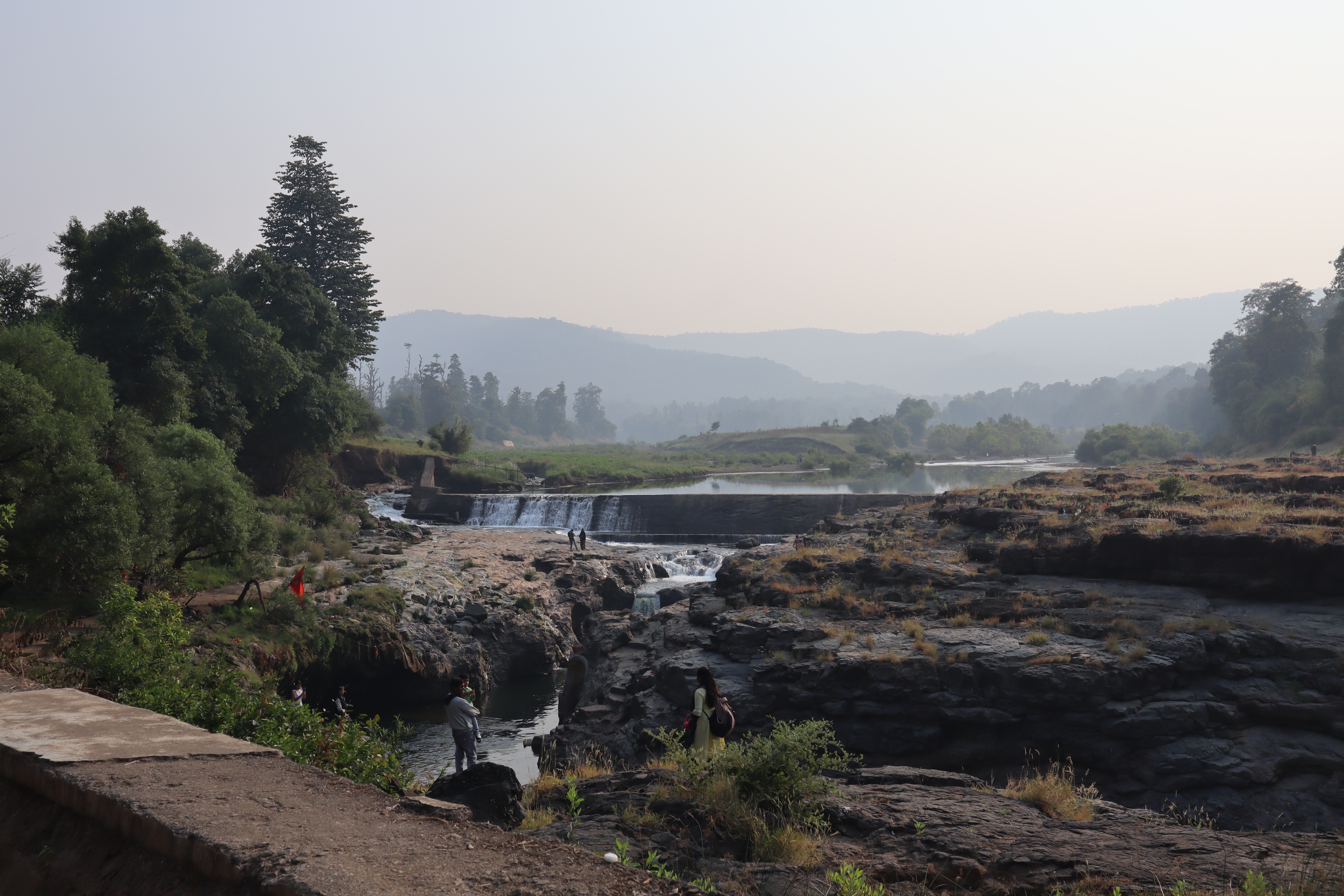
For our CAS trip this year, we visited the Ambapani village located in the Dang district of Gujarat. It was a 6 day trip from the 16th of December to the 21st of December. We stayed at the Ambapani Eco Tourism campsite. Throughout the course of six days we performed several activites such as, Bamboo weaving, warli painting, lippan art, riffle shooting, baaj making, trekking, river bath, etc.
LO1: Identify own strengths and develop areas for growth
We had to perform a variety of task that helped me identify my strenghts and weaknesses. At first I was having trouble understanding how to make baskets by weaving bamboos but after a while I got the hang of it. I think I did well while performing the art activities. Although I did struggle with activities likr dart shooting and riffle shooting, those are definitely the activities that I need to improve upon.
LO2: Demonstrate that challenges have been undertaken, developing new skills in the process.
Some of the activities in the trip were my firsts. I could not bring myself to do things like mud lipan which involved touching cow dung with bare hands. There was also many insects and several mosquitoes around us everyday I used to wake up with several mosquito bites on my body. But I realised that it is important to step out of my comfort zone and get uncomfortable so that I could better experience the life of rural people.
LO4: Show commitment to and perseverance in CAS experiences.
For someone like me who is accustomed to the urban lifestyle, the rural immersion was quite a shock. We were provided with very basic amenities, even our room were really small, on most of the days we had to bathe with cold water. There were times when I did not want to do some activities because they seemed gross to me or I just didn’t feel like doing them but instead of cribbing, I performed the activities throughout the 6 day trip and showed commitment.
LO5: Demonstrate the skills and recognize the benefits of working collaboratively.
This learning outcome was showcased majorly in the warli painting. There was a huge wall assigned to us and we needed to paint on it. We divided ourselves in groups and started to paint the wall together. This gave opportunities for everyone’s creativity and painting skills to be shown and the painting was completed beautifully. Even during the activities that I did not want to perform, when I saw that my friends were doing it without any hesitance, it motivated me to also do those activites.
LO6: Demonstrate engagement with issues of global significance
Poverty and lack of education are 2 major issues that I identified in the village. Most of the villagers earned very little money monthly, many could only afford one meal per day. By using our communication and social skills, we interacted with the village people and understood their lifestyles. On the last day we visited an Ashramshala which was a hostel, in which underprivileged children from surrounding villages stayed. We served them food and helped the staff clean up, later we played games with them.
LO7: Recognize and consider the ethics of choices and actions
We wasted a lot of food everyday which raised a concern, we weren’t using the resources that had been provided to us mindfully, we worked on the same and tried to minimize the food wastage as much as possible. We also needed to be really careful and respectful while talking to the villagers we had to make sure that we didn’t laugh the kind of language that they used, or the way they talked. We also had to make sure to not raise our voices at the kids when we were playing with them.
The rural immersion trip was quite challenging to say the least. Although it really helped bring me out of my comfort zone, it made me do things which I never thought I’d do. This trip also helped me reconnect with myself since we weren’t allowed to bring our phones. It felt really refreshing to be surrounded by greenary. Spending time with my friends and going on adventures with them was the highlight of the trip.